Sermons That Exalt Christ
The preaching of God’s Word is central to the life of the church. Tom's pulpit ministry is dedicated to providing clear, biblical teaching to equip believers, strengthen faith, and exalt Christ.

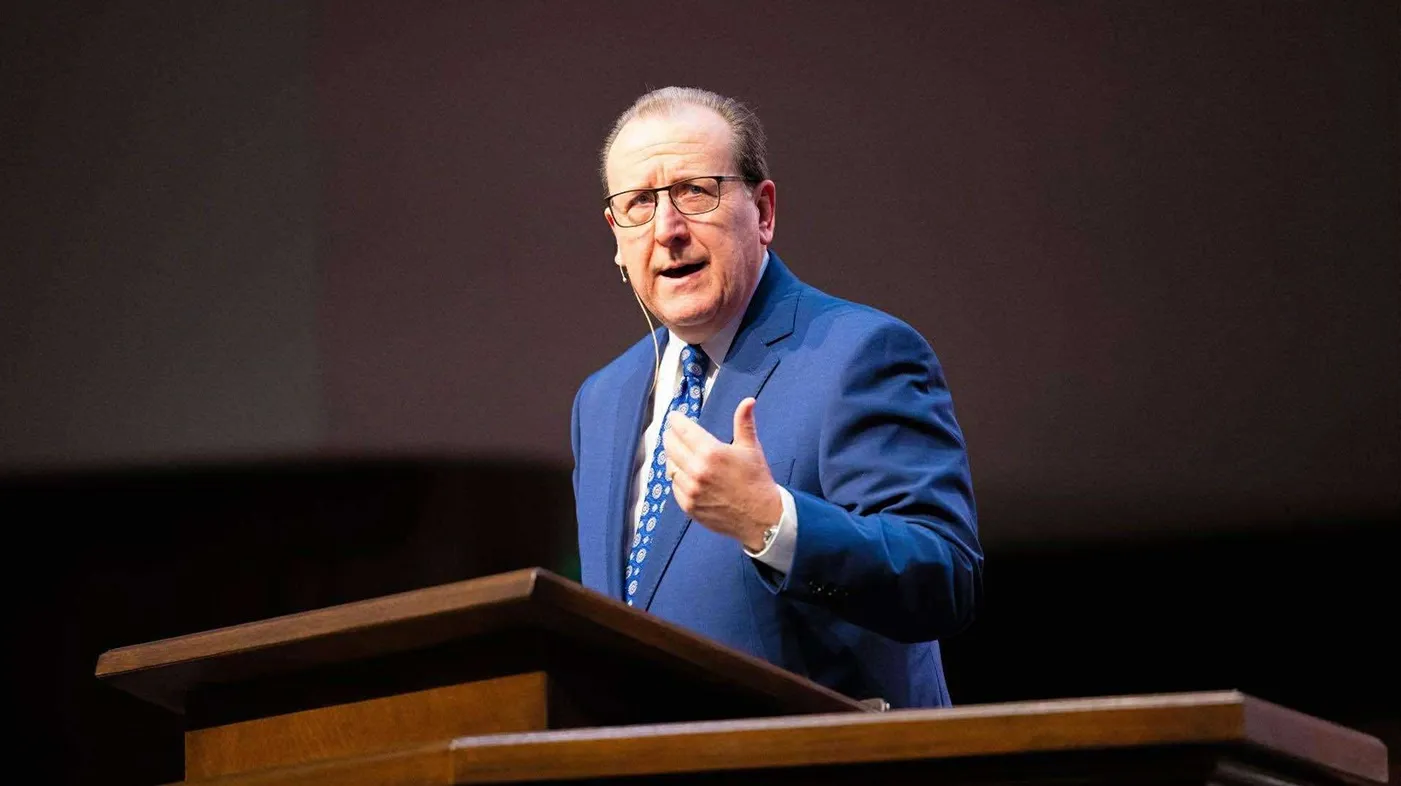
Engage with the most recent teaching from God’s Word.
The preaching of God's Word is central to worship and of the utmost importance for the sanctification of every believer in Christ.

.jpg)
.jpg)

Explore messages organized to help you grow in Christ.
Search and filter sermons for quick access.
Because He Lives: the Reason for Our Hope
Pastor Tom Pennington's sermon, "Because He Lives: The Reason for Our Hope," delivered in the wake of a friend's passing, underscores the pivotal truth of Christ's resurrection as the bedrock of Christian hope, drawing from 1 Corinthians 15. Acknowledging the pain of grief, Pennington asserts that believers do not grieve without hope, as their loved ones, like Sue Wyatt, are alive in Christ and assured of future bodily resurrection. He outlines Paul's logical argument against those in Corinth denying the resurrection of the dead. If Christ had not been raised, it would mean: no legitimate gospel (preaching is vain), no reasonable faith (faith is worthless), no reliable revelation (apostles, prophets, and even Christ would be liars, and Scripture untrustworthy), no real forgiveness (we would still be in our sins), and no eternal life (those who died in Christ would have perished). However, verse 20 triumphantly declares, "But now Christ has been raised from the dead." This central reality entirely negates those terrifying consequences. Because Christ lives, the gospel is trustworthy, faith is reasonable and justified, God's revelation is reliable, genuine forgiveness of sins is secured, and eternal life, including a future bodily resurrection like Christ's, is guaranteed for all believers.
The Guarantee of Answered Prayer - Part 2
The sermon on Matthew 7:7-11, "The Guarantee of Answered Prayer," highlights God's adoption of believers as His children, making Him our true Father. Pastor Tom Pennington explains Jesus' command to "ask, seek, and knock," assuring that our Heavenly Father will respond to persistent prayers. This guarantee isn't a "name it and claim it" promise; prayers must align with God's will, be offered with faith, right motives, obedience, and in Jesus' name. Jesus argues that if even inherently evil human fathers provide good gifts for their children, then our perfectly good, wise, and loving Heavenly Father will "how much more" give what is good to those who ask. This comparison underscores humanity's fallen nature, Jesus' unique sinlessness, and His deity. Our adoption, chosen by God in eternity past through Christ's sacrifice, ensures His boundless love and desire to provide for our legitimate needs, including spiritual blessings, physical necessities, wisdom for relationships, and preeminently, the Holy Spirit. The sermon concludes by urging believers to consistently pray for wisdom in all their relationships, trusting their generous Father's loving provision.
April 9, 30 AD
This text details the historical accounts of Jesus' crucifixion, burial, and resurrection, underscoring its foundational importance to Christian faith. Jesus was crucified on Friday, died at 3 p.m., and was hastily buried in a new tomb by Joseph of Arimathea and Nicodemus. On Saturday, a Roman guard was stationed at the tomb at the request of Jewish leaders to prevent the body from being stolen. Early Sunday morning, Mary Magdalene, Mary, and Salome arrived at the tomb to anoint Jesus, only to find the massive stone rolled away. An angel inside announced that Jesus had risen, fulfilling His prophecies, and instructed them to tell the disciples, including Peter, to meet Him in Galilee. The sermon emphasizes several evidences supporting the resurrection: the inexplicably moved stone, the angelic messengers, Jesus' prior predictions, and the empty tomb with orderly grave clothes�a fact undisputed even by His enemies for centuries. Subsequent appearances to hundreds of witnesses further solidified this reality. The resurrection�s profound significance is threefold: it validates Jesus' claims as the Messiah, confirms God's acceptance of His sacrifice for sins, and establishes Jesus as the future judge of humanity.
The Guarantee of Answered Prayer - Part 1
Pastor Tom Pennington's sermon on Matthew 7:7-11, "The Guarantee of Answered Prayer," contextualizes these verses within the Sermon on the Mount's section on human relationships (Matthew 7:1-12). Jesus' commands to "ask, seek, and knock" are presented as essential for acquiring the spiritual wisdom and strength needed to navigate complex interactions, such as discerning others' sins and living by the Golden Rule. These commands emphasize persistent, ongoing prayer. "Asking" signifies faith in a personal God and humble acknowledgment of one's needs. "Seeking" implies an intense pursuit of God's help, trusting Him to provide what is truly needed. "Knocking" illustrates tenacious, "shameless" prayer, confident that God, our generous Father, will always respond. Jesus guarantees that "everyone who asks receives," particularly concerning spiritual needs aligned with kingdom realities. Pennington clarifies this is not "name it and claim it" theology. Answered prayer requires several conditions: faith in God's Word and power, asking for God's glory and will (not selfish motives), a spirit of forgiveness towards others, asking in Jesus' name (reflecting His agenda and merits), living in a pattern of obedience to Christ, and aligning with God's sovereign will.
Dead and Buried
Tom Pennington's sermon, "The Memoirs of Peter Dead and Buried," argues that Jesus' burial is an essential, yet often overlooked, component of the gospel message, as vital as His death and resurrection. Drawing from 1 Corinthians 15 and Mark 15, the text elaborates on the burial's significance. It highlights the courageous act of Joseph of Arimathea, a wealthy and influential but secretly believing disciple, who risked everything to request Jesus' body from Pilate. Pilate, after verifying Jesus' certain death through a centurion, granted the body. Joseph, joined by Nicodemus, hastily prepared Jesus with linen and 72 pounds of spices, placing Him in a new, rock-hewn tomb sealed by a large stone. Key witnesses, including Mary Magdalene and the mother of Joses, observed the burial's precise location. The sermon stresses that Jesus' burial fulfills Messianic prophecy (Isaiah 53:9), proves His divine innocence, confirms His physical death for sins, signifies His conquest over death, and crucially, identifies the specific tomb that would undeniably be found empty, thereby certifying the resurrection.
Responding to the Sins of Others - Part 3
In his sermon on Matthew 7:1-6, Pastor Tom Pennington discusses how to respond to the sin of others, particularly the antagonism of unbelievers (verse 6). He explains that in ancient biblical culture, "dogs" and "swine" were not beloved pets but vicious, unclean scavengers. "What is holy" and "pearls" represent the precious gospel message of Jesus and His kingdom. Jesus commands His followers not to *continue* to give the gospel message to those who have heard, defiantly rejected, and become openly antagonistic towards Christ and His truth. This is because such individuals will treat the gospel as worthless, trampling it underfoot, and may even turn to persecute the messenger. This instruction balances the Sermon on the Mount's earlier commands (Matthew 7:1-5) for believers to respond to fellow believers with grace and humility, ensuring discernment rather than indiscriminate sharing. Biblical examples, including Jesus's ministry in Nazareth and Paul's missionary journeys, illustrate the practice of moving on when faced with defiant rejection and blasphemy. For unbelievers, the sermon warns that persistent rejection of the gospel has a limit to God's patience and will ultimately lead to judgment.
No Results Found.
We couldn’t find anything matching your search.
Explore The Word Unleashed
Our ministry brings together expository preaching, theological precision, and practical application for the good of Christ's church and the daily living of Christ's people.
.webp)
Sermons
Listen to expository sermons that clearly teach God’s Word and guide you in daily living.

Radio
Tune in to gospel-centered programs that share biblical truth and strengthen your daily walk with Christ.
Training
Join courses and workshops designed to deepen your faith and equip you to serve others with biblical wisdom.
.webp)
From the Pastor's Desk
Read pastoral messages that encourage, instruct, and help you apply God’s Word to every part of your life.
.webp)
Hymns
Discover timeless hymns that lift your heart in worship and remind you of God’s abounding grace and faithfulness.
Podcasts
Stay rooted in Scripture through our podcast series.