Sermons That Exalt Christ
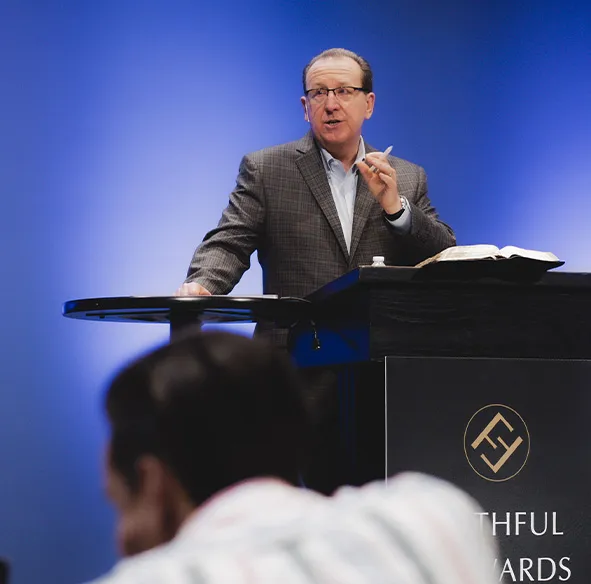
The preaching of God’s Word is central to the life of the church. Tom's pulpit ministry is dedicated to providing clear, biblical teaching to equip believers, strengthen faith, and exalt Christ.


Engage with the most recent teaching from God’s Word.
The preaching of God's Word is central to worship and of the utmost importance for the sanctification of every believer in Christ.

.jpg)
.jpg)

Explore messages organized to help you grow in Christ.
Search and filter sermons for quick access.
Two Gates, One Decision - Part 2
Pastor Tom Pennington�s sermon, "Two Gates, One Decision," from Matthew 7:13-14, warns against the spiritual danger of choosing the wrong entrance to God's kingdom. Using the analogy of a GPS leading a driver astray, he highlights that spiritual paths, like physical roads, lead to vastly different destinations. Jesus outlines four key contrasts: two gates, two ways, two destinations, and two crowds. The wide gate is easy to enter, encompassing indifference, human philosophies, false religions, or even a false profession of Christ. It opens onto a broad way, a comfortable lifestyle allowing individuals to choose their own moral path, which appears to be freedom but is actually slavery to sin. This broad path is traveled by "many" and leads to "destruction"�eternal, conscious torment in "fiery hell." Conversely, the narrow gate is difficult to find and requires personal repentance, faith in Jesus Christ, and shedding all self-merit. It leads to a narrow way, a confining lifestyle of obedience to Christ's commands. Though this path may seem restrictive from an earthly perspective, it represents true freedom and gracious submission to God.
Two Gates, One Decision - Part 1
This sermon contrasts the common belief that all spiritual paths ultimately lead to the same divine destination with Jesus' radical teaching in Matthew 7:13-14. Jesus states there are only two gates and two paths, leading to two entirely opposite eternities: life or destruction. The "wide gate" is expansive and attractive, representing the default path to destruction. Its numerous entry points include apathy, human philosophies that oppose God's knowledge, and all forms of false religion�many energized by demons. It also encompasses corrupted versions of true faith, such as distorted Judaism or "Christianity" that preaches a false Christ or gospel (like those emphasizing works for salvation). Even a false profession of the true gospel can lead through this gate. By default, everyone is born on this broad path; failing to choose the narrow gate means one is already heading for destruction. Conversely, the "narrow gate" is small and exclusive, marking the sole entry point to true salvation and eternal life through Jesus Christ.
Creatively Dodging Sanctification
The text, "Creatively Dodging Sanctification," critiques a prevalent "cross-centered" understanding of sanctification, notably advanced by Tullian Tchividjian. This view misinterprets gospel grace, suggesting that resting in justification or contributing only sin to sanctification negates personal effort in pursuing holiness. The author argues this perspective confuses justification with sanctification and risks antinomianism, where God's law holds no practical use for believers. The sermon asserts biblical sanctification is a progressive, lifelong work of God's grace by which the Spirit delivers believers from sin into increasing holiness. While entirely God's work, it *demands* maximum human effort, much like a farmer diligently cultivates a field while God provides growth. This process is a constant spiritual war, slow, painful, and only completed at death or Christ's return, transforming the heart rather than merely modifying behavior. Sanctification is guaranteed for true believers and requires the diligent use of means: prayer and active engagement with God's Word. Balancing the gospel's "indicatives" (what Christ accomplished) with its "imperatives" (what believers must do) is crucial for true, biblical sanctification, a pursuit without which no one will see the Lord.
A Fresh Look at the Golden Rule
Pastor Tom Pennington's sermon on Matthew 7:12, the "Golden Rule," explores its profound meaning and application within the Sermon on the Mount. He notes its historical recognition, being inscribed by Roman Emperor Alexander Severus, and its role as an overarching principle for relationships. Jesus presents this command�"In everything, therefore, treat people the same way you want them to treat you"�as a concise summary of "the Law and the Prophets," encapsulating God's expectations for human interaction. Pennington emphasizes that this rule is specifically for believers, as unbelievers cannot truly obey it in a way acceptable to God. Jesus' Golden Rule is unique: it is positively framed (requiring active love), motivated by genuine love for others and God (not selfishness), and only truly doable through the transformative power of God's Spirit, making one a "new creation." For non-believers, this impossibly high standard reveals their need for Christ's righteousness. For Christians, it acts as a comprehensive, flexible guide for conduct in all relationships, although obedience still requires the Holy Spirit's help. Ultimately, the Golden Rule is a divine command, rooted in the Old Testament, directing believers to express love for God by loving others.
The Biblical Case for the Resurrection
This text highlights the centrality of Jesus' Resurrection to Christian faith, illustrating its persuasive power through the story of Frank Morrison, a skeptic who became a believer after attempting to disprove it. The author then presents nine biblical reasons supporting the Resurrection's reality. These reasons include Old Testament prophecies (Psalm 16, Isaiah 53) and Jesus' own repeated predictions of His death and subsequent rising. Extensive evidence confirms the absolute certainty of Jesus' physical death, debunking any "swoon" theories. Furthermore, the radical transformation and unwavering confidence of Jesus' disciples, including former persecutor Paul and skeptics James and Jude, who ultimately died for their convictions, strongly attest to the Resurrection. Jesus made numerous post-Resurrection appearances to over 500 people. The undisputed empty tomb, with no body ever produced by enemies, provides crucial physical evidence. Finally, the text argues that all alternative explanations�such as hallucination, legend, or fraud�are insufficient to account for the comprehensive body of historical and testimonial facts, leaving the literal, physical Resurrection as the only adequate explanation.
Portrait of a Spiritual Beggar
The sermon, "Portrait of a Spiritual Beggar," emphasizes Matthew 5:3, stating that acknowledging one's complete spiritual poverty is foundational for entering God's kingdom. Pastor Tom Pennington illustrates this using Philippians 3:6-8, a self-portrait of the Apostle Paul's pre and post-conversion experience. Paul initially viewed his religious rituals, ethnic heritage, righteous lifestyle, Pharisaic association, zeal, and adherence to the Law as significant spiritual "assets" for gaining a right standing with God. Yet, his encounter with Christ on the Damascus Road brought a radical revaluation where all these former "gains" became "loss," utterly worthless. This spiritual transformation involves three radical changes in thinking, supernaturally produced by the Holy Spirit. First, one's view of self shifts to recognizing complete spiritual bankruptcy�a "spiritual beggar." Second, one's view of Christ changes, realizing the "surpassing value of knowing Christ Jesus my Lord" as life's ultimate asset, far exceeding any worldly desires. Third, one's understanding of salvation transforms: it's not through personal righteousness but solely through faith in Christ's righteousness, a gift from God. Everything previously esteemed is now counted as "rubbish" compared to gaining Christ. The sermon challenges listeners to self-examine whether the Holy Spirit has genuinely wrought these profound changes in their own souls.
No Results Found.
We couldn’t find anything matching your search.
Explore The Word Unleashed
Our ministry brings together expository preaching, theological precision, and practical application for the good of Christ's church and the daily living of Christ's people.
.webp)
Sermons
Listen to expository sermons that clearly teach God’s Word and guide you in daily living.

Radio
Tune in to gospel-centered programs that share biblical truth and strengthen your daily walk with Christ.
Training
Join courses and workshops designed to deepen your faith and equip you to serve others with biblical wisdom.
.webp)
From the Pastor's Desk
Read pastoral messages that encourage, instruct, and help you apply God’s Word to every part of your life.
.webp)
Hymns
Discover timeless hymns that lift your heart in worship and remind you of God’s abounding grace and faithfulness.
Podcasts
Stay rooted in Scripture through our podcast series.