Sermons That Exalt Christ
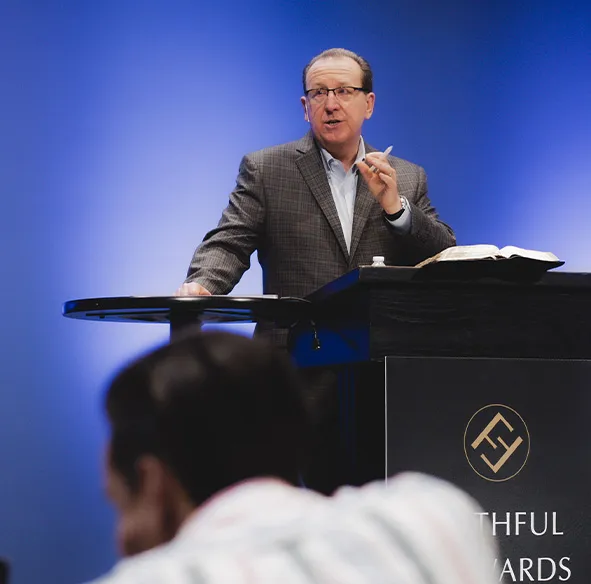
The preaching of God’s Word is central to the life of the church. Tom's pulpit ministry is dedicated to providing clear, biblical teaching to equip believers, strengthen faith, and exalt Christ.


Engage with the most recent teaching from God’s Word.
The preaching of God's Word is central to worship and of the utmost importance for the sanctification of every believer in Christ.

.jpg)
.jpg)

Explore messages organized to help you grow in Christ.
Search and filter sermons for quick access.
Wolves in the Pulpit - Part 1
Tom Pennington's sermon "Wolves In The Pulpit (Part 1)" delves into Jesus' warning in Matthew 7:15-20 about false prophets, describing them as "ravenous wolves" in "sheep's clothing." This pivotal message from the Sermon on the Mount underscores an ever-present danger throughout biblical history and into the modern era. A false prophet, or "pseudoprophet," claims divine authority but delivers messages rooted in their own deception, often influenced by Satan. These individuals subtly infiltrate the church, introducing destructive heresies. Pennington identifies key characteristics: they promote false sources of authority, teach a distorted Christ or gospel (evident in groups like Mormonism or Jehovah's Witnesses), encourage moral license, or conversely, enforce legalism and asceticism. Most notably, false prophets consistently tell people what they want to hear, sidestepping uncomfortable truths about sin, judgment, and the rigorous demands of discipleship, thereby fostering a false sense of security. Though true believers cannot be led into damning error, Jesus' warning emphasizes that false teaching can severely hinder spiritual growth, leading to confusion and instability. Therefore, constant vigilance is crucial for spiritual protection.
Living by the Compass, Not the Clock
Pastor Tom Pennington's seminar encourages listeners to live by "the compass, not the clock," prioritizing true importance over urgent demands. Citing Proverbs 14:8, he contrasts the wise person who reflects on life patterns with the fool who lives in self-deception. He challenges listeners to honestly assess their priorities versus actual effectiveness, noting that many neglect what they deem most important. Pennington stresses life's brevity, urging intentional living rather than being swept along by daily busyness or excessive media consumption. He offers biblical arguments for an ordered life: God plans, Scripture encourages human planning, and orderliness is an elder qualification. The foundation for this life is a clear "destination" � a written set of personal goals or resolutions, exemplified by Jonathan Edwards. He provides a workshop process to create these, including dedicated reflection time. Central priorities, based on Matthew 22:37-39, are to love God entirely and love one's neighbor as oneself. Loving God manifests in immersing oneself in His Word and caring for His people. Loving others means prioritizing relationships and scheduling intentional actions. Practical tools include weekly and annual self-evaluation, using a planner, and breaking down objectives into manageable tasks.
The Birth Announcement of God's Son - Part 2
Pastor Tom Pennington's sermon "The Birth Announcement of God's Son (Part 2)" from Luke 2:8-20 details God's grand plan to reveal Jesus' birth. Unlike His quiet arrival, God orchestrated the greatest birth announcement, delivered to an unlikely audience: humble, despised shepherds. An angel, radiating God's glory, brought "good news of great joy for all people," announcing the birth of "a Savior, who is Christ the Lord," in Bethlehem, fulfilling prophecy. This Savior's mission is to rescue humanity from slavery to Satan, God's righteous wrath, and the guilt of sin, a spiritual deliverance promised since Genesis and detailed by Isaiah. Jesus is identified as "Christ" (the Anointed Messiah�King, Priest, Prophet) and "Lord" (Kurios/YAHWEH�God Himself), emphasizing His divine nature essential for salvation. A sign of His identity was finding Him wrapped in cloths, lying in a manger. Suddenly, a multitude of heavenly hosts appeared, praising God with "Glory to God in the highest, and on earth peace among men with whom He is pleased," signifying peace with God granted through His sovereign grace.
The Birth Announcement of God's Son - Part 1
Tom Pennington's sermon, "The Birth Announcement of God's Son," contrasts the elaborate, formal announcements of royal births with Jesus' humble, unnoticed arrival. While human royalty's births are meticulously observed, God orchestrated the "greatest birth announcement" for His Son. Significantly, God chose an "unlikely audience"�despised shepherds�to receive this momentous news, bypassing powerful Roman and Israelite leaders. This choice reflects God's consistent method of selecting the humble and weak, ensuring only He receives glory. An angel, accompanied by the blinding "glory of the Lord," appeared to these terrified shepherds, proclaiming: "Do not be afraid; for behold, I bring you good news of great joy which will be for all the people; for today in the city of David there has been born for you a Savior, who is Christ the Lord." This "good news" (gospel) signifies spiritual salvation, offering "great joy" universally to all people, both Israel and Gentiles. The name Jesus, meaning "Yahweh saves," encapsulates His divine purpose: to rescue individuals from their sins and the eternal judgment they deserve. God initiates this rescue, appealing to sinners to be reconciled to Him, as Jesus came specifically as the Savior, not merely a moral teacher or social reformer.
The Light of the World
Tom Pennington's Christmas sermon connects the ubiquitous holiday lights to Jesus' profound claim, "I am the Light of the world; he who follows Me will not walk in the darkness, but will have the Light of life" (John 8:12). Delivered amidst the Feast of Tabernacles' grand candelabra, this declaration carries several critical implications. Firstly, Jesus reveals that the entire world exists in spiritual darkness, marked by ignorance of truth and a state of sin and rebellion against God. Secondly, He positions Himself as the exclusive source of absolute truth and moral purity, thereby claiming equality with God and fulfilling messianic prophecies. To follow Jesus means acknowledging one's inherent spiritual darkness, being willing to abandon sin and self-reliance, and believing solely in His redemptive work on the cross. This belief entails not just intellectual assent but a submission of one's will to Him as Savior and Lord. In return, Jesus promises those who follow Him "the Light of life," offering spiritual guidance, moral purity, and eternal life. The festive lights of Christmas should serve as a powerful reminder of this transformative invitation.
Q & A
Pastor Tom Pennington hosted an open mic Q&A session at Countryside Bible Church, addressing various theological and personal questions. Regarding Lazarus's four days in the grave, Pennington noted Scripture is silent but speculated his soul, as a believer, was likely present with the Lord, potentially experiencing a glimpse of heaven before his temporary resurrection. When asked about Catholicism, he identified two primary distinctions from evangelical Protestantism: the source of authority (Catholicism emphasizes Church interpretation alongside Scripture, while Protestants uphold Scripture alone) and the basis of salvation (faith plus works in Catholicism versus justification by faith alone). He also explained Bible translation philosophies, recommending formal equivalence (word-for-word, e.g., NASB, ESV) over dynamic equivalence (thought-for-thought) for accuracy in personal study. To foster anticipation for eternity, Pennington encouraged "numbering our days" to live with purpose and understanding that heaven is a temporary state, a "halfway house," before believers inhabit the new heaven and new earth, where righteousness will dwell and work will be fulfilling. He expressed concern over the United Methodist Church's decline, attributing it to liberalism eroding confidence in biblical authority and the gospel itself.
No Results Found.
We couldn’t find anything matching your search.
Explore The Word Unleashed
Our ministry brings together expository preaching, theological precision, and practical application for the good of Christ's church and the daily living of Christ's people.
.webp)
Sermons
Listen to expository sermons that clearly teach God’s Word and guide you in daily living.

Radio
Tune in to gospel-centered programs that share biblical truth and strengthen your daily walk with Christ.
Training
Join courses and workshops designed to deepen your faith and equip you to serve others with biblical wisdom.
.webp)
From the Pastor's Desk
Read pastoral messages that encourage, instruct, and help you apply God’s Word to every part of your life.
.webp)
Hymns
Discover timeless hymns that lift your heart in worship and remind you of God’s abounding grace and faithfulness.
Podcasts
Stay rooted in Scripture through our podcast series.