Sermons That Exalt Christ
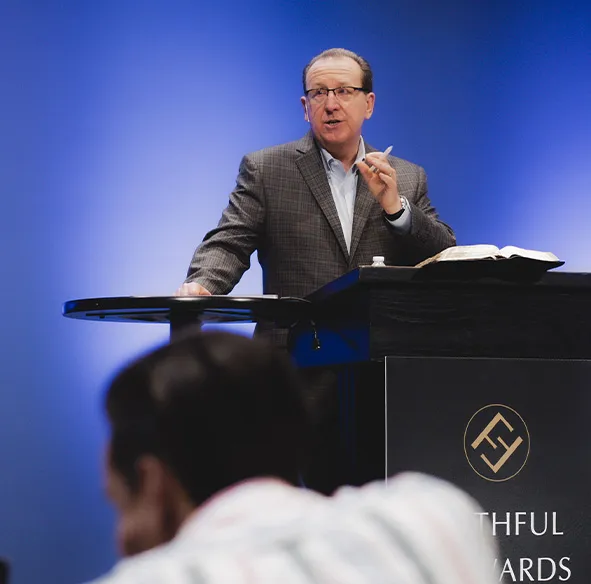
The preaching of God’s Word is central to the life of the church. Tom's pulpit ministry is dedicated to providing clear, biblical teaching to equip believers, strengthen faith, and exalt Christ.


Engage with the most recent teaching from God’s Word.
The preaching of God's Word is central to worship and of the utmost importance for the sanctification of every believer in Christ.

.jpg)
.jpg)

Explore messages organized to help you grow in Christ.
Search and filter sermons for quick access.
Concerning His Son
The sermon centers on the pivotal question, "Who do you say Jesus is?" and highlights that Paul's letter to the Romans presents the gospel as good news fundamentally about Jesus Christ. This gospel, originating from God and confirmed by Old Testament prophecies, is inextricably linked to God's Son. Jesus possesses a divine nature, being the eternal Son of God, fully equal to the Father, with the Holy Spirit completing the Trinity�all integral to the gospel. Concurrently, He embodies a human nature, born as a descendant of David "according to the flesh," fulfilling Messianic prophecies through both Joseph and Mary, thus establishing Him as the unique God-man. His ultimate vindication came through His powerful resurrection, which "declared" Him the Son of God, acting as His coronation from humiliation to exaltation, solidifying His divine authority. His identity as "Jesus Christ our Lord" encompasses His role as human savior, anointed Messiah, and sovereign Master. Genuine salvation necessitates believing in this complete biblical truth of Jesus�His preexistence, incarnation, atoning death, resurrection, and coronation�and submitting to Him as Lord, for a faith not centered on Christ is not true Christianity.
The Gospel of God
Pastor Tom Pennington's sermon on Romans 1:1c-3a underscores the urgent need to grasp the true biblical gospel amidst prevalent distortions. He highlights Paul's letter to the Romans as crucial, given Paul was "set apart for the gospel of God." The "gospel," meaning "good news," is God's profound message of reconciliation for fallen humanity through Jesus Christ. It offers pardon, restoration, and eternal life, received solely by grace through repentance and faith in Jesus. Pennington explains this gospel is presented as an announcement to be believed, an invitation to be accepted, and a command to be obeyed ("repent and believe"). Crucially, the gospel originates entirely from God, demonstrating His gracious character and absolute exclusivity�there is no other path to salvation. This divine plan, an eternal purpose, was consistently promised and confirmed by the Old Testament prophets, making the New Testament gospel the perfect fulfillment of ancient prophecies. Ultimately centered on Jesus Christ, it proclaims God's completed work for humanity, contrasting sharply with human-effort-based religions.
A Called Apostle
In this sermon on Romans 1:1, Tom Pennington examines Paul�s credential as a "called apostle," refuting modern claims of apostolic succession found in movements like the New Apostolic Reformation. Pennington argues that while the Greek word *apostolos* can simply mean a messenger, the biblical *office* of an apostle refers to Christ�s unique, authorized proxies. Pennington outlines four non-negotiable qualifications for this office: one must be personally chosen by Christ, taught directly by Him, be an eyewitness to His resurrection, and possess the ability to perform miraculous signs. Paul met these criteria through divine revelation and his Damascus Road encounter. Consequently, Pennington asserts that the apostolic office was a temporary, foundational gift to the church that no one qualifies for today. The sermon concludes by connecting Paul�s apostolic authority to the text of Romans. Since Paul is Christ�s chosen representative, his writings are not merely human opinions but the binding Word of God. Therefore, believers must submit to the book of Romans as if Jesus Himself were speaking.
The Man on the Second Cross
Pastor Tom Pennington's sermon "The Man on the Second Cross" (Luke 23:39-43) highlights the salvation of a repentant criminal as a profound illustration of God's instantaneous saving grace. This man was not just a common thief but a violent revolutionary and murderer, deserving crucifixion and eternal judgment for his heinous acts and rebellion against God. Despite his vile past, the Holy Spirit brought about a radical transformation. The criminal's change manifested as genuine repentance: acknowledging his deep sinfulness, the justice of his punishment, and Jesus's perfect innocence. This was coupled with saving faith, as he recognized Jesus as his rightful King, placed his hope in Him, and pleaded for mercy, "Jesus, remember me when You come in Your kingdom!" Jesus's immediate and certain response � "Truly I say to you, today you shall be with Me in Paradise" � powerfully demonstrates salvation by grace alone, through faith alone, in Christ alone, without good works. The two criminals illustrate humanity's only two responses to Christ: either rejecting Him and facing judgment, or repenting and believing to receive comprehensive forgiveness and eternal life in heaven.
Why Romans Matters - Part 3
The text discusses a significant cultural shift from respecting traditional authorities to a modern environment where everyone claims expertise, which has eroded the perception of spiritual authority. In contrast, the first-century church recognized clear divine authority, stemming from Christ, His apostles, and elders teaching scripture. Paul begins his letter to the Romans by asserting his unique, God-given authority, identifying himself as a "doulos," or "slave of Christ Jesus." This term "doulos" signifies complete ownership and submission, rather than merely being a hired servant. For all genuine believers, being a "slave of Christ" means their lives, bodies, time, and decisions are not their own but belong entirely to Jesus, who redeemed them from the cruel mastery of sin. For Paul, "doulos of Christ" also functions as a specific title, akin to Old Testament prophets, indicating he is God's special spokesman. Therefore, his words in Romans carry divine authority; to reject them is to reject God Himself, necessitating that readers approach the letter's challenging truths with appropriate submission and reverence.
Why Romans Matters - Part 2
This sermon initiates a deep study of Romans 1:1-7, highlighting its foundational significance. Pastor Tom Pennington explains that Paul, writing from Corinth at the end of his third missionary journey, addressed churches he hadn't founded to secure their support for his planned mission to Western Europe (Spain). His main objectives were to glorify God, establish Roman Christians in the gospel, and enlist them as partners. The letter's theological depth ensured Romans understood the gospel he preached. The opening verses are critical for Paul to establish his apostolic credentials. The sermon emphasizes why "Paul wrote it" makes Romans so vital, detailing his biography. Born Saul in Tarsus as a wealthy, Roman citizen and a "Hebrew of Hebrews," he was educated under Gamaliel in Jerusalem, becoming a zealous Pharisee. He fiercely persecuted Christians, consenting to Stephen's death and torturing believers. However, his dramatic conversion outside Damascus transformed him from Christianity's greatest enemy into its greatest proponent, a "slave of the Messiah, Jesus." This profound change underscores God's sovereignty in salvation, His limitless power to save any sinner, the historical truth of Christ's resurrection (which Paul witnessed), and the gospel's inherent transforming power, a message Paul boldly proclaimed.
No Results Found.
We couldn’t find anything matching your search.
Explore The Word Unleashed
Our ministry brings together expository preaching, theological precision, and practical application for the good of Christ's church and the daily living of Christ's people.
.webp)
Sermons
Listen to expository sermons that clearly teach God’s Word and guide you in daily living.

Radio
Tune in to gospel-centered programs that share biblical truth and strengthen your daily walk with Christ.
Training
Join courses and workshops designed to deepen your faith and equip you to serve others with biblical wisdom.
.webp)
From the Pastor's Desk
Read pastoral messages that encourage, instruct, and help you apply God’s Word to every part of your life.
.webp)
Hymns
Discover timeless hymns that lift your heart in worship and remind you of God’s abounding grace and faithfulness.
Podcasts
Stay rooted in Scripture through our podcast series.