Sermons That Exalt Christ
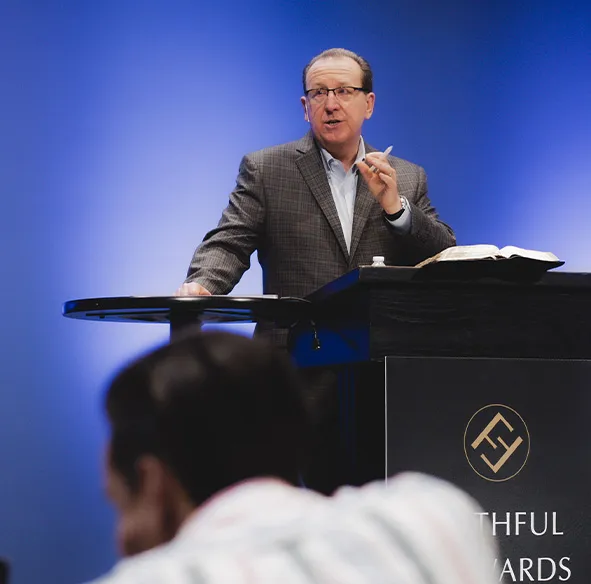
The preaching of God’s Word is central to the life of the church. Tom's pulpit ministry is dedicated to providing clear, biblical teaching to equip believers, strengthen faith, and exalt Christ.


Engage with the most recent teaching from God’s Word.
The preaching of God's Word is central to worship and of the utmost importance for the sanctification of every believer in Christ.

.jpg)
.jpg)

Explore messages organized to help you grow in Christ.
Search and filter sermons for quick access.
Ecclesiastes: A Biblical Philosophy of Life
Tom Pennington's sermon explores Ecclesiastes, presented as a divinely inspired philosophy for living in a fallen world, authored by Solomon late in life after his repentance. He refutes common interpretations that suggest the book reflects man's wisdom apart from God or the vanity of life without Him. Instead, Pennington argues Ecclesiastes reveals life's vanity *even for believers* and provides a grid for seeing life realistically. The sermon highlights two major, recurring themes: 1. **Life is a gift from God to be enjoyed:** Solomon urges readers to celebrate life's blessings�eating, drinking, labor, relationships�as gifts from God, within the boundaries of His law, and without cynicism, despite dark days. 2. **Life has serious limitations:** Solomon uses terms like "vanity" (breath, vapor) and "chasing after wind" to describe life's fleeting, often incomprehensible, and ultimately unsatisfying nature. These limitations stem from humanity's fall into sin, making the world "crooked and lacking." Examples include temporary accomplishments, rivalry in work, and the inability to know life's mysteries or the future. The ultimate conclusion from these twin realities is found in Ecclesiastes 12:13: "Fear God and keep His commandments.
Creation in Six Days
Countryside Bible Church is initiating a sermon series on its "distinctives," core biblical beliefs that differentiate it within contemporary Christian culture. The first distinctive discussed is "Creation in Six Days," where Pastor Tom Pennington emphasizes the church's firm adherence to the historic Christian doctrine of *creatio ex nihilo*�God creating everything from nothing in six literal, consecutive 24-hour days. This long-held view by early church fathers, reformers, and puritans for 1700 years is contrasted with modern theories. The sermon explicitly rejects attempts to reconcile Genesis with evolutionary science, such as the gap, pictorial day, day-age, and literary framework theories. The church affirms that God personally created all things by divine command, immediately forming distinct "kinds" that reproduce after their own, and that this occurred relatively recently (thousands of years ago, not billions), supported by Genesis genealogies and thorough linguistic analysis of the Hebrew word for "day." Denying this literal creation account, the pastor warns, fundamentally undermines the integrity of the entire Bible, opening the door to allegorizing other passages and ultimately attacking the reliability of all Scripture, including the gospel itself, as many crucial doctrines and New Testament teachings (including Christ's own words) are rooted in a historical Genesis.
Beloved of God
Tom Pennington�s sermon, "Why Romans Matters," explores the profound significance of Paul's opening greeting in Romans 1:1-7, highlighting three key reasons for the letter's enduring importance. First, it matters because Paul, an apostle of Christ, wrote it, making its content divinely authoritative. Second, Romans is crucial as it unveils the gospel of God�the good news concerning His Son, Jesus Christ, confirmed by His powerful resurrection, which brings about the obedience of faith among all people. Finally, the letter�s relevance lies in its intended audience. While addressed to specific first-century Roman churches, it speaks to all true believers across time who share common spiritual characteristics. These include being effectually called by God to belong to Jesus Christ, being recipients of God's unique, eternal, adopting love�a sovereign choice not based on human merit, but as intense as His love for Christ�and being definitively set apart as "saints," consecrated to God's service. Paul concludes his greeting by praying for "grace and peace" from God the Father and the Lord Jesus Christ, emphasizing God's undeserved goodness and ongoing blessings, all flowing through Christ�s redemptive work.
Called by God
This sermon on Romans 1:6-7 by Tom Pennington highlights the significance of Paul's letter due to its author, its central theme (the gospel), and especially its intended audience. Paul wrote to a diverse group of early believers in Rome, predominantly Gentiles, whose faith originated from converts at Pentecost and navigated challenges like the expulsion of Jews under Emperor Claudius, shaping the church's unique composition. Beyond this historical context, the message emphasizes a shared spiritual identity with these Roman Christians, who are described as "the called of Jesus Christ," "beloved of God," and "called as saints." The core teaching focuses on the "effectual call"�God's sovereign, powerful, and irresistible act of drawing chosen individuals to Himself through the gospel message, fundamentally distinct from the general invitation to believe. As highlighted in John 6:44, "No one can come to Me unless the Father who sent Me draws him," illustrating that God initiates and enables genuine faith, transforming desires and leading to salvation. This humbling truth underscores that our salvation is not based on our works but entirely on God's grace, leading believers to live lives worthy of Him and proclaim His excellencies to others.
The Obedience of Faith
This sermon on Romans 1:5 introduces "the obedience of faith" by contrasting a rejected presidential pardon with God's sovereign call to salvation, which demands acceptance. Paul�s letter emphasizes that the gospel originates from God, is confirmed by Scripture, and centers on Jesus Christ�His divine and human nature, and His vindication through resurrection. The core of the gospel, according to Paul, demands a response: "the obedience of faith." This phrase means that faith is an initial act of obedience to God's command to believe, and critically, genuine saving faith *always* produces a consistent life pattern of obedience to Christ. This obedience is presented as the "pulse" or vital sign of spiritual life, not the means of earning salvation. If there is no discernible pattern of obedience, genuine faith is absent. Beyond the personal response, the sermon highlights that the gospel is God's universal message for "all the Gentiles" or nations. This calls believers to engage in global missions and personal evangelism, reflecting God's ancient plan to reach all peoples.
But God!
This sermon, departing from a study of Romans, delves into Ephesians 2:1-10 to underscore that "salvation is entirely a work of God from beginning to end." It first paints a bleak picture of humanity's pre-conversion state (Ephesians 2:1-3): we were spiritually dead, enslaved by our trespasses and sins, conformed to the world and the devil, driven by our fleshly desires, and ultimately, "children of wrath." This condition highlights our utter helplessness and inability to rescue ourselves or contribute to our salvation. However, the sermon pivots on the powerful phrase "But God" (Ephesians 2:4), which introduces four crucial lessons about salvation. First, salvation is a **divine initiative**; God always seeks out lost sinners. Second, it's a **sovereign act**, a "monergistic" work where God alone effects our rescue, making human effort futile. Third, it represents a **comprehensive rescue**, delivering us from spiritual death, sin, enslavement, and most importantly, from God�s just wrath. Finally, "But God" ensures **future certainty**, guaranteeing that God, who began the work of salvation, will faithfully complete it to His glory. This profound truth of God's complete and costly rescue in Christ is what believers celebrate.
No Results Found.
We couldn’t find anything matching your search.
Explore The Word Unleashed
Our ministry brings together expository preaching, theological precision, and practical application for the good of Christ's church and the daily living of Christ's people.
.webp)
Sermons
Listen to expository sermons that clearly teach God’s Word and guide you in daily living.

Radio
Tune in to gospel-centered programs that share biblical truth and strengthen your daily walk with Christ.
Training
Join courses and workshops designed to deepen your faith and equip you to serve others with biblical wisdom.
.webp)
From the Pastor's Desk
Read pastoral messages that encourage, instruct, and help you apply God’s Word to every part of your life.
.webp)
Hymns
Discover timeless hymns that lift your heart in worship and remind you of God’s abounding grace and faithfulness.
Podcasts
Stay rooted in Scripture through our podcast series.