Sermons That Exalt Christ
The preaching of God’s Word is central to the life of the church. Tom's pulpit ministry is dedicated to providing clear, biblical teaching to equip believers, strengthen faith, and exalt Christ.

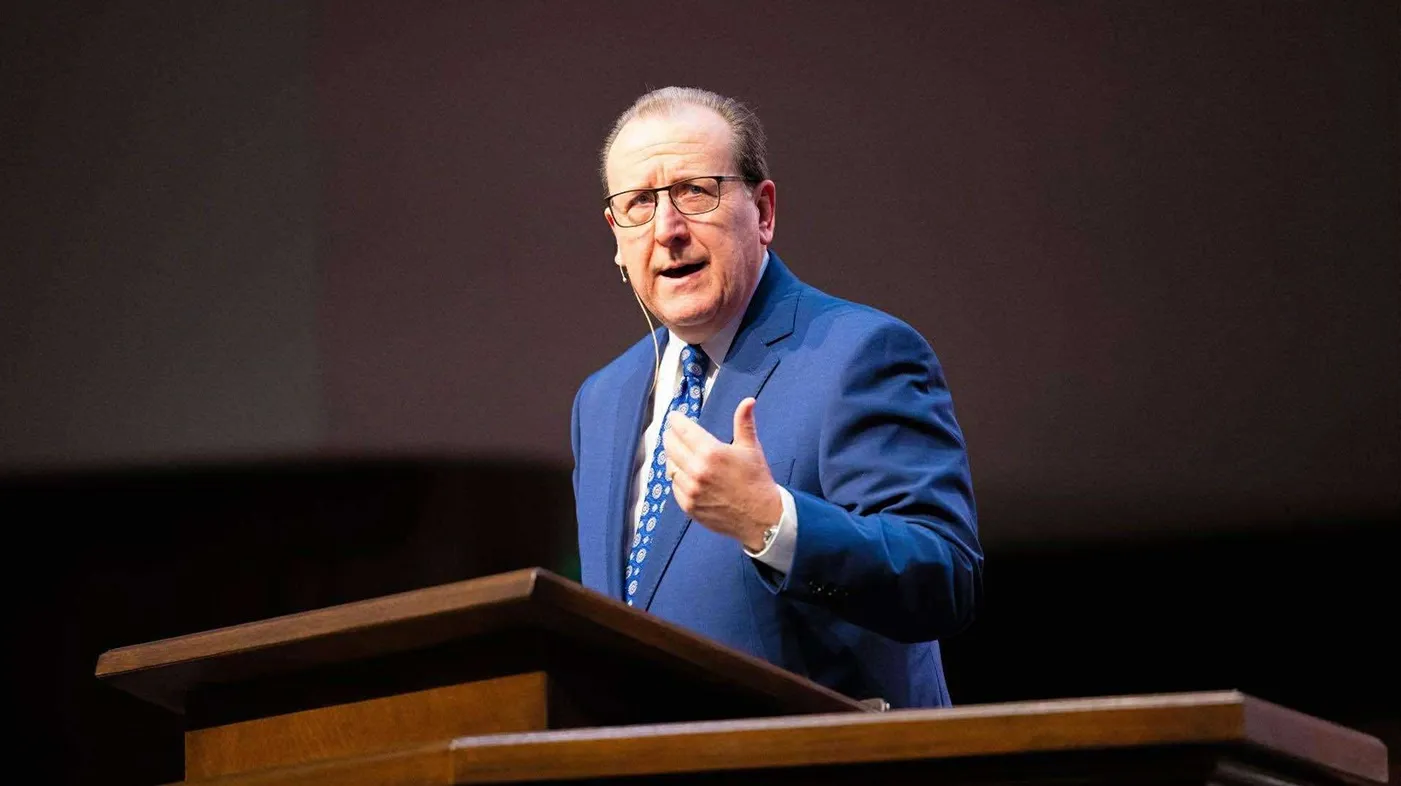
Engage with the most recent teaching from God’s Word.
The preaching of God's Word is central to worship and of the utmost importance for the sanctification of every believer in Christ.

.jpg)
.jpg)

Explore messages organized to help you grow in Christ.
Search and filter sermons for quick access.
Mighty to Save!
The sermon, "Mighty to Save!" from Mark 5:1-20, questions if Jesus can change the "worst sinner," affirming that no one is beyond His power. It first illustrates sin and Satan's enslaving power through the demon-possessed Gerasene man�violent, self-destructive, living among tombs, and beyond human control. This man's dire condition symbolizes humanity's spiritual slavery to sin, which, though varying in degree, is equally hopeless without Christ. Next, Jesus's saving power is revealed. A "legion" of demons inhabiting the man acknowledges Jesus as "Son of the Most High God." Jesus casts them into a nearby herd of 2,000 pigs, which drown, demonstrating His absolute authority over evil and profound value for human life over material loss. Responses to this miracle differ significantly. The local populace, frightened by Jesus's power and the disruption to their livelihoods, implore Him to leave, unwilling to accept the costly changes His presence demands. Conversely, the newly freed man, desiring to stay with Jesus, is instead commissioned to evangelize his own people, proclaiming "what great things the Lord has done for you and how He had mercy on you.
A Case for Cessationism - Part 1
Pastor Tom Pennington outlines his church's distinctive position of cessationism, asserting that miraculous spiritual gifts like tongues, prophecy, and healing are no longer normatively given by the Holy Spirit today. He contrasts this with continuationism, the belief that these gifts persist or have been restored in the modern charismatic movement. Pennington critiques the charismatic movement's questionable historical origins, noting that a significant portion of its global adherents embrace false gospels (like the Prosperity Gospel) or reject fundamental Christian doctrines. He clarifies that cessationism does not deny God's ongoing miraculous work or His ability to intervene, but rather holds that the *regular distribution* of specific spiritual gifts ceased after the Apostolic Age. Pennington refutes common continuationist arguments before presenting two key biblical cases for cessationism. First, miracles historically served a unique purpose: to authenticate God's divinely appointed messengers (like Moses, prophets, Jesus, and the Apostles) and validate new divine revelation. These miracle-working periods were brief and ceased once the revelation was complete. Second, the gift of apostleship, a temporary office requiring a witness to the resurrected Christ, personal appointment, and the ability to perform miracles, demonstrably ceased.
The Sufficiency of Scripture
Countryside Bible Church's distinctive firmly upholds the complete sufficiency of Scripture for spiritual life and sanctification, rejecting the integration of secular psychology. Pastor Tom Pennington details how evangelicalism, influenced by figures like Clyde Narramore and later Minirth-Meier, began incorporating psychology in the mid-20th century, based on the belief that "all truth is God's truth" and that the Bible alone is insufficient for complex human problems. The church denies that secular psychology provides a more accurate understanding of human issues or plays any legitimate role in a believer's sanctification. Detrimental effects of this integration include redefining sin as sickness, reclassifying sinners as victims, outsourcing pastoral counseling, applying secular therapies to spiritual problems, over-relying on psychotropic drugs, and proliferating self-help materials and secular-style support groups. While acknowledging a limited descriptive role for psychology and a medical role for psychiatry in treating *organic* issues, psychotropic drugs are seen only as behavior management, not solutions for spiritual problems. Countryside affirms that man's problems are either physical, spiritual, or a combination, with spiritual problems rooted in sin. The Holy Spirit effects true spiritual change *only* through the understanding, application, and obedience of God's Word.
The Role of Women in the Church
Countryside Bible Church is clarifying its core beliefs, or "distinctives," on divisive issues, including the role of women in the church. The church affirms the historic Christian position, known as complementarianism, which holds that men and women are spiritually equal, made in God's image, but are assigned distinct, God-ordained roles. This contrasts with egalitarianism, which believes men and women can occupy any functional role. The church's distinctive states that Scripture forbids women from teaching or leading men, or exercising authority over them in the context of the church. This command is rooted in the created order (Adam created first) and the fall (Eve was deceived), not cultural conditions, as evidenced in passages like 1 Timothy 2:11-12. While women are encouraged to teach other women and children, and contribute significantly in many church ministries, the elders of the church must be biblically qualified men. Men are called to embrace spiritual leadership in the home and church, doing so with love and sacrifice, always honoring women as their complete spiritual equals, and never becoming domineering. Countryside Bible Church emphasizes adherence to God's clear Word on this matter, irrespective of cultural or broader evangelical trends.
A Friend of Jesus!
This sermon delves into the universal human longing for friendship, tracing its origin to humanity's creation in the relational image of the triune God. While sin severed this original intimacy, Jesus astonishingly declares to all true followers, "You are My friends" (John 15:14), a profound privilege previously reserved for a select few. Being Jesus' friend doesn't negate our position as His "slaves," but signifies an intimate relationship where He no longer *merely* views us as servants. He confides in us, sharing His Father's plans and thoughts, elevating us to a level of trust and even promising to serve us, His guests. This friendship entails specific duties: we are to obey His commands, not to earn His friendship, but as a demonstration of our genuine discipleship and love. We must also love one another, reflecting Jesus' own love and care for His friends. Furthermore, we are appointed to "go and bear fruit that remains," meaning to make new disciples, driven by a desire to introduce others to this wonderful friend.
The Reality of a Changed Life
Countryside Bible Church's distinctive, "The Reality of a Changed Life," asserts that genuine salvation fundamentally transforms individuals. Rejecting "No-lordship salvation" popularized in the 20th century by figures like Chafer and Ryrie, which suggests one can be saved without committing to Christ's Lordship or manifesting a changed life, the church upholds the historic Christian view. This distinctive affirms that all truly saved individuals become new creations in Christ, experiencing spiritual rebirth and resurrection. This regeneration enables a new mind, affections, and a will to obey God. Salvation requires both faith and repentance � a turning from sin and rebellion towards God. These are not human works but gifts from God. True saving faith isn't mere mental assent; it encompasses knowledge, intellectual agreement, and a volitional trust in Christ, accepting Him as Lord. While Christians still struggle with sin, their lives will be characterized by a decreasing pattern of sin and an increasing pattern of holiness, demonstrating submission to Christ and obedience to God�s Word. This doctrine is vital to presenting an unadulterated gospel, preventing false assurance, and honoring Jesus Christ as Lord.
No Results Found.
We couldn’t find anything matching your search.
Explore The Word Unleashed
Our ministry brings together expository preaching, theological precision, and practical application for the good of Christ's church and the daily living of Christ's people.
.webp)
Sermons
Listen to expository sermons that clearly teach God’s Word and guide you in daily living.

Radio
Tune in to gospel-centered programs that share biblical truth and strengthen your daily walk with Christ.
Training
Join courses and workshops designed to deepen your faith and equip you to serve others with biblical wisdom.
.webp)
From the Pastor's Desk
Read pastoral messages that encourage, instruct, and help you apply God’s Word to every part of your life.
.webp)
Hymns
Discover timeless hymns that lift your heart in worship and remind you of God’s abounding grace and faithfulness.
Podcasts
Stay rooted in Scripture through our podcast series.