Sermons That Exalt Christ
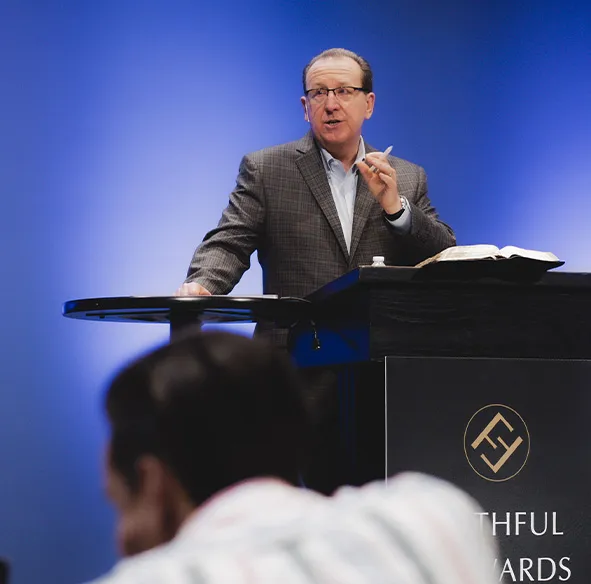
The preaching of God’s Word is central to the life of the church. Tom's pulpit ministry is dedicated to providing clear, biblical teaching to equip believers, strengthen faith, and exalt Christ.


Engage with the most recent teaching from God’s Word.
The preaching of God's Word is central to worship and of the utmost importance for the sanctification of every believer in Christ.

.jpg)
.jpg)

Explore messages organized to help you grow in Christ.
Search and filter sermons for quick access.
Why Romans Matters - Part 1
This text introduces a multi-year study of the Apostle Paul's Letter to the Romans, emphasizing its unparalleled significance in the New Testament and its profound impact throughout church history, influencing figures like Augustine, Martin Luther, and John Wesley. Paul authored the letter, dictating it to Tertius around 56-57 AD from Corinth, at the close of his third missionary journey. The central theme of Romans is "the gospel of God," or "justification by faith alone," serving as Paul's comprehensive articulation of Christian doctrine. The letter systematically unfolds this gospel, beginning with humanity's universal depravity and need for divine righteousness (chapters 1-4). It then explores the transformative effects of justification and the believer's secure standing in Christ (chapters 5-8), defends God's faithfulness to Israel and His sovereign election (chapters 9-11), and applies gospel truths to practical Christian living (chapters 12-15). Paul wrote Romans for three primary reasons: to establish the Roman church as a supportive base for his intended missionary expansion into Spain, to spiritually minister to and stabilize the Roman believers in their faith, and most importantly, to bring ultimate glory to God through the proclamation of the gospel, leading all nations to the obedience of faith.
The End of the Story
Pastor Tom Pennington addresses the controversial "long ending" of Mark's Gospel (16:9-20), explaining that it is widely considered not part of the original text by scholars, as evidenced by its absence in the oldest and most significant ancient manuscripts. He reassures listeners of the Bible's overall reliability, citing the vast number and early dating of biblical manuscripts compared to other ancient literature, and noting that 99% of the text is confirmed accurate, with any variations transparently footnoted. While the long ending is deemed inauthentic�with the abrupt ending at Mark 16:8 being the most probable original intent, urging readers to confront the resurrection�Pennington emphasizes that its content largely aligns with other inspired New Testament passages, although it shouldn't be used to establish doctrine. He then highlights two major lessons from Mark's Gospel: first, the undeniable nature of Jesus as the Messiah and Son of God, confirmed by Mark, God, demons, Jesus himself, and even His enemies. Second, the fundamental reason Jesus came: to die. Mark's Gospel dedicates significant space to the Passion Week, culminating in Jesus's declaration in Mark 10:45 that He came "to give His life a ransom for many," underscoring His necessary, voluntary, sacrificial, redemptive, and substitutionary atonement.
A Virtual Tour of the Sermon on the Mount
The Sermon on the Mount (Matthew 5-7) serves as Jesus' comprehensive guide to righteous living within His spiritual kingdom, delivered to His disciples and surrounding crowds. It outlines the **character** of kingdom citizens through the Beatitudes: poor in spirit, mourning sin, meek, hungering for righteousness, merciful, pure in heart, peacemakers, and those persecuted for Christ's sake. This character fosters their **influence** as salt and light, preserving and illuminating the world through their lives, good works, and gospel proclamation. The core of the sermon details **kingdom righteousness**, emphasizing a right relationship with Scripture, God, and others. Jesus fulfilled the Old Testament, which holds permanent divine authority, demanding obedience from the heart, not mere externalism like the Pharisees. This includes dealing with anger and lust, practicing radical truthfulness, shunning revenge, and loving enemies. A right relationship with God means pursuing His glory over personal ambition and His kingdom over materialism, trusting Him for all needs. With others, it involves grace and humility towards fellow believers, discernment with antagonistic unbelievers, and applying the "Golden Rule"�treating others as one wishes to be treated.
Do I Ever Please God?
This sermon explores whether anyone can truly please God, distinguishing between unregenerate individuals and believers. Before conversion, an unbeliever cannot perform any work that pleases God. Even their seemingly good or righteous deeds are considered "filthy garments" (Isaiah 64:6) and sinful, stemming from a heart in rebellion against God and lacking true faith or the motive of His glory, as Romans 8 unequivocally states. After conversion, however, believers *can* perform works that God considers good, righteous, and pleasing. These "good works" are defined as sincere obedience to God's clear commands in Scripture, not man-made rules or legalistic additions. God accepts these works not because they are flawless, but in His grace, due to the believer's union with Christ, Christ's continuous intercession, and the Holy Spirit's enabling work within them. While justification is secure, a believer's choices affect God's disposition as a loving Father: sin displeases Him and may incur fatherly discipline, whereas sincere, albeit imperfect, obedience delights Him. God, as a compassionate Father, is pleased with His children's genuine efforts to obey Him out of love and gratitude.
The Parable of the Two Builders - Part 2
Pastor Tom Pennington concludes his two-and-a-half-year study of the Sermon on the Mount with the Parable of the Two Builders (Matthew 7:24-27). He shares his powerful personal testimony of living in self-deception for years, making multiple professions of faith and exhibiting outward Christian behavior, until his genuine conversion at age 18. This passage is deeply significant to him, serving as a crucial warning against false profession, a danger he believes many face. The parable illustrates Jesus' warning about self-deception. Two men build houses that appear outwardly similar, symbolizing lives that look Christian. The wise builder digs deep, laying his foundation on solid rock, while the foolish builder builds on sand. An inevitable storm, representing God�s final judgment, reveals the true nature of each foundation. The house built on rock stands firm, while the one on sand collapses. The "rock" represents hearing Jesus' words and consistently acting on them, demonstrating genuine, heart-level submission to His Lordship. It's not merely intellectual knowledge, verbal profession, or even outwardly zealous service. Conversely, the "sand" signifies hearing Jesus' teaching but failing to consistently obey, a superficial profession without a heart truly committed to Him.
The Parable of the Two Builders - Part 1
Pastor Tom Pennington's sermon, "The Parable of Two Builders" from Matthew 7:24-27, underscores Jesus' warning against false profession, stressing the absolute importance of a genuine spiritual foundation. An analogy of a hurricane-proof home built on solid ground illustrates that true Christian life requires similar steadfastness. Jesus' parable contrasts two builders: a wise one who hears His words and acts on them, building on bedrock; and a foolish one who hears but disobeys, building on sand. While both houses initially appear alike, the "storm of God's judgment" reveals their true strength. Only the wise builder's house withstands the tempest, symbolizing a genuine faith demonstrated through obedience. The foolish builder's house collapses entirely, representing a deceptive profession that fails the ultimate test. The sermon clarifies that true saving faith has three components: knowledge of gospel facts (notitia), mental assent to their truth (assensus), and crucially, active trust in Jesus, leading to personal abandonment and obedient submission to His Lordship (fiducia). This radical submission and obedience are the sole validations of salvation, distinguishing authentic believers from those with mere historical or superficial faith. The sermon challenges listeners to examine whether their lives are truly characterized by this active, obedient trust in Christ.
No Results Found.
We couldn’t find anything matching your search.
Explore The Word Unleashed
Our ministry brings together expository preaching, theological precision, and practical application for the good of Christ's church and the daily living of Christ's people.
.webp)
Sermons
Listen to expository sermons that clearly teach God’s Word and guide you in daily living.

Radio
Tune in to gospel-centered programs that share biblical truth and strengthen your daily walk with Christ.
Training
Join courses and workshops designed to deepen your faith and equip you to serve others with biblical wisdom.
.webp)
From the Pastor's Desk
Read pastoral messages that encourage, instruct, and help you apply God’s Word to every part of your life.
.webp)
Hymns
Discover timeless hymns that lift your heart in worship and remind you of God’s abounding grace and faithfulness.
Podcasts
Stay rooted in Scripture through our podcast series.