Sermons That Exalt Christ
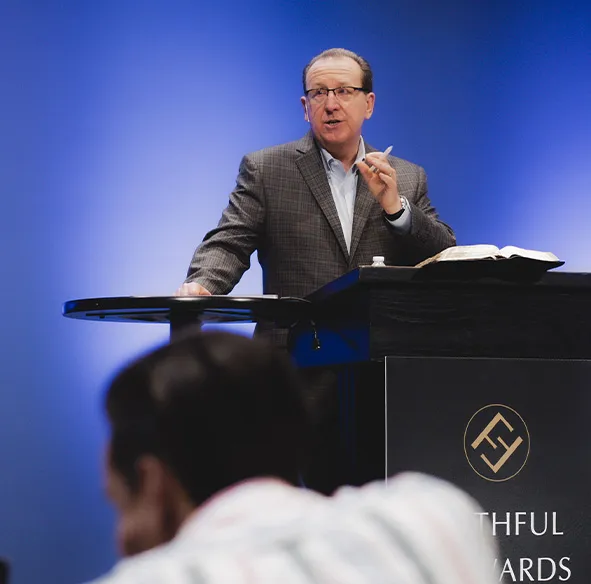
The preaching of God’s Word is central to the life of the church. Tom's pulpit ministry is dedicated to providing clear, biblical teaching to equip believers, strengthen faith, and exalt Christ.


Engage with the most recent teaching from God’s Word.
The preaching of God's Word is central to worship and of the utmost importance for the sanctification of every believer in Christ.

.jpg)
.jpg)

Explore messages organized to help you grow in Christ.
Search and filter sermons for quick access.
Under Yahweh's Wings - Part 2
This sermon, focusing on Ruth 1:22b-2:23, emphasizes God's protection and provision for those who seek refuge "under His wings," comparing them to baby birds finding security with their mother. It positions this section as "Act 3" of the Book of Ruth, following Elimelech's disastrous move to Moab and the subsequent deaths, and Naomi and Ruth's journey home where God converts Ruth from idolatry. God's divine providence is central, orchestrating Ruth's "chance" arrival at the field belonging to Boaz, a wealthy, righteous, and compassionate relative of Naomi. In the dark times of the Judges, Boaz stands out for his extraordinary kindness to Ruth, a foreign Moabitess. He ensures her safety, provides water, invites her to share meals, and instructs his workers to leave extra grain for her. Boaz's generosity stems from hearing about Ruth's spiritual transformation, her abandonment of her past, and her commitment to Yahweh, the God of Israel. The core lesson for believers is that God often cares for His people through the obedience and compassion of other righteous individuals. Christians are called to actively meet the needs of their fellow believers, demonstrating love through deeds like visiting the sick, providing food, and giving generously.
How to Love Your Wife
Pastor Tom Pennington's sermon "How to Love Your Wife," based on Ephesians 5:25-33, instructs Christian husbands on their primary responsibility. Beginning with the premise that the husband is the head, mirroring Christ's headship over the church, Pennington emphasizes that loving one's wife is an imperative, an act of will, and a constant habit, not merely an emotion. He illustrates this love through two pictures: Christ's treatment of the church and our treatment of our own bodies. First, love must be **sacrificial**, mirroring Christ giving Himself up for the church by prioritizing the wife's needs over personal desires and serving her daily. Second, it must be **sanctifying**, meaning husbands should prioritize their wife's spiritual well-being and growth in Christ-likeness, starting with their own spiritual leadership and protecting her from sin. The second picture reveals love as **nourishing**, providing for her physical and material needs, including food, clothing, and physical intimacy, much like one cares for their own body. Lastly, love must be **cherishing**, treating her with tenderness, affection, and gentleness, avoiding neglect, anger, or hurtful words, just as Christ cherishes the church.
I Object! - Part 3
This sermon introduces Paul�s "gospel of God" from Romans, explaining it encompasses both good news (reconciliation with God through Christ) and bad news (humanity's universal sinfulness and inability to save itself). When confronted with this truth, people either respond with brokenness and repentance (a rare, Spirit-led response) or, more commonly, with anger and rejection. In Romans 3:1-8, Paul addresses four common Jewish objections to this gospel, demonstrating how religious people often resist the idea of salvation by grace alone: 1. **Undermining God's integrity:** If Jewishness doesn't guarantee salvation, what's its advantage? Paul affirms its "great advantage" of being entrusted with God's oracles. 2. **Undermining God's faithfulness:** If many Jews disbelieve, does God's faithfulness to His promises fail? Paul asserts God is always faithful, even in judgment. 3. **Undermining God's justice:** If our sin highlights God's righteousness, is it unjust for Him to judge us? Paul counters that God must judge the world justly. 4. **Undermining God's holiness:** If salvation is by grace alone, does it encourage sin ("let us do evil that good may come")? Paul vehemently rejects this, calling it slander.
Battling Sexual Lust and Sin
Pastor Tom Pennington addresses the pervasive sin of sexual lust, rampant in our technological age, using 1 Corinthians 6:12-20. He emphasizes that while unrepentant sexual sin signifies one isn't a true Christian, believers still battle this universal temptation. Biblical change requires "putting off" sinful behaviors (even radical steps), "putting on" positive virtues (pursuing righteousness, faith, love, peace), and crucially, "renewing your mind" with God's Word. The core of renewal lies in understanding seven truths about our bodies. First, sexual lusts must never be rationalized; they are not Christian liberty but enslave us. Second, our bodies were made for Jesus Christ, not immorality. Third, our bodies are eternal, resurrected and transformed, so how we use them matters. Fourth, our body's members are members of Christ, meaning sexual sin unites Christ to that impurity, including mental lust through pornography. Fifth, sexual sin uniquely dishonors our body. Sixth, our body is indwelt by the Holy Spirit, making it a sacred temple; sinning is done in God's direct presence. Finally, our body belongs to Jesus Christ, bought at the price of His blood; we are His, and must glorify God in our bodies.
I Object! - Part 2
Pastor Tom Pennington's sermon "I Object! (Part 2)" on Romans 3:1-8 examines common objections to the gospel, highlighting how Satan blinds unbelievers with false philosophies like postmodernism and pluralism, creating "fortresses of ideas" that the gospel challenges. Pennington elaborates on Paul's masterful responses to Jewish objections. He first briefly reiterates that while Jewish heritage doesn't guarantee salvation, Jews were uniquely entrusted with "the oracles of God," thus God's integrity remains (v. 1-2). The sermon then focuses on the objection that the gospel undermines God's faithfulness (v. 3-4). Jews questioned if God's promises to Abraham would be nullified if some Jews didn't believe. Paul emphatically replies, "May it never be!" God is absolutely trustworthy, even if every human is a liar. His faithfulness is demonstrated equally in keeping promises of blessing and threats of judgment, a truth often ignored by false teachers. Finally, Pennington addresses the objection that the gospel undermines God's justice (v. 5-6). If human unrighteousness showcases God's righteousness, is God unjust to inflict wrath? Paul again declares, "May it never be!" God's right to justly judge the entire world is foundational and unquestionable.
I Object! - Part 1
The provided text, "The Book of Romans I Object! (Part 1)," by Tom Pennington, pastor-teacher at Countryside Bible Church, explores Romans 3:1-8. It sets the stage by recalling Paul's "courtroom drama" where he convicted pagans (Romans 1) and Jews (Romans 2) as sinners needing the gospel, emphasizing that Jewish privileges do not guarantee salvation. Chapter 3 opens with the Jewish "defendants" raising objections to Paul's indictment, arguing his gospel undermines God's character. This sermon focuses on the first objection: "What advantage has the Jew? Or what is the benefit of circumcision?" The Jews questioned the value of their special status if it didn't secure their salvation, implying Paul's message undermined God's integrity and Old Testament promises. Paul's response is that while Jewishness doesn't contribute to *personal* salvation at judgment, it offers "great in every respect" advantages. The supreme privilege, discussed in detail, is that they were "entrusted with the oracles of God" � the divine Scriptures. These Old Testament writings were a unique gift, pointing the way to God and salvation through the coming Messiah, a truth Jesus Himself affirmed.
No Results Found.
We couldn’t find anything matching your search.
Explore The Word Unleashed
Our ministry brings together expository preaching, theological precision, and practical application for the good of Christ's church and the daily living of Christ's people.
.webp)
Sermons
Listen to expository sermons that clearly teach God’s Word and guide you in daily living.

Radio
Tune in to gospel-centered programs that share biblical truth and strengthen your daily walk with Christ.
Training
Join courses and workshops designed to deepen your faith and equip you to serve others with biblical wisdom.
.webp)
From the Pastor's Desk
Read pastoral messages that encourage, instruct, and help you apply God’s Word to every part of your life.
.webp)
Hymns
Discover timeless hymns that lift your heart in worship and remind you of God’s abounding grace and faithfulness.

Podcasts
Stay rooted in Scripture through our podcast series.