Sermons That Exalt Christ
The preaching of God’s Word is central to the life of the church. Tom's pulpit ministry is dedicated to providing clear, biblical teaching to equip believers, strengthen faith, and exalt Christ.

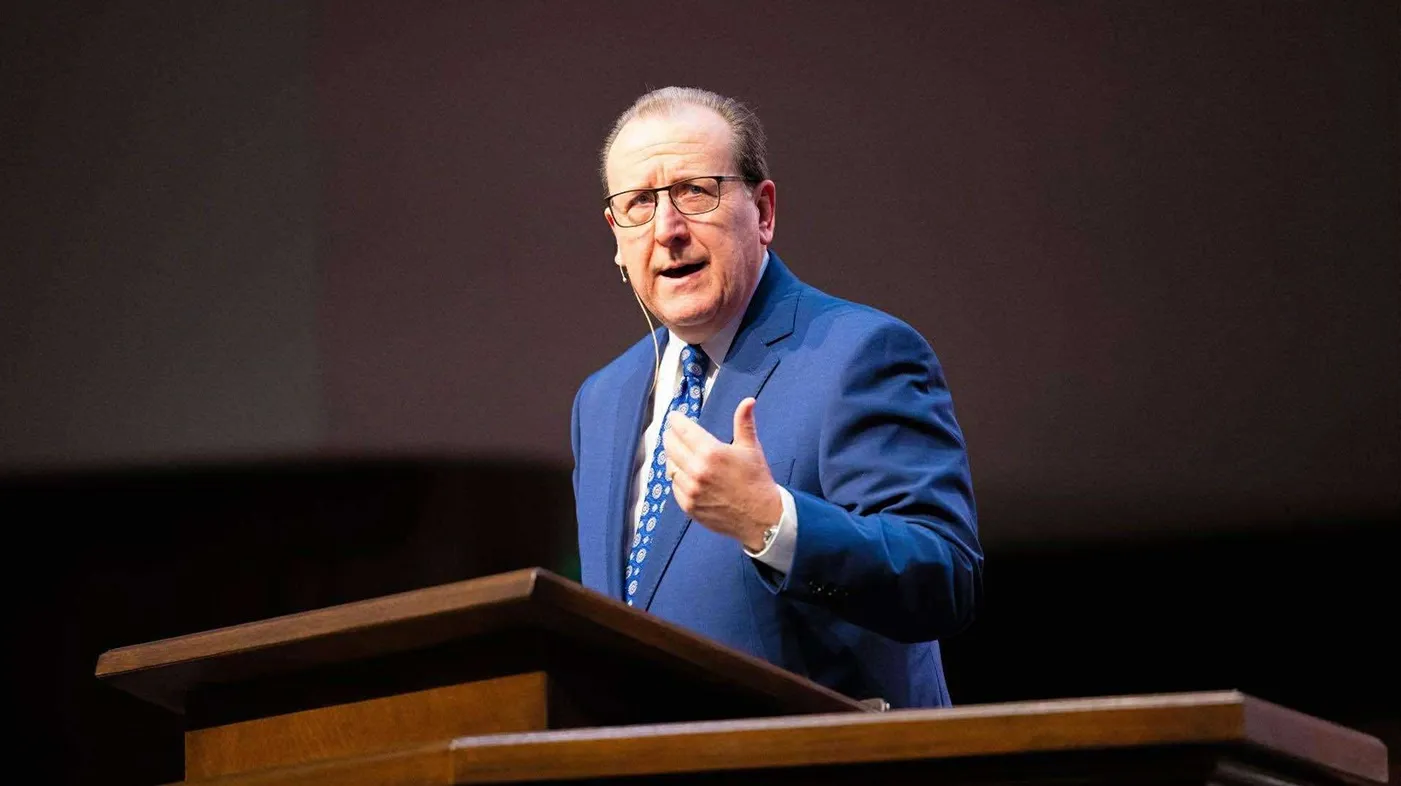
Engage with the most recent teaching from God’s Word.
The preaching of God's Word is central to worship and of the utmost importance for the sanctification of every believer in Christ.

.jpg)
.jpg)

Explore messages organized to help you grow in Christ.
Search and filter sermons for quick access.
A Sacred Trust
During the ordination of Dusty Burris, Pastor Tom Pennington expounds on 2 Timothy to define a pastor�s primary duty: the stewardship of biblical truth. Highlighting the Apostle Paul�s relationship with Timothy, Pennington outlines four essential imperatives for every minister holding this "sacred trust." First, a pastor must **teach the truth**, relying solely on "sound words" from Scripture rather than human wisdom to ensure the congregation's spiritual health. Second, he must **live the truth**, modeling faith and love so that his personal character aligns with his doctrine. Third, he must **guard the truth**, acting as a sentinel against internal and external threats such as distortion, distraction, and false teaching. Finally, he must **pass on the truth**, entrusting the gospel to faithful men capable of teaching others to ensure the faith survives for future generations. Pennington emphasizes that this charge places the pastor in a historical succession beginning with Christ and the Apostles. He concludes by reminding the new pastor that his ultimate evaluation before God will depend on his faithfulness to this precious deposit.
Be Careful How You Build
Tom Pennington�s sermon, "Be Careful How You Build," (1 Corinthians 3:9-17) charges newly ordained minister Peter, and all church leaders, to build Christ's church faithfully. The message outlines three critical instructions. Firstly, leaders must "build on the right foundation," which is Jesus Christ and the New Testament revelation concerning Him. Building on anything other than divine truth results in a structure that is not the true church. Secondly, they must "use the right materials," signifying quality teaching and pure motives. Inferior teaching or self-serving ambition (like "wood, hay, and straw") will be consumed by Christ's evaluative fire at judgment, leading to a loss of reward, though salvation remains secure. Finally, leaders must "remember the rightful owner." The church is God's temple, His holy sanctuary. To damage or destroy it through factionalism, heresy, or personal agendas will incur God's severe judgment. The sermon emphasizes that leaders are part of a multi-generational building project with an established blueprint, urging them to follow God's plan, build with integrity, and acknowledge God's ultimate ownership.
False Claims and Empty Rituals - Part 3
In his sermon on Romans 2:25-29, Tom Pennington addresses the problem of "false claims and empty rituals," arguing that many people are "mislabeled" regarding their faith, believing they belong to God but lacking genuine spiritual connection. He explains Paul's challenge to first-century Jews who relied on their ethnicity, knowledge of Scripture, and the ritual of circumcision for salvation. Pennington emphasizes that external morality, biblical knowledge, and religious rituals�whether circumcision for Jews or baptism for some Christians�are insufficient. They represent justification by works, which demands impossible perfect obedience and fails to address the root problem: the unregenerate human heart. True belonging to God's people, Paul argues, is an inward transformation�a "circumcision of the heart" accomplished by the Holy Spirit, not by adhering to the "letter" of the law or external observance. God looks beyond outward appearances to the heart, which is the source of all thoughts and actions. Pennington applies this truth by urging listeners, especially professed Christians, to self-examine: Has the Spirit of God truly changed their hearts, making them "new creations" who authentically love God and others, rather than merely performing external religious acts? This internal change, not outward observance, is the real evidence of salvation.
False Claims and Empty Rituals - Part 2
Tom Pennington's sermon "False Claims and Empty Rituals (Part 2)" on Romans 2:25-29 addresses the dangerous misconception of relying on religious rituals for salvation. Citing examples like the Roman Catholic Eucharist and ancient Jewish circumcision, he explains that many mistakenly believe certain acts confer righteousness or guarantee acceptance by God. Paul's argument in Romans posits only two paths to God: justification by works or justification by faith in Jesus Christ. Pennington clarifies that if one seeks salvation through rituals�such as circumcision, baptism, or reciting a "sinner's prayer"�they are, knowingly or unknowingly, choosing the path of justification by works. This path, however, demands *perfect* and consistent obedience to God's entire Law. A single transgression invalidates any ritual or perceived merit, rendering it useless and leading to condemnation. Circumcision, for instance, was intended as an outward symbol of an inward spiritual cleansing and heart change performed by God, not a means of salvation itself. Since humanity is incapable of perfect obedience, rituals and personal efforts offer no hope for salvation.
False Claims and Empty Rituals - Part 1
Tom Pennington's sermon on Romans 2:25-29, "False Claims and Empty Rituals (Part 1)," confronts the misconception that external religious adherence guarantees salvation. It highlights Paul's critique of "religious" individuals (first-century Jews) who placed confidence in nationality, morality, scriptural knowledge, and especially, the ritual of circumcision. Pennington clarifies that circumcision, unique to Israel, was a *sign* of a necessary *inward* spiritual cleansing and heart transformation, divinely accomplished by the Spirit, not a human work. Old Testament texts (Deuteronomy 10, Jeremiah 4, Deuteronomy 30) emphasized a "circumcised heart," a change God performs. Abraham's righteousness, Romans 4 shows, came through faith *before* his circumcision. First-century Jews, however, wrongly saw the physical act as a "passport to Heaven," a false confidence Paul (and the Jerusalem Council) vehemently rejected as a "false gospel." The sermon concludes that no external ritual, Christian or otherwise, can save; true salvation requires a divine "new birth" (John 3), a radical heart change by the Holy Spirit, achieved through repentance and faith in Jesus Christ alone, abandoning all other hopes.
In God We Trust - Part 2
The sermon addresses the legalization of same-sex marriage as a "watershed moment" dividing true and false Christianity. The speaker cites immediate consequences: a Montana man seeking a polygamy license, the Oregon bakery case where Christians faced persecution and speech restrictions, and the Episcopal Church's affirmation of same-sex weddings, demonstrating a trend of capitulation. Scripture is presented as unequivocally defining homosexuality as sin, making this issue a test of loyalty to Christ over culture. Christians are urged to respond by remembering God's sovereignty, acknowledging His divine abandonment of a pagan culture, and trusting Christ to build His church. They must treat unbelievers with dignity, realize the gospel shines brightest in darkness, and expect persecution, responding with joy, love, prayer for deliverance and gospel advance. Additionally, Christians are called to diligently pray for national leaders' salvation, wisdom, and just rule, for the nation's welfare, and for preservation from judgment due to the righteous. As citizens, they should be concerned about constitutional breaches and moral decline, and be prepared to legally defend religious liberty, always prioritizing the gospel and avoiding disrespectful or violent resistance.
No Results Found.
We couldn’t find anything matching your search.
Explore The Word Unleashed
Our ministry brings together expository preaching, theological precision, and practical application for the good of Christ's church and the daily living of Christ's people.
.webp)
Sermons
Listen to expository sermons that clearly teach God’s Word and guide you in daily living.

Radio
Tune in to gospel-centered programs that share biblical truth and strengthen your daily walk with Christ.
Training
Join courses and workshops designed to deepen your faith and equip you to serve others with biblical wisdom.
.webp)
From the Pastor's Desk
Read pastoral messages that encourage, instruct, and help you apply God’s Word to every part of your life.
.webp)
Hymns
Discover timeless hymns that lift your heart in worship and remind you of God’s abounding grace and faithfulness.
Podcasts
Stay rooted in Scripture through our podcast series.