Sermons That Exalt Christ
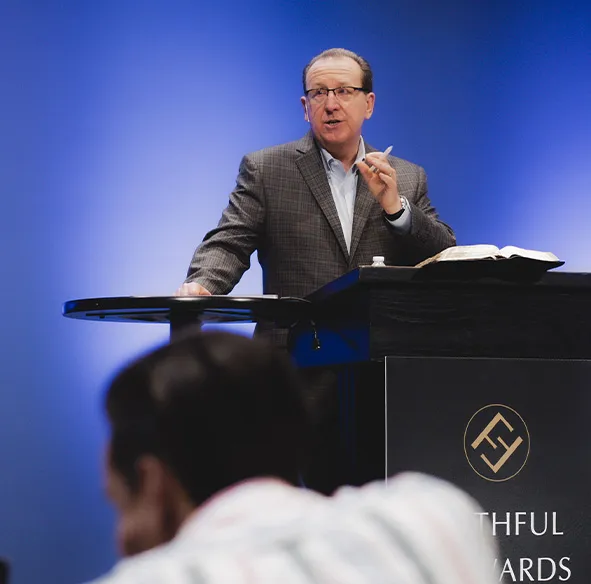
The preaching of God’s Word is central to the life of the church. Tom's pulpit ministry is dedicated to providing clear, biblical teaching to equip believers, strengthen faith, and exalt Christ.


Engage with the most recent teaching from God’s Word.
The preaching of God's Word is central to worship and of the utmost importance for the sanctification of every believer in Christ.

.jpg)
.jpg)

Explore messages organized to help you grow in Christ.
Search and filter sermons for quick access.
Under Yahweh's Wings - Part 3
The sermon explores Act 3 of Ruth, "Yahweh's Protection and Provision," showing God's care for Ruth and Naomi. Following Elimelech's family tragedy in Moab and Naomi's return, Ruth, her Moabitess daughter-in-law, converted to Yahweh. God provides through three scenes. First, divine providence guides Ruth to "chance" upon Boaz's field, a wealthy, righteous relative. Second, Boaz shows extraordinary compassion, ensuring Ruth's safety, encouraging her to remain in his fields, and providing abundant gleanings. This demonstrates God using righteous individuals. Third, Naomi recognizes God's "hesed" (steadfast love/loyal commitment) behind these blessings, caring for the living and honoring the dead. She also identifies Boaz as a "goel" (kinsmen redeemer), a relative with legal family responsibilities, signaling long-term security. Key lessons for believers include: God always provides for those seeking refuge in Him, often through hard work and generous people. He orchestrates life's smallest details through His providence. Ultimately, God's care stems from His unchanging "hesed," His tenacious and loyal steadfast love for His covenant people, guaranteeing His goodness and love will pursue them daily.
Not Even One! - Part 2
This sermon, "Not Even One!", from Romans 3:9-20, confronts humanity's spiritual self-deception, explaining that our carefully staged spiritual "selfies" hide a desperate reality. Pastor Tom Pennington asserts that Romans 3 strips away this facade, revealing God's disturbing portrait of mankind's universal and total depravity. Paul's argument, supported by extensive Old Testament quotations, declares, "THERE IS NONE RIGHTEOUS, NOT EVEN ONE." This signifies that no human, apart from Jesus, perfectly conforms to God's standard of absolute righteousness�perfect love for God and neighbor, lived without sin. This depravity is both universal, affecting everyone, and total, permeating every part of our being. It manifests as darkened minds, rendering us unable to grasp spiritual truth due to willful ignorance and hard-hearted rebellion. Our wills are enslaved, as "THERE IS NONE WHO SEEKS FOR GOD"; instead, humanity runs from Him unless divinely sought. Furthermore, our lifestyles are rebellious, having "TURNED ASIDE" from God's path, rendering us "USELESS" for our designed purpose of glorifying Him. Understanding this profound sinfulness is essential for appreciating the gospel's brilliance. Just as a jeweler places a diamond on black cloth to highlight its sparkle, our true depravity illuminates the glory of God's grace.
Not Even One! - Part 1
In the sermon "Not Even One!" (Romans 3:9-20), Pastor Tom Pennington explains Paul's foundational argument in Romans: humanity's utter lack of personal righteousness, which is crucial before presenting the gospel's good news. Paul indicts pagans, Jews, and ultimately all humanity, summarizing in Romans 3:9 that "both Jews and Greeks are all under sin." "Depravity" means sin permeates every part of our nature; it is universal and total. Being "under sin" encompasses several realities: living in the realm of sin (Satan's kingdom), routinely practicing sin, being enslaved by sin's power, incurring legal guilt before God, and awaiting sin's penalty. No group is spiritually superior by nature, as all are equally condemned. This universal human sinfulness represents a profound legal problem before God, the righteous judge. Therefore, the only solution is a legal one: justification, where God, by grace, credits Christ's righteousness to believers, thereby moving us from being "under sin" to "under grace."
How to Parent Your Children
This sermon on Ephesians 6:4 outlines Christian parenting principles, starting by debunking two common extremes: the "guaranteed outcome" approach, which wrongly believes perfect parenting ensures a Christian child, and the "laissez-faire" approach, which neglects active parental involvement. The text stresses that God evaluates parental faithfulness to His commands, not the child's ultimate outcome, recognizing that children possess fallen, sinful hearts. Parents are commanded "not to provoke your children to anger," meaning they must treat children, made in God's image, with respect and avoid actions like inconsistent discipline, arbitrary rules, nagging, favoritism, or abuse that lead to exasperation and discouragement. Conversely, parents must "bring them up in the discipline and instruction of the Lord." This involves actively raising children through stages: teaching authority (infancy-5), developing character while pointing to the gospel (5-12), and mentoring (teens). The key tools are discipline (training with clear expectations, rewards, and biblical physical correction, administered always in love, never anger) and instruction (verbal teaching, warning, and encouragement drawn from Scripture). Crucially, all parenting must be "of the Lord," making Christ, not family, achievements, or education, the ultimate center and goal of the home, as God calls parents to be faithful to His divine plan.
How to Obey Your Parents
This sermon on Ephesians 6:1-3 instructs children to obey and honor their parents. "Obey" means immediate, wholehearted compliance without arguing, while "honor" signifies deep respect and high regard for their authority. This obedience applies "in all things," with the sole exceptions being commands that defy God's direct word. The Old Testament underscores the gravity of parental disobedience, indicating it's a serious offense to God. Children are to obey "in the Lord," meaning their submission to parents is an act of obedience to Christ himself, recognizing parents as God's representatives. Motivations include this being inherently right, a divine command, and a promise of well-being and a long life. For all, this passage reveals two profound lessons. First, it models how Christians, as God's adopted children, should obey and honor their Heavenly Father. Second, it highlights humanity's universal failure to perfectly obey and honor parents, demonstrating our desperate need for the gospel. Jesus, the perfect Son, entirely submitted to His earthly parents, and through faith, His perfect obedience is credited to believers, atoning for our own disobedience. Our only hope is in Christ.
How to Submit to Your Husband
Pastor Tom Pennington opens a sermon on wives' submission, contextualizing it within Ephesians' instruction to walk in biblical wisdom, which involves submission to God-ordained human authorities�a principle reflecting God's own nature. Drawing from Ephesians 5:22-24, Pennington defines a wife's submission as voluntarily ordering herself under her husband's God-given authority, just as the church submits to Christ. This command is ongoing, non-optional, and directly addressed to the wife. He clarifies that submission does not mean tolerating abuse, sinning at a husband's command, or implying inferiority, as Christ's submission to the Father proves. Wives are to submit to "their own husbands," even if they are unbelievers (to potentially win them without a word), doing so "as to the Lord" and with respect. The reason is God's timeless design: the husband is the "head" (leader) of the wife, and this applies "in everything," unless it commands sin, as failing to do so dishonors God's Word. The sermon concludes with two broader implications for all Christians: first, it highlights humanity's universal rebellion against authority, underscoring our profound need for Jesus Christ's perfect life and atoning death.
No Results Found.
We couldn’t find anything matching your search.
Explore The Word Unleashed
Our ministry brings together expository preaching, theological precision, and practical application for the good of Christ's church and the daily living of Christ's people.
.webp)
Sermons
Listen to expository sermons that clearly teach God’s Word and guide you in daily living.

Radio
Tune in to gospel-centered programs that share biblical truth and strengthen your daily walk with Christ.
Training
Join courses and workshops designed to deepen your faith and equip you to serve others with biblical wisdom.
.webp)
From the Pastor's Desk
Read pastoral messages that encourage, instruct, and help you apply God’s Word to every part of your life.
.webp)
Hymns
Discover timeless hymns that lift your heart in worship and remind you of God’s abounding grace and faithfulness.

Podcasts
Stay rooted in Scripture through our podcast series.