Sermons That Exalt Christ

The preaching of God’s Word is central to the life of the church. This page is dedicated to providing clear, biblical teaching designed to equip believers, strengthen faith, and exalt Christ.

Black and white close-up of a person writing in a notebook with an open book beside them.
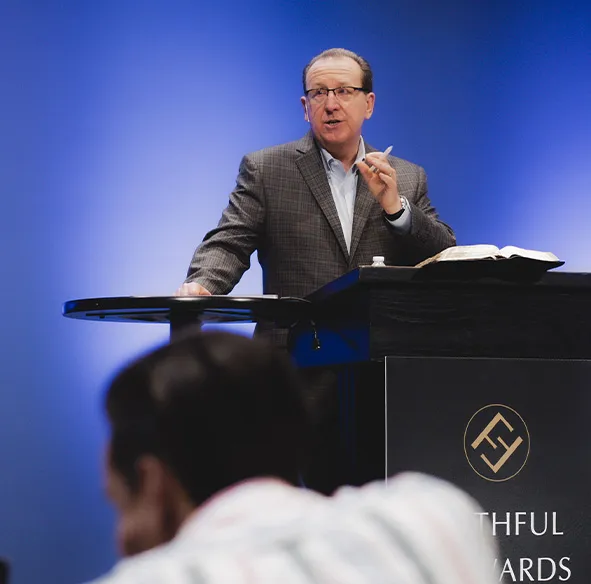
A man giving a speech at a podium.

Explore messages organized to help you grow in Christ.

Search and filter sermons for quick access.

2026
2025
2024
2023
2022
2021
2020
2019
2018
2017
2016
2015
2014
2013
2012
2011
2010
2009
2008
2007
2006
2005
2004
2003
Mark - The Memoirs of Peter
Sunday Evening Online
Trending vs. Truth
Recovering a Lost Legacy
Q&A
Ordination Services
Missions Sunday
Embracing Our Church's Distinctives
Thanksgiving Sermons
Christmas Sermons
Passion Week Sermons
An Aerial View of the New Testament
An Aerial View of the Old Testament
Anchored Section 1
Anchored Section 2
Anchored Section 3
Baptism Services
Bible Study for Every Christian
Bridge Over Troubled Water
Christmas Concert Messages
Committing to Christian Relationships
Daniel
Deadly Dangers
Ephesians
Five Hallmarks of a Biblical Church
Hold Fast
Hook, Line and Sinker
Just by Faith Alone
Lies Christians Believe
Look in the Mirror!
Lord, Teach Us To Pray
Marriage & Family by God's Design
No Whining Allowed
Power Over Temptation
Preserving the Unity of the Church
Psalm 23
Revelation
Riches to Rags
Romans
Ruth
Sanctification
Six Steps to Spiritual Stability
Systematic Theology
The Distinctives of Countryside Bible Church
The First Testament of Jesus Christ
The Memoirs of Peter
The Reason We Live
The Sermon on the Mount
United in Christ!
Watch Your Mouth!
We Were Made to Worship
When Life's Not Fair
Your Faith, Dead or Alive?
2 Corinthians
Numbers
Revelation
1 John
1 Peter
Titus
James
Hebrews
2 Timothy
1 Timothy
2 Thessalonians
Colossians
Philippians
Ephesians
Galatians
1 Corinthians
Acts
Romans
John
Mark
Luke
Matthew
Malachi
Proverbs
Daniel
Lamentations
Isaiah
Ecclesiastes
Deuteronomy
Genesis
Exodus
Ruth
Psalms
1 Samuel
Thank you! Your submission has been received!
Oops! Something went wrong while submitting the form.
2025-03-09

The Baptism of Jesus the Messiah

The text examines Jesus' baptism (Matthew 3:13-17), presenting it as a crucial event that proves His identity and inaugurates His redemptive work. At around thirty years old, Jesus journeyed to John the Baptist with "settled determination" to be baptized, despite John's initial refusal, recognizing Jesus' moral perfection. Jesus insisted, stating it was "fitting for us to fulfill all righteousness." Immediately after His baptism, a "Supernatural Testimony" unfolded: the heavens opened, the Spirit of God descended visibly like a dove, and an audible voice from God the Father declared, "This is My beloved Son, in whom I am well-pleased." This powerful affirmation confirmed Jesus as the unique Messiah (Psalm 2) and the suffering Servant (Isaiah 42), empowering Him for ministry and marking its official commencement. Theological implications for believers are profound: Jesus' baptism proved His perfect righteousness, essential for Him to be a sinless substitute. It symbolized His identification with sinful humanity, willingly aligning with those He came to save, and served as a "vicarious repentance" on behalf of His people. This foundational event demonstrates Jesus as the complete, perfectly righteous Savior who identifies with and atones for humanity.

Matthew
Tom Pennington
Access Now
|
Matthew
2025
2025-02-16

Messiah's Messenger - Part 4

This sermon, "Matthew Messiah�s Messenger (Part 4)," explores John the Baptist's primary mission as the forerunner of Jesus, focusing on Matthew 3:11-12. John's ministry had three key aspects: announcing the Messiah's impending arrival, His divine nature, and His divine ministry. John proclaimed the Messiah as "The Coming One," emphasizing His imminent arrival as prophesied in the Old Testament. He underscored the Messiah's divine nature by declaring Him "mightier" than himself and admitting he was unworthy to perform even the most menial task of removing His sandals, signifying the Messiah's inherent divine power and personhood. Crucially, John announced the Messiah's dual divine ministry: to baptize with the Holy Spirit for salvation and forgiveness for believers, and with "fire" for condemnation and eternal judgment for unbelievers. This dual role is powerfully illustrated by the winnowing fork metaphor: the Messiah will thoroughly clear His threshing floor, gathering His "wheat" (believers) into His eternal kingdom while burning the "chaff" (unbelievers) with "unquenchable fire." The sermon concludes by urging listeners to repent and believe in Jesus as Savior, or face Him as their just Judge, highlighting the critical choice regarding one's eternal destiny.

Matthew
Tom Pennington
Access Now
|
Matthew
2025
2025-02-09

Messiah's Messenger - Part 3

The text, based on Matthew 3:1-12 and 2 Corinthians 7:10-11, distinguishes between godly sorrow, which leads to genuine repentance and salvation, and worldly sorrow, which produces false repentance and spiritual death. Pastor Tom Pennington explains how John the Baptist's ministry revealed this contrast when Pharisees and Sadducees sought baptism. John's prophetic message to these religious leaders, whom he called a "brood of vipers," outlined six characteristics of false repentance. These include an unspiritual motive, driven by self-preservation rather than remorse for sin against God; an unchanged heart, evident in spiritual danger and moral deception despite outward piety; and an unconcerned conscience, lacking fear of God's coming wrath. False repentance also manifests as an unchanged life, bearing no "fruit in keeping with repentance"; an unfounded confidence in personal righteousness or spiritual heritage; and an unrealistic hope that divine judgment will not come or will not be just. John emphasizes that God's judgment is certain and imminent for those without true repentance. The only escape from God's wrath is through genuine repentance and faith in Jesus the Messiah, who saves believers from future condemnation.

Matthew
Tom Pennington
Access Now
|
Matthew
2025
2025-02-02

Messiah's Messenger - Part 2

Pastor Tom Pennington�s sermon, "Matthew Messiah�s Messenger (Part 2)," examines John the Baptist's ministry as a divine prelude to Jesus. He asserts that salvation begins with God's regeneration, enabling conversion through simultaneous repentance from sin and faith in Christ. John's ministry, prophesied in Isaiah and Malachi, served to prepare people for the Messiah's arrival. His austere lifestyle, characterized by camel hair and a diet of locusts and wild honey, underscored his role as a Nazirite, rebuking religious hypocrisy and embodying the spirit of Elijah. John's widespread public ministry drew thousands to the Judean wilderness for a unique "baptism of repentance." This immersion, distinct from Christian baptism, was a proselyte baptism for Jews, signifying their spiritual bankruptcy and the urgent need for a new beginning to enter Messiah's kingdom. It required confessed sins and was a powerful illustration of the forgiveness made possible by Jesus. Pennington concludes with four crucial implications: John confirmed Jesus as the promised Messiah and God; repentance is absolutely necessary for salvation; genuine repentance is a test of true faith; and the Christian life demands continual, relational repentance.

Matthew
Tom Pennington
Access Now
|
Matthew
2025
2025-01-12

Messiah's Messenger - Part 1

Matthew
Tom Pennington
Access Now
|
Matthew
2025
2025-01-05

The Christian Virtue of Hospitality

Pastor Tom Pennington encourages making a New Year's resolution to pursue Christian hospitality, defining it as "a love of strangers"�receiving and treating unknown Christians warmly and generously. He emphasizes this virtue for three reasons: to maintain the church's distinctiveness amidst growth, to counteract culture's drift towards selfish isolation, and to adhere to clear biblical teaching, unlike pragmatic churches. Hospitality is crucial because it is rooted in God's character as a gracious host, was powerfully demonstrated throughout Christ's ministry, and is explicitly commanded in the New Testament (Romans 12:13, Hebrews 13:2, 1 Peter 4:9). It is also a qualification for elders and a test of Christian character, signifying spiritual maturity. Motivations for hospitality include imitating God, expressing love for Christ (by serving "the least of these"), showing love for God's people, and advancing the gospel. Practical applications involve hosting church ministries or travelers, intentionally interacting with strangers on Sundays, introducing oneself to unknown church members, and regularly sharing meals with diverse believers. Ultimately, practicing hospitality now reflects the character of God, whose eternal hospitality we will forever enjoy, with Jesus Himself serving us.

Tom Pennington
Access Now
|
2025

No Results Found.

We couldn’t find anything matching your search.

Now Playing -
Now Playing
00:00
-00:00