Sermons That Exalt Christ
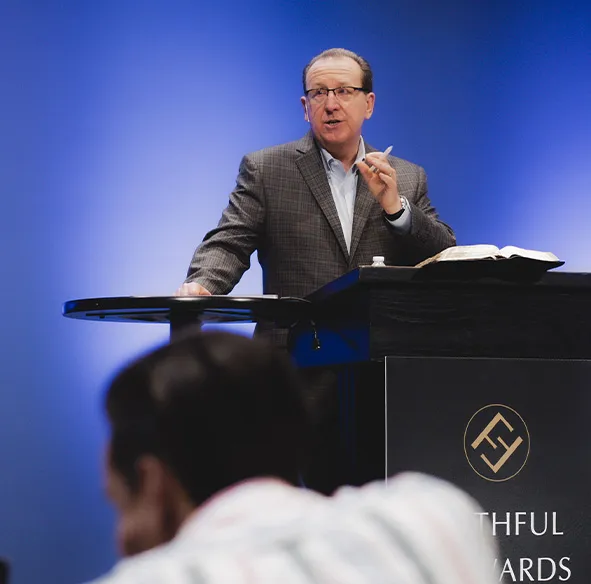
The preaching of God’s Word is central to the life of the church. Tom's pulpit ministry is dedicated to providing clear, biblical teaching to equip believers, strengthen faith, and exalt Christ.


Engage with the most recent teaching from God’s Word.
The preaching of God's Word is central to worship and of the utmost importance for the sanctification of every believer in Christ.

.jpg)
.jpg)

Explore messages organized to help you grow in Christ.
Search and filter sermons for quick access.
Gifted to Serve - Part 2
In "Romans Gifted to Serve (Part 2)," Pastor Tom Pennington discusses applying the gospel through service, urging believers to accurately understand and responsibly use their spiritual gifts as outlined in Romans 12:3-8. He compiles a comprehensive list of New Testament gifts from Romans 12, 1 Corinthians 12, and Ephesians 4, then categorizes them. Pennington primarily focuses on "temporary sign gifts," explaining their purpose was to confirm divinely appointed messengers and the new revelation they brought from God. Historically, miracle-working men like Moses, Elijah, Christ, and the Apostles appeared in specific, limited periods to authenticate those speaking God's direct words. The sermon argues that gifts such as apostleship ceased because their unique qualifications�witnessing the resurrected Christ, personal appointment by Christ, and the ability to perform miracles�are no longer met. Furthermore, other miraculous gifts declined even within the New Testament era itself and were recognized as having ceased by early church fathers. With the completed and confirmed Word of God (the Bible) now available, these revelatory and confirmatory sign gifts are no longer necessary for the church today.
The Spiritual War Behind World History - Part 1
Pastor Tom Pennington introduces Daniel chapter 10, emphasizing God's complete sovereignty over nations and individual lives. This passage provides a unique and clear glimpse into the unseen spiritual war that profoundly affects the events of human history. Daniel, around 85 years old and still in Babylonian captivity, was in deep mourning, fasting, and praying for three weeks over Israel's desperate circumstances and the opposition they faced in rebuilding the temple. By the Tigris River, Daniel experienced a terrifying vision of a glorious heavenly being, described with linen attire, a gold belt, a body like beryl, a face like lightning, and eyes like flaming torches. This figure, possibly a pre-incarnate appearance of Jesus Christ, overwhelmed Daniel, causing him to lose all strength and fall unconscious, while his companions sensed a supernatural presence and fled. Pennington highlights several lessons from this encounter: God's infinite greatness and holiness demand reverence, He is always with His people in their difficulties, persecution of believers is a normal expectation, and engaging in strategic prayer is a crucial task. This vision serves as a powerful reminder of the spiritual realities influencing our physical world.
The Church, God's New Temple, & You
Pastor Tom Pennington's sermon from Countryside Bible Church, on the occasion of sending out Northlake Bible Church, emphasizes the profound unity shared by believers in Christ, drawing from Ephesians 2:19-22. He explains that through Christ's work, believers are no longer strangers but are united with God and each other. Paul illustrates this union with three metaphors: believers are citizens of God's kingdom, members of God's family (adopted as children), and critically, "stones in God's temple." This third image highlights a deep, interdependent unity. Like ancient buildings, individual "stones" (believers) are meticulously shaped by God to fit together. The temple's foundation is the inspired teaching of the apostles and prophets (God's Word), with Jesus Christ as the essential cornerstone, ensuring the church is Christ-centered. This living temple is where God manifests His presence�His new "Holy of Holies"�stressing its holiness and the priority of worship. The metaphor explicitly rejects narcissistic, consumeristic, or spectator mentalities, calling every believer to active, interdependent service for the body's growth and health. Ultimately, as these two churches begin separately, they are urged to remember their organic unity as God's dwelling place on Earth, faithfully reflecting His presence in their respective communities.
A Savior Is Born! - Part 4
Recent surveys reveal a concerning decline in understanding Christmas's true meaning. Pastor Tom Pennington emphasizes Luke's historical record, highlighting Jesus' birth fulfilled prophecy: right time, family, city, and virgin circumstances. God's birth announcement came to humble, despised shepherds, demonstrating His unmerited grace. An angel, in divine glory, proclaimed "good news of great joy for all people": "Today in the city of David there has been born for you a Savior, who is Christ the Lord." This baby is a human Savior, the Messiah (Christ), and God (Lord), whose dual nature was vital for rescuing from sin. A multitude of angels then proclaimed "Glory to God in the highest, and on earth peace among men with whom He is pleased"�peace with God offered by His sovereign grace. The shepherds' actions model our appropriate response: 1. **Believe the gospel:** Convinced, they hurried to find Jesus, demonstrating eager obedience. 2. **Share the gospel:** Having witnessed, they immediately told others about the Child. 3. **Meditate on the gospel:** Mary "treasured all these things, pondering them," a continuous practice. 4. **Glorify and praise God:** They returned, praising God for all they had heard and seen.
A Savior Is Born! - Part 3
Pastor Tom Pennington's sermon contrasts the elaborate births of British royalty with the humble, yet profoundly significant, birth of Jesus Christ. While Jesus' birth was simple, God orchestrated the greatest announcement, choosing despised shepherds as the initial audience. This deliberate choice underscores that spiritual salvation is a gift of grace, not earned by human merit, demonstrating God often chooses the "nothings and nobodies" to prevent human boasting. An angel, accompanied by God's visible glory, proclaimed "good news of great joy for all the people." This "gospel" (euangelion) announced spiritual rescue, a universal message encapsulated in Luke 2:11: "For today in the city of David there has been born for you a Savior, who is Christ the Lord." Jesus' purpose was singular: to be the world's Savior, delivering humanity from sin's penalty and restoring their relationship with God. He wasn't merely a teacher or reformer. Salvation is solely God's initiative and accomplishment, offered by grace through faith. The gospel is an announcement to believe, an invitation to accept, and a command to obey, leading to the profound joy of spiritual rescue.
Seventy Years & Seventy Weeks - Part 4
This sermon on Daniel 9 delves into the "seventy weeks" prophecy, a profound timeline outlining God's plan for Israel and Jerusalem from Daniel's era to the end of the age. These "seventy weeks" are interpreted as 490 literal years (70 units of 7 years), decreed to accomplish six goals: to finish transgression, end sin, make atonement, bring everlasting righteousness, seal up vision and prophecy, and anoint the most holy place. The first 69 weeks (483 years) commence with a decree to rebuild Jerusalem, leading directly to the Messiah's first coming and death. Jesus of Nazareth perfectly fulfilled this timing, being "cut off" as prophesied. Following this, Jerusalem and the Temple were destroyed by "the people of the prince who is to come" (Romans in 70 AD). A significant gap then occurs between the 69th and 70th weeks. The final, seventieth week is a future seven-year period, identified as the Tribulation. It begins with the Antichrist making a covenant with Israel. Mid-way through (3.5 years), he breaks this covenant, stops temple sacrifices, and commits the "abomination of desolation.
No Results Found.
We couldn’t find anything matching your search.
Explore The Word Unleashed
Our ministry brings together expository preaching, theological precision, and practical application for the good of Christ's church and the daily living of Christ's people.
.webp)
Sermons
Listen to expository sermons that clearly teach God’s Word and guide you in daily living.

Radio
Tune in to gospel-centered programs that share biblical truth and strengthen your daily walk with Christ.
Training
Join courses and workshops designed to deepen your faith and equip you to serve others with biblical wisdom.
.webp)
From the Pastor's Desk
Read pastoral messages that encourage, instruct, and help you apply God’s Word to every part of your life.
.webp)
Hymns
Discover timeless hymns that lift your heart in worship and remind you of God’s abounding grace and faithfulness.
Podcasts
Stay rooted in Scripture through our podcast series.