Sermons That Exalt Christ
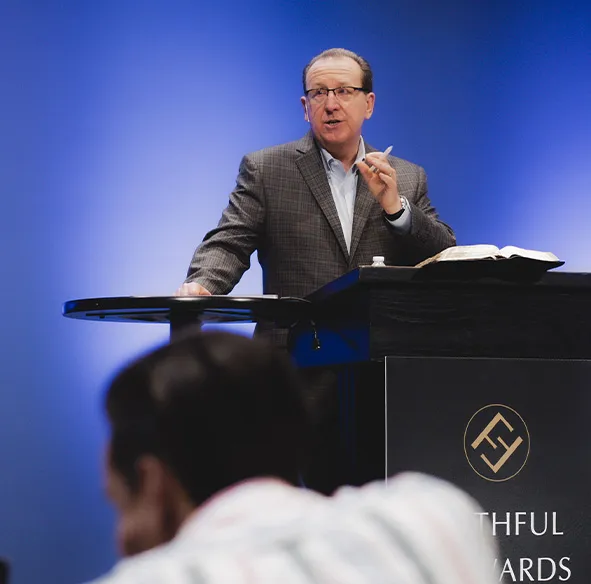
The preaching of God’s Word is central to the life of the church. Tom's pulpit ministry is dedicated to providing clear, biblical teaching to equip believers, strengthen faith, and exalt Christ.


Engage with the most recent teaching from God’s Word.
The preaching of God's Word is central to worship and of the utmost importance for the sanctification of every believer in Christ.

.jpg)
.jpg)

Explore messages organized to help you grow in Christ.
Search and filter sermons for quick access.
Wake Up! - Part 2
In "Romans Wake Up! � Part 2," Tom Pennington highlights the dramatic conversion of St. Augustine, who, after a youth of paganism and promiscuity, found Christ through reading Romans 13:11-14, the sermon's foundational text. This passage urges believers to "wake up" from spiritual slumber and actively engage in warfare against their unredeemed "flesh." Pennington provides five practical instructions for this ongoing spiritual battle. First, Christians must "put off" the "deeds of darkness," actively shedding sinful behaviors like carousing, drunkenness, sexual promiscuity, strife, and jealousy. Second, they must "put on the armor of light," replacing these sins with corresponding spiritual virtues. Third, the battle extends beyond mere behavior to fighting the underlying causes of sin, including sinful thinking, other facilitating sins, and deep-seated lusts or cravings. Fourth, believers are called to expend maximum effort in this fight, while simultaneously depending entirely on the Lord and His Spirit, working through His Word, for true change. Finally, Christians must "make no provision for the flesh," actively structuring their lives to remove opportunities and temptations for sin. This spiritual warfare is a lifelong commitment, requiring constant vigilance and unwavering reliance on Christ's power for victory.
Jesus Is Coming Again - Part 1
Tom Pennington's sermon "Jesus is Coming Again (Part 1)" from Mark 13:24-27 emphasizes the vital, yet often forgotten, Christian doctrine of Christ's return, arguing that reflecting on it motivates holiness. He distinguishes between Jesus' First Advent (birth) and the Second Advent, which includes two related but distinct events: the Rapture (Christ coming *for* His saints before the Tribulation) and the Second Coming (Christ coming *with* His saints to earth after the Tribulation, bringing judgment). Pennington focuses on the Second Coming as described in Mark 13 (the Olivet Discourse). He briefly reviews the "beginning of birth pangs" (false christs, wars, disasters leading up to and into the Tribulation) and the "Great Tribulation" (the latter 3.5 years, marked by the Antichrist's "Abomination of Desolation"). The sermon then delves into the timing and signs of the Second Coming. While the exact day is unknown, it will occur "immediately after the tribulation." It will be universally visible, like lightning, preceded by catastrophic cosmic disturbances: the sun will be darkened, the moon will not give its light, and "stars will be falling" (likely meteors).
Wake Up! - Part 1
In "Romans Wake Up! (Part 1)," Tom Pennington preaches on Romans 13:11-14, urging believers to "wake up" from spiritual laziness and actively battle their "flesh"�the unredeemed, fallen part of their being. He first highlights that God created light to illustrate spiritual truths, such as His pure nature, the stark contrast between Christ's and Satan's kingdoms, the gospel's glory versus error, and the fundamental difference between believers (children of light) and unbelievers (children of darkness). Pennington criticizes various unhelpful approaches to fighting the flesh, including ignoring it, passively yielding to it, or employing ineffective "weapons" like sheer willpower, prayer alone, secular psychology, instantaneous "crisis" experiences (e.g., Keswick, Wesleyan "second blessing," Baptist "re-dedication"), legalism, charismatic experiences, or self-reformation. Instead, the sermon provides crucial biblical motivations for this ongoing spiritual warfare. Believers must recognize that it is "late in redemptive history," living in the last days initiated by Christ's first coming. It is also past time to live in accordance with the new nature they received in Christ, moving beyond spiritual apathy. Furthermore, our "ultimate salvation" (glorification)�complete freedom from sin at death or Christ's return�is nearer than when we first believed.
What Does it Mean to Follow Christ?
Pastor Tom Pennington's sermon, "What Does it Mean to Follow Christ," analyzes Mark 1:16-20, where Jesus calls Peter, Andrew, James, and John. He clarifies that "following Christ" is a dynamic concept, encompassing initial conversion (John 1), a specific call to service (Mark 1), full-time ministry (Luke 5), and ongoing faithfulness. In Mark 1, Jesus calls these fishermen, who were already acquainted with Him, to join Him on a "short-term mission trip" as "fishers of men," requiring them to leave their successful businesses temporarily. The sermon extracts several profound lessons about Christ: He delights in using ordinary people for extraordinary tasks, demands absolute submission to His will, equips His disciples for assigned tasks, requires a willingness to leave everything to follow Him, demands primary loyalty, and decides each follower's role. For believers, the text teaches that Jesus and His kingdom must be our highest priority, we must actively serve Him (even if not in full-time ministry), be characterized by obedience, and actively seek to bring others to Christ. Ultimately, Jesus' call to faith, repentance, and devoted discipleship is still extended to all today, urging listeners to surrender everything for the incomparable treasure of knowing Him.
The Debt of Love
The sermon on Romans 13:8-10, "The Debt of Love," highlights love as the unifying idea among the Bible's commands, within the broader theme of God redeeming a people for His glory. The passage emphasizes that believers owe nothing to anyone "except to love one another," presenting this as a continuous, never-ending obligation. This "agape" love�an unselfish, self-sacrificing desire to meet others' needs�is not self-generated but a fruit of the Holy Spirit for those saved by grace. Love is a comprehensive obligation. It fulfills God's moral law for individuals (as a pattern for sanctification, not a means to salvation) and summarizes all commands related to one's neighbor. Both Jesus and Paul teach that "love your neighbor as yourself" encapsulates our entire moral duty to others, doing no wrong and actively seeking their good. The sermon stresses that love is not a path to justification; even one failure shatters the law. Moreover, a consistent absence of love indicates spiritual death, while for believers, love is the primary virtue for sanctification. Love provides the overview of God's moral law, while specific commands teach Christians *how* to practically live out this love.
A Friend of Sinners - Part 2
Pastor Tom Pennington�s sermon on Mark 2:13-17, titled �A Friend of Sinners,� challenges common, flawed Christian approaches to unbelievers, such as complete separation or cultural assimilation. He emphasizes that Jesus did not treat sinners as enemies but as a mission field. The core of the message unpacks Jesus' interaction with Levi, a despised tax collector. Jesus calls Levi to follow Him, an act demonstrating His sovereign grace towards the undeserving. Subsequently, Levi hosts a large dinner, where many tax collectors and "sinners" dine with Jesus and His disciples. This gathering draws criticism from the scribes and Pharisees, who question Jesus' association with such "unclean" individuals, accusing Him of violating their religious rules and standards of righteousness. Jesus responds by stating, "It is not those who are healthy who need a physician, but those who are sick; I did not come to call the righteous, but sinners." This powerful declaration reveals His mission: to seek, pursue, and save those who recognize their spiritual illness and need for repentance, not the self-righteous. Pennington concludes by urging believers to emulate Jesus� example.
No Results Found.
We couldn’t find anything matching your search.
Explore The Word Unleashed
Our ministry brings together expository preaching, theological precision, and practical application for the good of Christ's church and the daily living of Christ's people.
.webp)
Sermons
Listen to expository sermons that clearly teach God’s Word and guide you in daily living.

Radio
Tune in to gospel-centered programs that share biblical truth and strengthen your daily walk with Christ.
Training
Join courses and workshops designed to deepen your faith and equip you to serve others with biblical wisdom.
.webp)
From the Pastor's Desk
Read pastoral messages that encourage, instruct, and help you apply God’s Word to every part of your life.
.webp)
Hymns
Discover timeless hymns that lift your heart in worship and remind you of God’s abounding grace and faithfulness.
Podcasts
Stay rooted in Scripture through our podcast series.