Sermons That Exalt Christ
The preaching of God’s Word is central to the life of the church. Tom's pulpit ministry is dedicated to providing clear, biblical teaching to equip believers, strengthen faith, and exalt Christ.

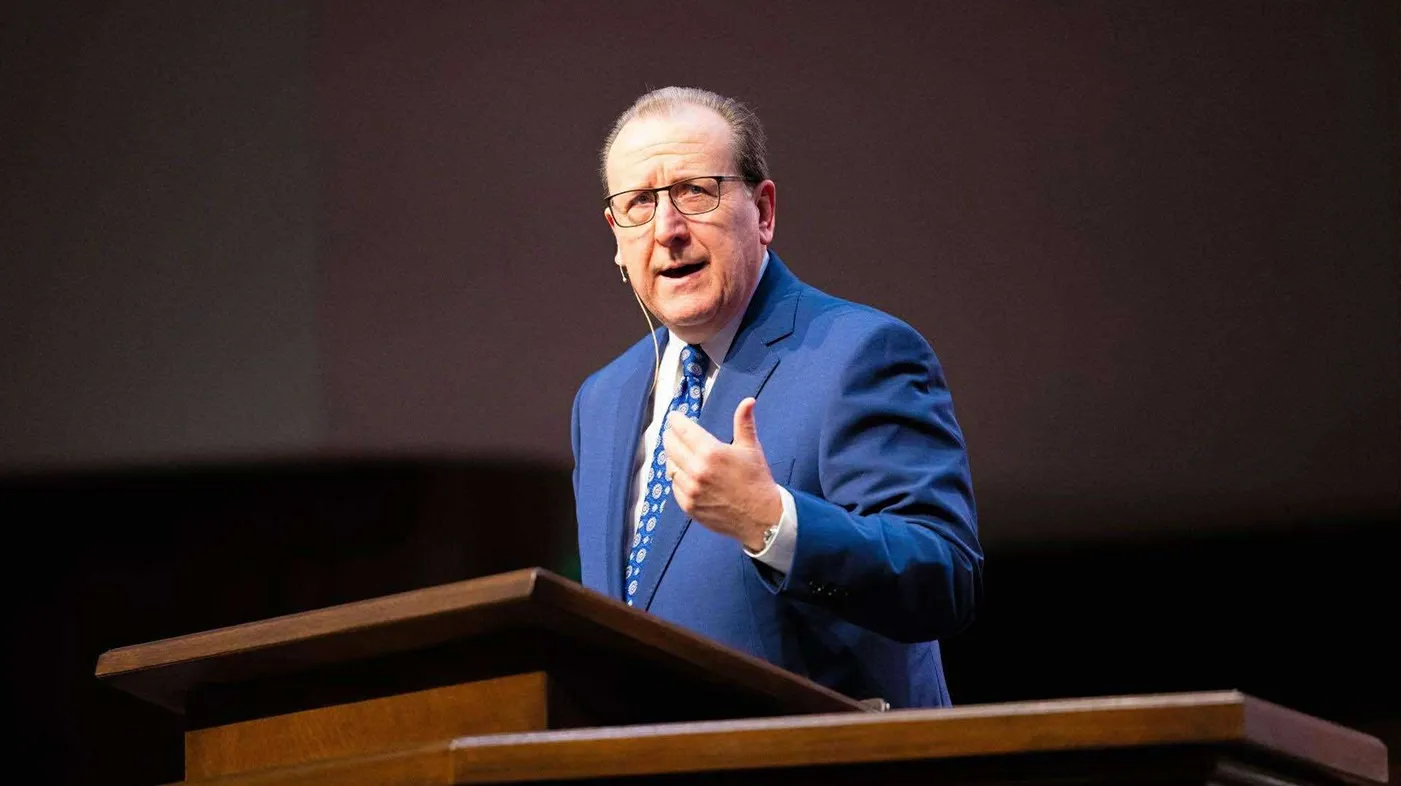
Engage with the most recent teaching from God’s Word.
The preaching of God's Word is central to worship and of the utmost importance for the sanctification of every believer in Christ.


Explore messages organized to help you grow in Christ.
Search and filter sermons for quick access.
A Real Thanksgiving
In his sermon "A Real Thanksgiving," Pastor Tom Pennington explores Philippians 1:3-5, presenting four principles for genuine thanksgiving. First, acknowledge God as the source of every good thing. True gratitude stems from recognizing that all blessings originate from Him. Conversely, the refusal to credit God is a root of sin and craving, while thankfulness is its antidote. Second, cultivate gratitude as a habit. Paul's thanksgiving was a constant practice, not merely an annual observance. This consistent thankfulness, demonstrated by biblical figures like Daniel and Christ, should be a regular part of prayer, even amid hardship. It reflects trust in God's sovereignty and goodness, thereby glorifying Him. Third, establish people as the object of your thanks. Paul primarily thanked God "for you all," valuing relationships more than possessions. This means focusing on God's grace in the lives of others, appreciating their presence, and expressing that gratitude directly to them. Finally, keep the gospel as the priority. Paul's profound joy and thanksgiving arose from the Philippians' "participation in the gospel." This "koinonia" or partnership in the gospel encompasses believing its message, sharing it with others, financially supporting its spread, and praying for those who minister it.
Why Should You Care About Theology? - Part 2
The text underscores the critical importance of Systematic Theology, citing widespread confusion about biblical teachings that can lead to tragic consequences like wrong behavior. Defined as "What does the whole Bible teach us about any given topic?", Systematic Theology organizes God's complete revelation into coherent doctrines such as Bibliology, Christology, and Soteriology, always with Scripture as its foundation. The speaker defends this approach by arguing that everyone inherently practices some form of systematic theology; the aim is to make it accurate and thorough. Christianity is founded on a body of doctrine�"the faith," "the deposit"�that demands comprehensive understanding, guarding, and transmission. The principle of "analogy of faith" dictates that the entire Scripture provides context for interpreting individual passages, requiring a holistic view. Both Christ and Paul exemplified this systematic approach, explaining theological truths by connecting diverse scriptures. Ultimately, Systematic Theology offers numerous benefits: it defends against doctrinal error, guards against wrong behavior (as belief influences conduct), promotes spiritual growth by laying a foundational understanding for Christian living, and profoundly deepens one's relationship with Jesus Christ, stirring devotion as biblical truths are understood holistically.
Philippians' Raison D'tre
Pastor Tom Pennington introduces Philippians as a guide to "basic spirituality 101," exploring its purpose. Paul wrote this letter from Roman imprisonment for several reasons: to express deep affection for the Philippians, report on his circumstances (noting the gospel's progress despite his chains), commend and send home Epaphroditus (who delivered a gift and recovered from illness), and thank them for their consistent financial support. He also confronted church issues like false teachings (Judaizers and libertines) and pervasive disunity rooted in selfishness. Additionally, Paul prepared them for persecution, illustrating that the gospel still advances even amidst suffering. Beyond these immediate concerns, the epistle�s timeless message, its "raison d'etre," is to teach how Christians should think. This is revealed through key concepts: **joy** (unaffected by external trials), **unity** (countering internal strife), **right thinking** (focusing on noble truths), the **gospel** (Paul's passion), and **Christ** (the central figure). Paul's overarching purpose is fostering a mindset consumed with Christ and His gospel. When Christ is the undisputed center, unity flourishes as differences diminish, and unshakeable joy endures despite earthly trials. This foundational shift�making Christ the center of one's spiritual universe�is the core teaching.
Uncommon Servants and Unlikely Saints
Pastor Tom Pennington begins his study of Philippians by introducing Paul and Timothy as "uncommon servants." Paul, though the sole author, humbly includes Timothy, his devoted companion, to share the limelight and model humility for the Philippian church, which struggled with internal disunity. They are described as "bond-servants" or "slaves of Christ," a term signifying willing devotion and privilege, reflecting Christ's own servanthood. This concept is contrasted with being a "slave of sin," emphasizing that everyone serves something, but choosing Christ offers true freedom and purpose. Pennington then characterizes the Philippian believers as "unlikely saints." The church's origins, detailed in Acts 16, involved diverse and unexpected converts: Lydia, a successful businesswoman; a demon-possessed slave girl; and a Roman jailer. The term "saints" refers to all Christians, denoting those "set apart by the Holy Spirit for God�s purposes" and united with Christ, not by their own merit, but by God's grace. This positional holiness inherently implies a duty to pursue personal holiness. Finally, Paul's greeting of "grace and peace" is presented as an underrated yet profound blessing, representing God's unmerited favor and subjective peace bestowed upon those willingly devoted to Christ as His holy people.
Why Should You Care About Theology? - Part 1
Pastor Tom Pennington introduces Systematic Theology, addressing its importance by highlighting how many people have a fragmented understanding of Scripture, akin to a "poorly sewn quilt." He defines theology as a discourse about God, explaining its various classifications (historical, biblical, practical, and systematic). Systematic Theology's core aim is to answer: "What does the whole Bible teach today about any given topic?" This involves meticulously collecting, exegeting, interpreting, and synthesizing all relevant passages for comprehensive understanding. While it uses terms not explicitly in the Bible (e.g., Trinity, Incarnation), these summarize biblical concepts. The study relies on presuppositions that God exists, the Bible is His absolute and intelligible revelation. Key tools include the divinely inspired Scripture, exegesis (discovering author's meaning), and reason, critically aided by the Holy Spirit's illumination for spiritual grasp. Systematic Theology typically covers doctrines like Scripture (Bibliology), God (Theology Proper), Man (Anthropology), Christ (Christology), Salvation (Soteriology), Church (Ecclesiology), and the Future (Eschatology). This organized approach directly links deep biblical knowledge to spiritual growth and practical Christian living, preventing a jumbled theology.
God's Plan for the Church - Part 3
Tom Pennington's sermon, "God�s Plan for the Church (Part 3)," based on Ephesians 4:7-16, emphasizes the church's divinely appointed purpose and ultimate destination. He likens a church straying from Scripture to Columbus's miscalculations, warning against arriving at a "wrong destination." Recapping Ephesians 4:7-12, Pennington outlines God�s plan: Christ appoints leaders (evangelists, pastor-teachers) who equip members (through teaching and prayer). These equipped members then accomplish the church's service (worship, nurturing, evangelizing), leading to the body's growth. Ephesians 4:13 then reveals the ultimate goal: 1. **When:** "Until Christ returns," when all believers achieve perfect spiritual maturity, becoming entirely like Jesus. This divine plan is eternal and unchangeable, refuting ideas of "reinventing the church." 2. **Who:** "We all" � every true Christian will persevere, preserved by God, to reach this perfection. 3. **How:** Through a "slow, steady growth" process, akin to physical development or a journey, rather than sudden spiritual crises. True spiritual life always produces growth. 4.
No Results Found.
We couldn’t find anything matching your search.
Explore The Word Unleashed
Our ministry brings together expository preaching, theological precision, and practical application for the good of Christ's church and the daily living of Christ's people.

Sermons
Listen to expository sermons that clearly teach God’s Word and guide you in daily living.

Radio
Tune in to gospel-centered programs that share biblical truth and strengthen your daily walk with Christ.
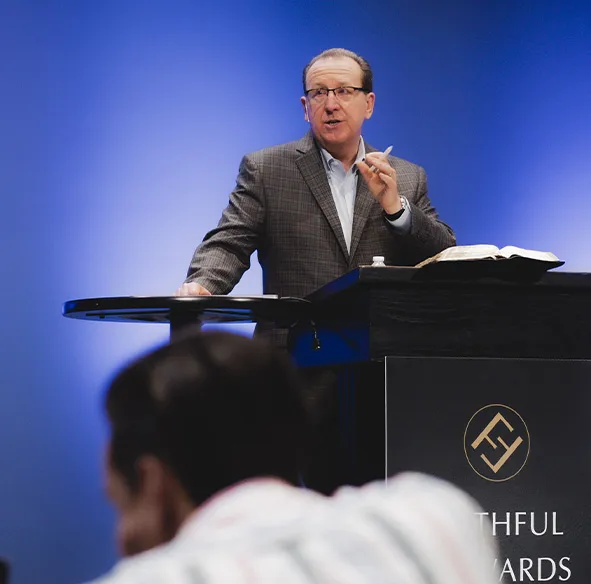
Training
Join courses and workshops designed to deepen your faith and equip you to serve others with biblical wisdom.

From the Pastor's Desk
Read pastoral messages that encourage, instruct, and help you apply God’s Word to every part of your life.

Hymns
Discover timeless hymns that lift your heart in worship and remind you of God’s abounding grace and faithfulness.
Podcasts
Stay rooted in Scripture through our podcast series.