Sermons That Exalt Christ
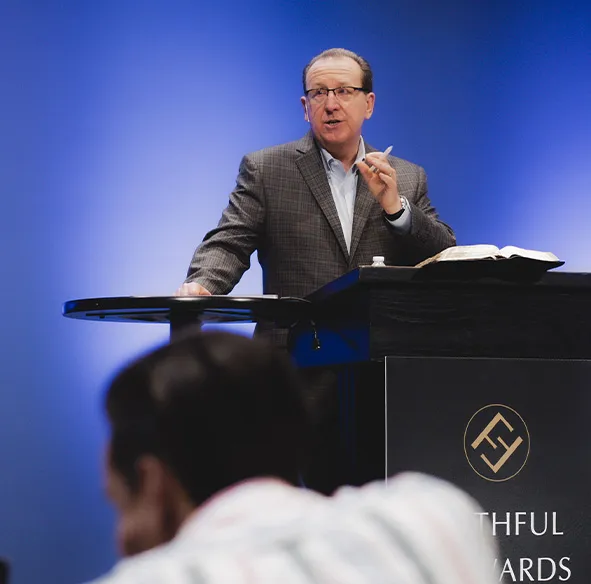
The preaching of God’s Word is central to the life of the church. Tom's pulpit ministry is dedicated to providing clear, biblical teaching to equip believers, strengthen faith, and exalt Christ.


Engage with the most recent teaching from God’s Word.
The preaching of God's Word is central to worship and of the utmost importance for the sanctification of every believer in Christ.

.jpg)
.jpg)

Explore messages organized to help you grow in Christ.
Search and filter sermons for quick access.
The Canon: Why These Sixty-Six Books - Part 2
This sermon explores the canon of Scripture, addressing why only 66 books are included and how to discern divine revelation from false claims. The speaker reviews the meaning of "canon" as both a list of inspired books and a standard for belief. He then delves into the biblical criteria for the Old Testament canon. Moses was unequivocally established as God's spokesperson, with God commanding him to write the Pentateuch, which the people witnessed and accepted as God's Word. Moses also predicted that God would raise other prophets "like him." These true prophets would be distinguished by God speaking through them and by their messages adhering to two crucial criteria: their predictions would always come true, and their doctrine would always align with previous revelation. Additionally, God sometimes authenticated them with miracles. Prophets like Joshua and Samuel, meeting these established criteria, added their divinely inspired writings to Moses' original "Book of the Law." This continuous chain of authenticated prophets and their immediately accepted writings led to the universal acceptance of the Old Testament canon, as endorsed by Christ and settled centuries before his birth.
The Reason We Live - Part 4
In a sermon on Philippians 1:18b-26, Pastor Tom Pennington contrasts Paul's people-focused devotion with the isolated life of Saint Barsanuphius, highlighting that for Paul, living for God meant living for people. This sermon, part of a series on the Christian's reasons for living, focuses on Paul's third ambition: to bring others to delight in Christ. Paul expresses confidence he will remain alive and continue ministering to the Philippians for two main goals. The *immediate goal* is their "progress and joy in the faith." Progress involves advancing in spiritual maturity through knowledge and practice of biblical truth, while joy stems from a settled conviction in God's absolute sovereignty, regardless of circumstances. True Christians, like Paul, cannot live in spiritual isolation but must be concerned for others' growth. The *ultimate goal* of Paul's ministry, as stated in verse 26, is for the Philippians' "proud confidence" or "boasting" to "abound in Christ Jesus." This biblical concept of boasting means placing complete trust and reliance in something, then glorying in it. Paul distinguishes between boasting in oneself (one's achievements or credentials), which is antithetical to being in Christ, and boasting solely in Jesus Christ.
The Canon: Why These Sixty-Six Books - Part 1
Pastor Tom Pennington's message, "The Canon: Why These Sixty-Six Books (Part 1)," addresses the critical question of identifying God's authoritative word, illustrated by anecdotes of individuals claiming new divine revelations. He defines "canon" as the list of books inspired by God, serving as the *sole* rule for belief and practice�a distinction from Roman Catholic theology. The Old Testament canon was accepted by early Christians and validated by Christ. As heresies like Marcion's emerged, the church developed criteria such as apostolicity, orthodoxy, and universal acceptance for New Testament books. While early church councils eventually affirmed the 27 New Testament books, the speaker stresses that true canonicity isn't merely human consensus but divine certification. He explains the Jewish Old Testament canon (Law, Prophets, Writings) was settled by Ezra's time (400 BC) and endorsed by Christ. The foundational argument for its authority stems from God's unmistakable designation of Moses as His unique mouthpiece at Mount Sinai (Exodus 19, Numbers 12), making his writings undeniably divine and forming the bedrock for the entire Old Testament canon.
The Reason We Live - Part 3
This sermon, "The Reason We Live (Part 3)" from Philippians 1:18b-26, contrasts Howard Hughes's tragic, self-serving life with Apostle Paul's God-centered ambitions. Paul's second ambition is to "be with Christ," achieved through two practical steps. First, developing a biblical perspective on life and death. For Paul, "to live is Christ," meaning life is devoted to ministering for Him, and "to die is gain," an "interest payment" leading to immediate presence with Christ, which is "very much better." Living also means "fruitful labor" for others. Ultimately, Paul finds "to choose is impossible," trusting God's will as both life and death are immense blessings for a Christian. Second, learning to value Christ's presence. Paul expresses a deep "craving" to "depart" (like setting sail for home) and be with Christ, not for selfish escape, but for the profound benefits death brings: freedom from sin, perfect worship, a new body, full understanding, eternal joy, reunion with fellow saints, and being "home" with the Lord to see and exalt His glory. However, Paul balances this desire with the "necessity" to remain alive for the Philippians' progress and joy in faith, prioritizing others' spiritual well-being over his personal preference.
The Reason We Live - Part 2
Tom Pennington's sermon, "The Reason We Live, Part 2," delves into Philippians 1:18b-26, exploring Apostle Paul's core life ambitions, which are entirely centered on Jesus Christ. The message primarily unpacks Paul's profound declaration: "For to me, to live is Christ and to die is gain," providing a distinctly Christian perspective on life and death. "To live is Christ" means that a believer's existence is completely filled, occupied, and directed by Jesus. This commitment to Christ, the sermon explains, stands in stark contrast to various common, inadequate reasons for living such as family, pleasure, stoic endurance, cynicism, mysticism, humanism, or mere religious observance. True Christian living ensures Christ alone inspires, defines, and controls every facet of one's being. Furthermore, "to die is gain" redefines death for the Christian, portraying it as a "profit" or "interest" derived from a life invested in Christ. While death is a physical separation of soul and body, its inherent fear and "sting" have been removed by Christ's sacrifice. This biblical viewpoint transforms death from a dreaded end into a joyous transition, as the prospect of being "with Christ" is considered "very much better" than earthly life.
The Bridge Between Knowing and Doing
The text highlights a common problem among Christians: despite abundant access to biblical resources, a significant gap often exists between knowing God's truth and consistently living it out. Pastor Tom Pennington identifies biblical meditation as the essential "bridge" that connects knowledge with practice. Citing Joshua 1:8 and Psalm 1, he explains that consistent meditation on God's Word is foundational for spiritual prosperity, stability, and fruitfulness. Biblical meditation is not about emptying the mind, like pagan practices, but actively filling it with deep thought on scripture. It involves deliberately recalling, engaging in internal discussion, and thoroughly contemplating God's Word, works, and character. This process yields two primary results: spiritual insight, or illumination, where the Holy Spirit clarifies and deepens understanding, and practical application, leading to concrete plans for living out biblical truths. The speaker defines meditation as "deliberately choosing to think deeply about something in order to better understand it and to plan how to do it." Practical methods for meditation include asking questions of the text, making observations, rephrasing, praying through the scripture, and considering specific ways to apply its teachings to daily life.
No Results Found.
We couldn’t find anything matching your search.
Explore The Word Unleashed
Our ministry brings together expository preaching, theological precision, and practical application for the good of Christ's church and the daily living of Christ's people.
.webp)
Sermons
Listen to expository sermons that clearly teach God’s Word and guide you in daily living.

Radio
Tune in to gospel-centered programs that share biblical truth and strengthen your daily walk with Christ.
Training
Join courses and workshops designed to deepen your faith and equip you to serve others with biblical wisdom.
.webp)
From the Pastor's Desk
Read pastoral messages that encourage, instruct, and help you apply God’s Word to every part of your life.
.webp)
Hymns
Discover timeless hymns that lift your heart in worship and remind you of God’s abounding grace and faithfulness.
Podcasts
Stay rooted in Scripture through our podcast series.