Sermons That Exalt Christ
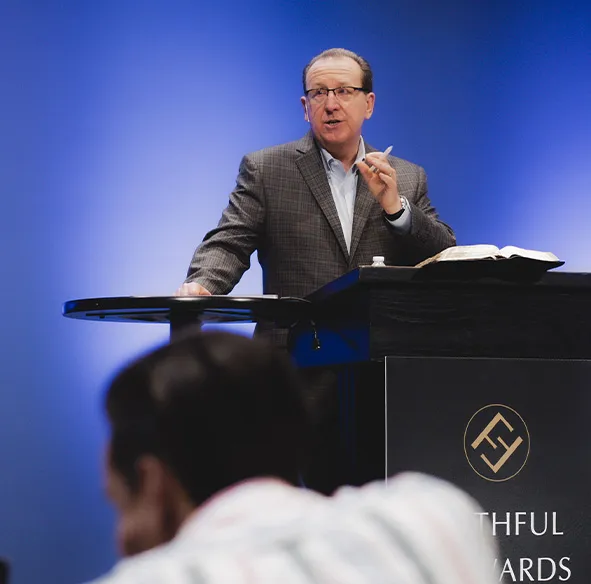
The preaching of God’s Word is central to the life of the church. Tom's pulpit ministry is dedicated to providing clear, biblical teaching to equip believers, strengthen faith, and exalt Christ.


Engage with the most recent teaching from God’s Word.
The preaching of God's Word is central to worship and of the utmost importance for the sanctification of every believer in Christ.

.jpg)
.jpg)

Explore messages organized to help you grow in Christ.
Search and filter sermons for quick access.
Heaven Rules
Tom Pennington's sermon, "Heaven Rules," from Daniel 4, emphatically asserts God's absolute sovereignty over all nations, directly refuting deistic notions of a distant, uninvolved God. He introduces Daniel, a prophet highly esteemed by God, whose ministry during the Babylonian captivity served to uphold God's honor among pagan nations, demonstrate His power, and improve the welfare of exiled Jews. The sermon highlights Daniel chapter 4 as a prime illustration of this theme. It details King Nebuchadnezzar's dream, Daniel's interpretation, and God's subsequent humbling of the world's most powerful monarch. Nebuchadnezzar, boasting in his own might, was afflicted with seven years of insanity until he finally acknowledged God's everlasting dominion and confessed that "the Most High is ruler over the realm of mankind and bestows it on whomever He wishes" and that "heaven rules." Pennington derives three core applications for believers: God's sovereignty controls all earthly rulers, nations rise and fall by His divine choice, and God actively humbles the proud. Christians are encouraged to acknowledge God's intimate involvement in world affairs, including political leadership, and to remain humble, attributing all personal successes and accomplishments to God's grace rather than their own abilities. God alone is the King of the universe.
Men at Work: Every Believer's Role in Sanctification - Part 4
In "Men at Work: Every Believer�s Part in Sanctification," Pastor Tom Pennington emphasizes that believers must intensely "work out their salvation" (Philippians 2:12), not to earn it, but to diligently pursue sanctification�God�s ongoing deliverance from sin. Likening this to cultivating a garden or an Olympic athlete's training, he stresses that while believers expend strenuous effort, God ultimately orchestrates the spiritual growth. The process for this biblical change, drawn from Ephesians 4, involves three crucial steps: 1. **Lay Aside the Old Self:** Actively shed past sinful habits and ways of thinking, recognizing that one's old self died with Christ. 2. **Be Renewed in the Spirit of Your Mind:** Allow the Holy Spirit, through consistent engagement with God's Word, to radically reorient one's mental disposition, fostering true knowledge and Christ-likeness. This inward transformation is paramount, distinguishing sanctification from mere self-reformation. 3. **Put On the New Self:** Consciously apply scriptural truths and virtues, responding in obedience to replace sinful patterns (e.g., generosity instead of stealing). To practically apply this, believers should identify specific sins, study Scripture to find opposite virtues, develop a daily plan, and expend maximum effort, trusting God's grace for the transformative change.
Men at Work: Every Believer's Role in Sanctification - Part 3
Pastor Tom Pennington's sermon, "Sanctification Men at Work," challenges the passive view of sanctification as a "spectator sport." Drawing from Philippians 2:12-13, he asserts that while God initiates and produces change, believers are actively commanded to "work out your salvation." This doesn't mean earning salvation, but rather diligently cultivating Christ-likeness. Pennington identifies four foundational elements for the believer's role. First, **motives** include following Christ's example, preparing for His return, honoring spiritual leaders, and imitating our holy God. Second, sanctification demands an **ongoing pattern of obedience**, not just initial belief. Third, the **attitude** must be "with fear and trembling," signifying profound reverence and awe for God, who is a "consuming fire," not a casual acquaintance. Finally, "working out your salvation" metaphorically means **cultivating** one's spiritual life like a garden�sowing God's Word and consistently striving for obedience. This process requires strenuous, dedicated effort, akin to a runner pressing towards a goal. Ultimately, while believers exert this crucial effort, God is the one who graciously produces true spiritual growth.
To the Praise of His Glorious Grace
Pastor Tom Pennington's sermon "To the Praise of His Glorious Grace" (Ephesians 1:6) explores the profound emotional and theological weight of grace, a word evoking deep feeling even among those unfamiliar with God. He elucidates three crucial lessons from this phrase. First, grace highlights human depravity. It implies our inherent failure and lack of merit, as humanity is "dead in trespasses and sins" and "children of wrath," deserving divine punishment. This dark backdrop of human unworthiness, like a dark cloth beneath a diamond, illuminates the magnificent brilliance of God's grace. Second, the phrase reveals God's character. Grace is defined as God's unmerited favor, distinguishing it from mercy (withholding deserved wrath). Through His glorious grace, God bestows incredible benefits: adopting us as sons into His family with full privileges, redeeming us from spiritual slavery through Christ's sacrifice, and granting complete forgiveness of our sins. Third, the ultimate purpose behind God's gracious actions�adopting, redeeming, and forgiving�is solely "to the praise of the glory of His grace," not based on any human merit. Pennington challenges Christians to live lives of constant praise and amazement for this grace.
In God's Name
The sermon "Systematic Theology In God's Name" stresses that God's names are profound revelations of His character, not mere labels, providing humanity with insight into His nature. Key Old Testament names: * **El, Elohim, El Elyon**: Denote God as the mighty, powerful, Most High Creator, Owner, and Sovereign, actively sustaining all existence and challenging evolutionary views. * **Adonai**: "Lord" or "Master," emphasizing God's absolute authority and control; nothing is outside His reign. * **Shaddai**: "God Almighty," depicting Him as a faithful provider and an unshakeable, safe refuge, like a protective mountain. * **Yahweh (LORD)**: His personal name, "I AM WHO I AM," revealing His self-existence (dependent on nothing) and eternal, unchanging faithfulness. Jesus' use of "I AM" underscored His divinity. New Testament names, including **Theos** (God), **Kurios** (Lord/Master), **Pater** (Father�a perfect provider and guide), and **Pantokrator** (Almighty, ruler of all), echo these divine attributes. Collectively, God's names reveal His absolute sovereignty, immense power, and consistent love, inviting believers to trust, praise, and find refuge in His character, which serves as a strong tower.
Men at Work: Every Believer's Role in Sanctification - Part 2
Pastor Tom Pennington's sermon explores sanctification, the process by which believers become more like Jesus Christ. He explains it in two senses: positional (set apart at salvation) and progressive (the ongoing work of God's Spirit reducing sin and increasing righteousness). This transformation is a gift of grace and God's work, yet it requires maximum human effort, unfolding as a lifelong internal struggle that renovates the heart, not just behavior, and is guaranteed for every true believer. Pennington clarifies that professed believers living in unrepentant sin must examine their faith, as true faith always shows evidence of spiritual growth; otherwise, God's discipline will lead to repentance or ultimately, being called home. He then addresses *how* God sanctifies, stressing that God uses "means," refuting unbiblical views (Keswick, Pentecostal, Wesleyan theologies) that advocate sudden, crisis-moment spiritual leaps or mistakenly attribute the struggle to a lack of divine power. Instead, the primary means is "the truth" � God's Word. Believers must actively engage with Scripture: taking it in, understanding its meaning, discerning its application to their lives, and taking concrete steps to apply its teachings.
No Results Found.
We couldn’t find anything matching your search.
Explore The Word Unleashed
Our ministry brings together expository preaching, theological precision, and practical application for the good of Christ's church and the daily living of Christ's people.
.webp)
Sermons
Listen to expository sermons that clearly teach God’s Word and guide you in daily living.

Radio
Tune in to gospel-centered programs that share biblical truth and strengthen your daily walk with Christ.
Training
Join courses and workshops designed to deepen your faith and equip you to serve others with biblical wisdom.
.webp)
From the Pastor's Desk
Read pastoral messages that encourage, instruct, and help you apply God’s Word to every part of your life.
.webp)
Hymns
Discover timeless hymns that lift your heart in worship and remind you of God’s abounding grace and faithfulness.

Podcasts
Stay rooted in Scripture through our podcast series.