Sermons That Exalt Christ
The preaching of God’s Word is central to the life of the church. Tom's pulpit ministry is dedicated to providing clear, biblical teaching to equip believers, strengthen faith, and exalt Christ.


Engage with the most recent teaching from God’s Word.
The preaching of God's Word is central to worship and of the utmost importance for the sanctification of every believer in Christ.


Explore messages organized to help you grow in Christ.
Search and filter sermons for quick access.
Slow to Act: The Richness of God's Patience
Tom Pennington's sermon "The Richness of God's Patience" contrasts human impatience with God's deliberate, sovereign nature. He defines God's patience as divine self-restraint, a quality stemming from His immense power over Himself, enabling Him to bear with sin without immediate wrath. Biblical illustrations, including Adam and Eve, the pre-flood world, and the Amorites, demonstrate God's long-suffering over centuries. Pennington explains that God's patience is manifested in restraining His divine wrath, which was vindicated at the cross, allowing for forgiveness, and in bearing with believers' repeated needs. He cautions against misinterpreting God's patience as non-existence, weakness, or disinterest. Instead, God is patient to provide an opportunity for repentance, to make judgment undeniably deserved when it comes, to reveal His profound mercy to those He saves, and to allow time for the spread of the Gospel. The sermon concludes by urging believers to reflect God's patience in their own lives: by patiently waiting on God's timing, by being patient with the spiritual progress of others, by being slow to anger when personally wronged, and by being quick to forgive. Ultimately, God's patience is a gracious opportunity before the certainty of judgment.
Six Steps to Spiritual Stability - Part 3
In "Six Steps to Spiritual Stability (Part 3)," Tom Pennington asserts that ideas have profound consequences, shaping individual behavior and entire cultures, exemplified by Peter Singer's disturbing ethical philosophy. Pennington argues that spiritual stability directly correlates with our thought life; our thoughts determine our character and destiny. While unbelievers possess darkened minds, Christians undergo a lifelong process of mental renewal, transforming their thinking through God's mercy (Romans 12:2). The sermon's core message centers on Philippians 4:8, which provides eight virtues for regulating a Christian's mind: whatever is true, honorable, right, pure, lovely, of good repute, excellent, and praiseworthy. Pennington emphasizes that believers must "dwell on these things," meaning to habitually discipline their minds to ponder them. Practical applications include guarding against unbiblical philosophies like secular humanism and moral relativism, actively sifting through thoughts, and confronting unbiblical thinking with truth, rather than just seeking "happy thoughts." Ultimately, spiritual stability is achieved by constantly meditating on God's Word, which perfectly meets all these criteria, bringing every thought under the authority of Christ.
Six Steps to Spiritual Stability - Part 2
This sermon, part of a series on "Six Steps to Spiritual Stability," addresses the pervasive problem of worry, likening it to a "computer game of the mind" that consumes time and energy without accomplishing anything. Pastor Tom Pennington emphasizes that worry, originating from the Old German word for "choke," is a serious "mental strangulation" intensified by modern culture and can even hinder true faith, as Jesus taught in Matthew 6. The biblical antidote, the fourth step to spiritual stability, is to "Talk to God about everything," based on Philippians 4:6-7. This involves three parts: a prohibition to "be anxious for nothing" (meaning stop sinful worry, distinct from legitimate concern); a prescription to make "requests known to God in everything by prayer and supplication, with thanksgiving"; and a promise that "the peace of God, which surpasses all comprehension, will guard your hearts and your minds in Christ Jesus." Prayer isn't about informing or changing God, but transforming us by fostering humility, dependence, and trust. Crucially, offering requests *with thanksgiving* demonstrates deep confidence in God's goodness and sovereignty, regardless of the outcome.
The Love of God - Part 2
Pastor Tom Pennington's sermon delves into the profound nature of God's love, defining it as a reasoned, self-sacrificial, and unselfish desire to meet the needs of cherished individuals, regardless of their worthiness or response. This love is sovereign, infinite, eternal, and unfailing, flowing from God's inherent goodness. He identifies three objects of God's love: God Himself and the other members of the Trinity; every human being universally, a love demonstrated through common grace and the universal offer of salvation, which he argues is not mutually exclusive with divine election; and finally, His chosen people (believers) with a special, redemptive love. For believers, God's love is expressed primarily through Christ's substitutionary death, election, salvation, adoption, and even chastening. In response to this immense love, believers are called to love God wholeheartedly, love all people (especially other believers with practical kindness), obey God's commands, and cease loving the world's fleeting values. Husbands are specifically admonished to mirror Christ's sacrificial love for the church in their marriages. Ultimately, understanding God's unwavering love should strengthen a believer's assurance, as nothing can separate them from it.
The Love of God - Part 1
Pastor Tom Pennington introduces a two-part series on "The Love of God," stressing its profound, revolutionary nature often misunderstood in culture. He recounts evangelist D.L. Moody�s transformation: initially denying God�s love for sinners, Moody's entire ministry was revolutionized by a preacher who illustrated God's love from Genesis to Revelation. This experience turned Moody into an "apostle of the love of God." Pennington emphasizes that understanding the "breadth and length and height and depth" of God's love, as prayed for in Ephesians 3, is foundational for Christian life. He defines this divine love, "agape," as a reasoned, self-sacrificial, and self-giving act of will that loves irrespective of the object's worthiness or response, yet is not devoid of emotion. God's love is sovereign, choosing to love because He chooses to love; it is infinite, eternal, and utterly unselfish, as described in 1 Corinthians 13 and exemplified by His love for Solomon despite his failings. The sermon highlights that perfect, self-giving love eternally exists within the Trinity, forming the basis for God's voluntary choice to love humanity.
Six Steps to Spiritual Stability - Part 1
Tom Pennington's sermon, "Stability: Six Steps to Spiritual Stability (Part 1)," from Philippians 4:1-9, outlines how to achieve spiritual steadfastness, using the D-Day Rangers' resilience as an analogy. He identifies three initial steps. First, **resolve to live in harmony with other Christians**. This isn't about compromising doctrine or overlooking unrepentant sin, but diligently resolving non-foundational disagreements among believers. Paul urges personal reconciliation, involving a mature third party if needed, and gracious separation without sowing discord. Second, **determine to respond to life's circumstances with joy**. This spiritual joy, unlike happiness, is independent of circumstances and a fruit of the Spirit. Paul, who suffered immensely, commands constant rejoicing. It comes from a firm belief in God's sovereignty, unchanging character, unwavering promises, and an eternal perspective, illustrated by Dr. Walt Fremont's enduring joy amidst illness. Third, **make it your ambition to be known for a gentle spirit**. This involves sweet reasonableness, graciousness, and not insisting on one's own rights, showing considerate courtesy to all. Paul links this to "the Lord is near," reminding believers of Christ's imminent return and ultimate vindication, encouraging them to extend grace. These steps are crucial for standing firm in the spiritual battle.
No Results Found.
We couldn’t find anything matching your search.
Explore The Word Unleashed
Our ministry brings together expository preaching, theological precision, and practical application for the good of Christ's church and the daily living of Christ's people.

Sermons
Listen to expository sermons that clearly teach God’s Word and guide you in daily living.

Radio
Tune in to gospel-centered programs that share biblical truth and strengthen your daily walk with Christ.
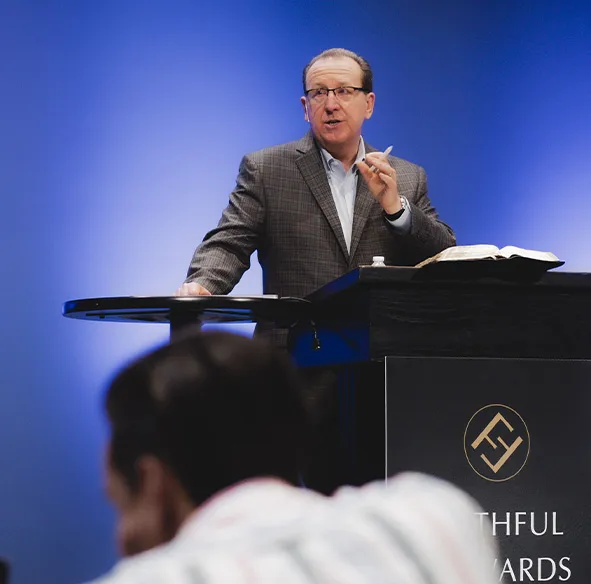
Training
Join courses and workshops designed to deepen your faith and equip you to serve others with biblical wisdom.

From the Pastor's Desk
Read pastoral messages that encourage, instruct, and help you apply God’s Word to every part of your life.

Hymns
Discover timeless hymns that lift your heart in worship and remind you of God’s abounding grace and faithfulness.

Podcasts
Stay rooted in Scripture through our podcast series.