Sermons That Exalt Christ
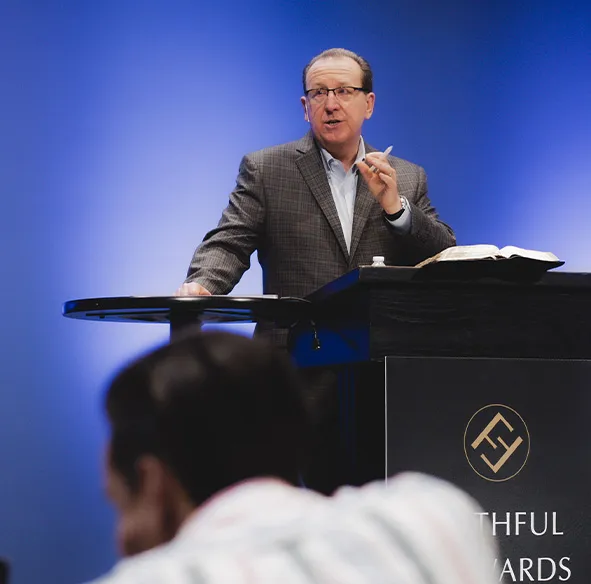
The preaching of God’s Word is central to the life of the church. Tom's pulpit ministry is dedicated to providing clear, biblical teaching to equip believers, strengthen faith, and exalt Christ.


Engage with the most recent teaching from God’s Word.
The preaching of God's Word is central to worship and of the utmost importance for the sanctification of every believer in Christ.

.jpg)
.jpg)

Explore messages organized to help you grow in Christ.
Search and filter sermons for quick access.
The Band Played On: the Role of Music in Worship - Part 2
Tom Pennington's sermon "The Band Played On, Part 2" explores the crucial role and criteria for music in worship. He begins by recapping that music is a foundational aspect of biblical worship, present from creation to Revelation, prioritizing it second only to God's Word. Its purpose is to express our hearts, teach truth, aid memory, and glorify God, with resources like instruments and choirs biblically affirmed. The sermon's core focuses on criteria for worship music. Lyrics must be biblical, consistent with God's truth, rich in content, and avoid being weak or repetitive. They must also be balanced, reflecting both Old and New Testament revelations, subjective experiences alongside objective truths about God, and a mix of old and new songs. Furthermore, lyrics should be appropriate to the occasion, matching the tone for praise or lament. Regarding musical style, Pennington argues the Bible does not dictate specific genres as inherently moral or immoral; music itself, apart from lyrics, lacks morality. Principles for style include intentional variety (like the Psalms), suitability to the lyrics' content (e.g., loud for praise, quiet for confession), and skilled performance.
The Band Played On: the Role of Music in Worship - Part 1
Music is presented as a crucial element of worship, second only to God's Word, and an intrinsic part of human nature, wired into our brains from birth�a reflection of being made in God's image. The sermon emphasizes music's profound biblical priority: it predates creation, was consistently central to Old Testament worship and Jesus' earthly life, is commanded for believers in the New Testament (Ephesians 5, Colossians 3), and will be a feature of eternal worship (Revelation 5). Its purposes are multifaceted: to express our hearts in praise, thanksgiving, confession, and petition; to teach God's truth; to aid in remembering that truth; and ultimately, to glorify God. God provides resources to support musical worship, including various instruments, choirs, and music directors, all divinely commanded in the Old Testament and implicitly affirmed in the New. These resources exist to encourage and enrich the active participation of God's people in singing. The magnificent dedication of Solomon's temple, filled with instruments and voices, serves as a powerful example of music evoking God's glorious presence. Therefore, music is a divine gift for worship that should be a priority for every believer, bringing glory to God.
The Great Tribulation: the Approaching Storm of God's Wrath - Part 2
The sermon "The Great Tribulation: The Approaching Storm of God�s Wrath, Part 2" details a future seven-year period of God's wrath that follows the Rapture and precedes Christ's Second Coming. Its core purposes include reclaiming the earth from Satan's usurpation, bringing redemption to Israel, destroying false religion, and punishing Christ-rejecting individuals. Major figures in this eschatological drama are identified as the Beast (Antichrist), the False Prophet, the Dragon (Satan), and the Lamb (Jesus Christ). The tribulation's timeline, illuminated by Daniel 9's "seventy weeks" prophecy, is initiated by the Antichrist's seven-year covenant with Israel. At the midpoint, the Antichrist will break this agreement, halting temple worship and committing the "abomination of desolation," leading to intensified desolation until Christ's return concludes the period. The prophecy's 69 weeks (483 years) ended during Jesus's earthly ministry, leaving the final 70th week as a future, distinct seven-year period. Believers are encouraged to find courage, security, and patience in God's sovereign control over history and His unerring plan.
The Word: the Key Element of Worship
In his sermon, "Worship The Word: The Key Element of Worship," Tom Pennington emphatically argues for the indispensable centrality of God's Word in all true worship, both individual and corporate. He critiques contemporary "emerging church" movements that devalue authoritative preaching, opting instead for open discussions, entertainment, or music to replace the Word, attributing this shift to postmodernism's rejection of absolute truth. Pennington asserts that overwhelming biblical and historical evidence consistently establishes the Word's primacy. He traces this pattern from the Old Testament, highlighting the teaching roles of Levites, priests, prophets, and synagogues�exemplified by Ezra's public reading and explanation of the Law. Christ's own ministry was characterized by authoritatively teaching and explaining Scripture, setting a clear example. The early New Testament church, through the apostles' dedication to teaching and elders' responsibilities, maintained this focus, a practice also documented by early church fathers like Justin Martyr. The Word is central, Pennington explains, because it is God speaking to humanity, unlike other worship elements that are offerings from us to God. Moreover, it shapes and informs all other aspects of worship to be acceptable. He applies this by urging churches to remain Word-centered as a crucial litmus test for spiritual health.
The Great Tribulation: the Approaching Storm of God's Wrath - Part 1
The Great Tribulation is presented as a terrifying future period of unprecedented divine wrath upon the Earth, far exceeding any natural disaster. Likening it to Hurricane Camille, the speaker defines "tribulation" (Greek "thlipsis") as an intense "pressing together" or affliction. While those on Earth, including believers, will experience severe distress and persecution, the Bible primarily emphasizes the divine perspective: it is "the Day of the LORD," "Day of Vengeance," and "the Day of Wrath," culminating in Christ's return as judge. This seven-year period, with the "Great Tribulation" specifically denoting its more intense second half, is extensively prophesied across scripture�from Deuteronomy and Jeremiah's "time of Jacob's distress" for Israel, to Daniel's "seventy weeks," Jesus' Olivet Discourse, and especially Revelation 6-19. These passages vividly describe cosmic cataclysms and the "winepress of the fierce wrath of God." The sermon issues a stark warning: humanity must either accept Jesus Christ as Redeemer and find refuge in His atoning blood, thereby escaping this coming wrath, or face Him as a wrathful judge. Believers, conversely, are promised deliverance from the wrath to come.
The Heart of Worship - Part 8
Pastor Tom Pennington concludes his sermon series on John 4, asserting that true worship, like true living, must be centered in Christ. He reviews four previously established laws of worship: it must be internal, stemming from the heart; it must be knowledgeable, not merely emotional; it must be directed by God's truth; and it must be "in spirit," meaning authentic, passionate, and actively participative. The fifth and final law, emphasized in this session, is that true worship is not general but profoundly centered in Jesus Christ. This stems from Jesus' revelation to the Samaritan woman that He is the Messiah (John 4:25-26). Pennington explains two critical applications: first, we must worship *through* Christ, as He is the sole mediator and the only accepted channel to the Father (John 14:6). Second, we must worship Christ Himself, because as God the Son, He is inherently worthy of all adoration and is the designated object of the Father's design for worship (John 5:23). Generic worship of "God" is insufficient; true Christian worship consistently focuses on Jesus, who is the ultimate "temple" of God's presence and the very heart of our faith.
No Results Found.
We couldn’t find anything matching your search.
Explore The Word Unleashed
Our ministry brings together expository preaching, theological precision, and practical application for the good of Christ's church and the daily living of Christ's people.
.webp)
Sermons
Listen to expository sermons that clearly teach God’s Word and guide you in daily living.

Radio
Tune in to gospel-centered programs that share biblical truth and strengthen your daily walk with Christ.
Training
Join courses and workshops designed to deepen your faith and equip you to serve others with biblical wisdom.
.webp)
From the Pastor's Desk
Read pastoral messages that encourage, instruct, and help you apply God’s Word to every part of your life.
.webp)
Hymns
Discover timeless hymns that lift your heart in worship and remind you of God’s abounding grace and faithfulness.
Podcasts
Stay rooted in Scripture through our podcast series.