Sermons That Exalt Christ
The preaching of God’s Word is central to the life of the church. Tom's pulpit ministry is dedicated to providing clear, biblical teaching to equip believers, strengthen faith, and exalt Christ.

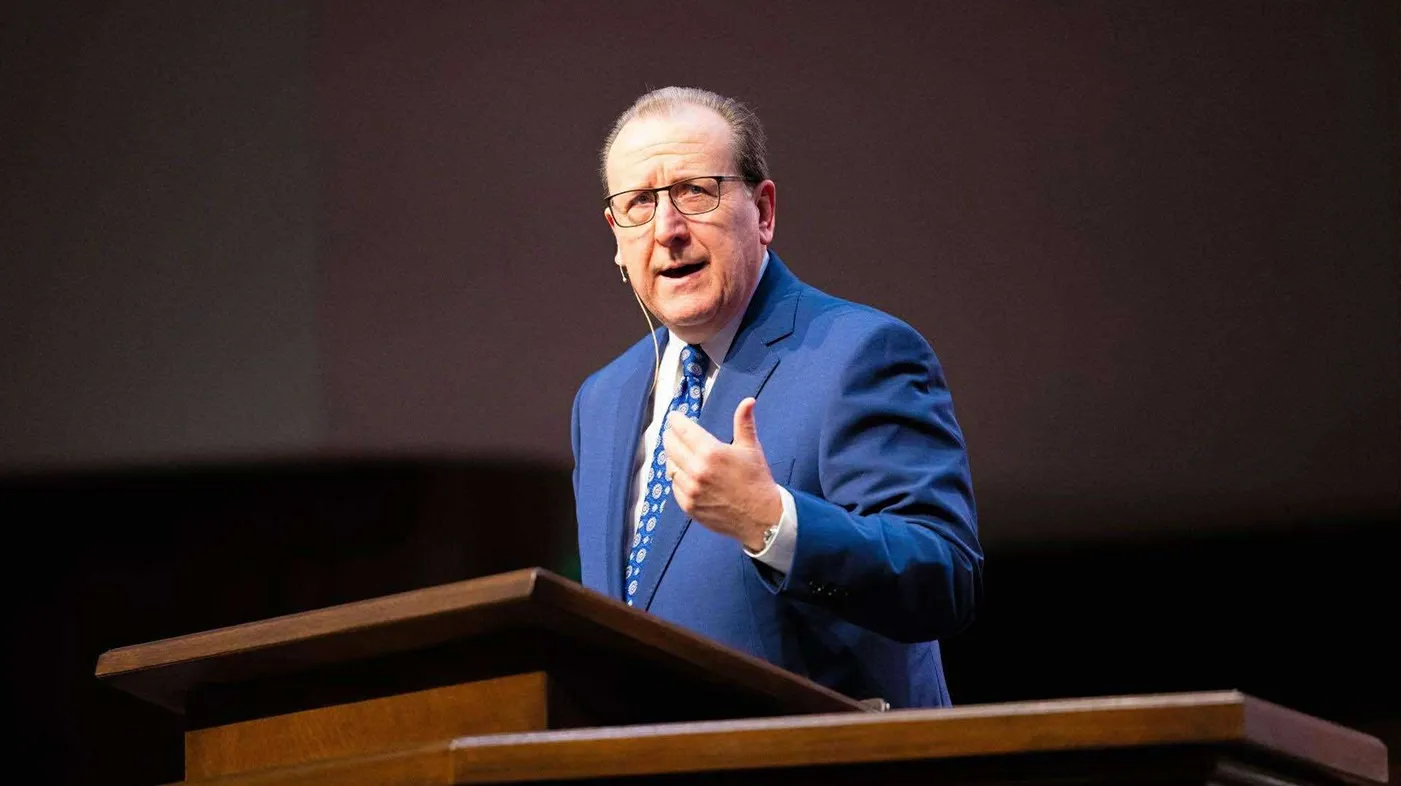
Engage with the most recent teaching from God’s Word.
The preaching of God's Word is central to worship and of the utmost importance for the sanctification of every believer in Christ.


Explore messages organized to help you grow in Christ.
Search and filter sermons for quick access.
Sealed By the Spirit
This sermon by Tom Pennington concludes a series on Ephesians 1:3-14, focusing on the Holy Spirit's crucial role in God's redemptive plan: "sealing" believers. This sealing permanently connects individuals to Jesus Christ, with the Spirit always glorifying Christ. It occurs at the moment of salvation, immediately after one hears and believes the gospel, and is a universal spiritual reality for all Christians, initiated by God the Father using the Holy Spirit as the seal. The sealing provides several vital assurances for believers: it proves God's ownership, certifies their genuineness as Christ's followers, demonstrates divine authority, and critically, guarantees their eternal security. Additionally, the Holy Spirit acts as a "pledge" or "down payment," assuring believers of their full future inheritance. This divine act of sealing lasts until the "day of redemption," ultimately serving "the praise of God's glory" and manifesting His inherent majesty.
Christ's Role in the Drama of Redemption - Part 4
Tom Pennington's sermon contrasts the limited earthly inheritances people anticipate with the vastly superior spiritual inheritance believers receive in Christ, as outlined in Ephesians 1:7-12. This divine inheritance is a profound blessing, with Jesus Christ as its channel and God as its sovereign source, freely bestowed through grace due to our adoption as co-heirs with Christ. The content of this inheritance encompasses spiritual salvation�eternal life and justification�the Kingdom of God, which means living under Christ's righteous rule in heaven, the millennium, and a new heavens and earth, and most significantly, God Himself. The certainty of this inheritance is absolute: God, who predestined it, will not change His mind, His unstoppable energy ensures His plan cannot be thwarted, and since it is entirely by His grace, it cannot be forfeited by us. Ultimately, the goal of this magnificent inheritance is "to the praise of His glory." Understanding this eternal, certain reality should radically transform how believers navigate life, encouraging them to live beyond temporary earthly satisfactions for the glorious future awaiting them.
Are You Sure? The Certainty of Truth in a Postmodern World - Part 2
Tom Pennington asserts that every belief system rests on a foundational authority, or "puesto." For Christians, this ultimate authority is Jesus Christ, whose resurrection validated all His teachings. In contrast, postmodernism grounds truth in individual or collective human reasoning, leading to the conclusion that absolute truth is unknowable or nonexistent. Pennington argues that Jesus's teachings directly contradict postmodernist claims. Jesus demonstrated that language effectively communicates truth, and that God revealed absolute truth through human agents and propositional statements, affirming the Old Testament, His own teachings, and pre-authenticating the New Testament. He also taught that truth can be rationally understood, that scriptural propositions hold a single meaning (the author's intent), and that believers can be certain of foundational truths. Postmodernism suffers from four major flaws: it contradicts Christ's explicit teachings, inconsistently uses propositional truth to deny its existence, presents a meta-narrative while disavowing them, and proves impractical in real-world application. Pennington concludes that embracing Jesus's teachings reverses postmodernism's negative impacts, urging Christians to engage postmodernists by emphasizing Christ's claims and to earnestly contend for the objective, absolute truth delivered to the saints.
Christ's Role in the Drama of Redemption - Part 3
Pastor Tom Pennington introduces the idea that while many human conspiracy theories exist, a fundamental truth lies within: a secret, overarching plan does govern all world events, not by human conspirators, but by God Himself. Drawing from Isaiah 46, he highlights God's unique ability to declare the end from the beginning, infallibly accomplishing His purpose. The sermon focuses on Ephesians 1, where Paul reveals this "mystery"�a truth previously hidden but now disclosed through Christ and the apostles. This divine plan centers entirely on Jesus Christ, unfolding over "the fullness of times" as an "already, but not yet" reality, initiated by Christ's first coming and consummated by His return. The heart of God's secret plan is "the summing up of all things in Christ." This encompasses Christ being the ultimate goal and meaning of all existence, the supreme Lord and authority over all creation, and the restorer and reconciler of everything in heaven and on earth. God reveals this grand plan for our encouragement and comfort, ensuring that despite global chaos or personal difficulties, His unwavering purpose to exalt His Son will be fulfilled.
Christ's Role in the Drama of Redemption - Part 2
Tom Pennington's sermon, "Christ�s Role in the Drama of Redemption (Part 2)," from his Ephesians series, highlights the critical importance of the "mind" in Christian life and spiritual growth. Building on Ephesians 1:7-12, Pennington asserts that Christ provides not only redemption and forgiveness but also the wisdom of God, a gift of grace encompassing both profound understanding of eternal questions and practical insight for daily living. He argues that this wisdom is essential for spiritual growth, emphasizing that God's work in the mind is as crucial as forgiveness. While the Fall corrupted human minds, salvation initiates a radical transformation, enabling believers to renew their minds through God's Word and the Holy Spirit, shifting from a worldly mindset to one aligned with the Spirit, as detailed in Romans 8 and 12, and Ephesians 4. Pennington critiques modern church culture for devaluing serious thought in favor of emotion and experience. He contends that prioritizing feelings or sensational experiences, though they have a place, ultimately bypasses the mind and fails to produce genuine spiritual change. Biblical Christianity, he states, necessitates a radical intellectual transformation that subsequently impacts affections and actions.
Are You Sure? The Certainty of Truth in a Postmodern World - Part 1
The text addresses the pervasive challenge of postmodernism, a prevailing intellectual mood asserting that certainty about truth is impossible and there are no universal explanations or "metanarratives" of meaning. Speaker Tom Pennington highlights that only a small minority of Americans and teenagers believe in moral absolutes, demonstrating a cultural shift from premodern (divine revelation) and modern (human reason) epistemologies. This relativistic mindset, influenced by thinkers like Foucault and Derrida, has infiltrated education and even the church, notably through the Emerging Church movement (e.g., Rob Bell, Brian McLaren). This infiltration leads to tragic consequences within Christianity: truth is viewed as a "trajectory" rather than absolute, the Bible becomes a "scrapbook" of stories rather than propositional truth, certainty in interpretation is dismissed as prideful, sin becomes subjective, and essential doctrines are re-evaluated or rejected. In stark contrast, the Bible assumes and teaches that truth is objective, universal, eternal, and propositional. Truth is defined as God's self-expression, where His unchanging nature and communications perfectly correspond to reality. Scripture consistently affirms that God's Word is truth, applicable to all people, never changing, and expressed in knowable statements. Therefore, believers can and should know this truth with certainty.
No Results Found.
We couldn’t find anything matching your search.
Explore The Word Unleashed
Our ministry brings together expository preaching, theological precision, and practical application for the good of Christ's church and the daily living of Christ's people.

Sermons
Listen to expository sermons that clearly teach God’s Word and guide you in daily living.

Radio
Tune in to gospel-centered programs that share biblical truth and strengthen your daily walk with Christ.
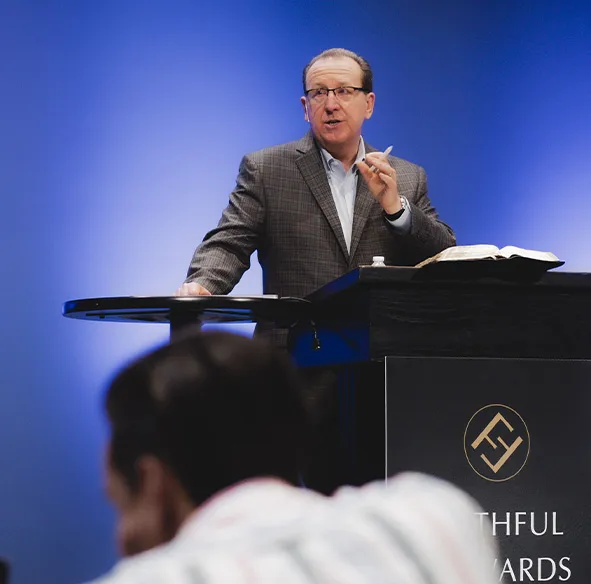
Training
Join courses and workshops designed to deepen your faith and equip you to serve others with biblical wisdom.

From the Pastor's Desk
Read pastoral messages that encourage, instruct, and help you apply God’s Word to every part of your life.

Hymns
Discover timeless hymns that lift your heart in worship and remind you of God’s abounding grace and faithfulness.
Podcasts
Stay rooted in Scripture through our podcast series.