Sermons That Exalt Christ
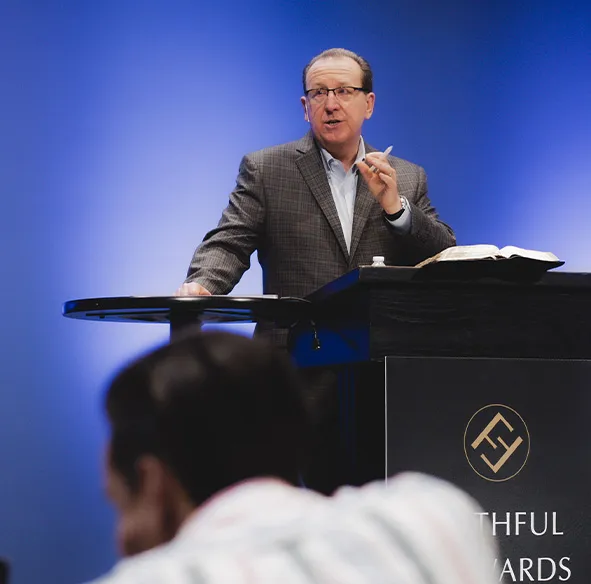
The preaching of God’s Word is central to the life of the church. Tom's pulpit ministry is dedicated to providing clear, biblical teaching to equip believers, strengthen faith, and exalt Christ.


Engage with the most recent teaching from God’s Word.
The preaching of God's Word is central to worship and of the utmost importance for the sanctification of every believer in Christ.

.jpg)
.jpg)

Explore messages organized to help you grow in Christ.
Search and filter sermons for quick access.
The Bride of Christ
The sermon explores the New Testament metaphor of Christ as the Bridegroom and the Church as His Bride, drawing parallels to first-century Jewish and Greek marriage customs. Six key similarities are highlighted. First, God the Father sovereignly chose an undeserving bride (humanity) for His Son, a prearranged marriage born of grace. Second, Christ, the Bridegroom, deliberately set His love upon this chosen bride, a decision of will. Third, Christ paid the ultimate dowry by sacrificing His life to redeem her. Fourth, like a groom preparing a home, Christ has gone to prepare dwelling places for us in His Father's house. Fifth, Christ actively prepares His bride, the Church, for the wedding, sanctifying and cleansing us through His Word and life's trials until we are holy and blameless. Finally, Christ will return to take His bride to His home forever, an event likened to the Rapture and the subsequent Marriage Supper of the Lamb. This rich metaphor underscores Christ's profound love and personal delight in us, His cherished bride.
When Proof Is Not Enough
The text posits that while substantial evidence supports the Christian faith, it doesn't inherently compel belief because human hearts are often hardened by sin. Mark 8:10-13 illustrates this, as Jewish religious leaders, despite having personally witnessed numerous miracles performed by Jesus, still demand a specific "sign from heaven" to test Him. They sought to discredit Jesus by questioning the divine source of His earthly power, implying it could be demonic. Jesus, sighing deeply in sorrow and anger, refused their demand for another sign, offering only the "sign of Jonah"�His resurrection�and then departed from them. This act symbolizes God's eventual abandonment of those who consistently refuse His clear revelation. The sermon emphasizes that persistent unbelief stems not from a lack of evidence, but from a willful refusal and spiritual inability to accept the truth. While apologetics can challenge faulty worldviews, genuine saving faith is ultimately produced by God's Spirit illuminating hearts through His Word, as human will, not intellect, is the primary barrier to belief.
Husband, Love Your Wife - Part 1
Tom Pennington's sermon "Husband, Love Your Wife" from Ephesians 5:25-33 emphasizes the radical nature of Paul's command for husbands in the first-century Mediterranean world, where women and marriage were often devalued across Jewish, Roman, and Greek cultures. He explains that while a husband is the "head," this role is a profound responsibility, not a right to dictate, echoing Christ's servant leadership for the church. The core command, "Husbands, love your wives," is an imperative, meaning no husband is exempt, regardless of his wife's actions or changes. This love is defined as *agape*�an unselfish, self-sacrificing decision of the will, focused on the highest good of the beloved, irrespective of their merit or lovability. Pennington stresses that this love should mirror Christ's love for the church: sacrificial, putting her needs before his own, actively listening, understanding, and diligently meeting her needs. Christ loved the church when she was "helpless, ungodly, sinners, enemies," setting an ultimate standard for husbands to love their wives unconditionally, even when unreciprocated. This "impossible" standard, reflecting the atonement, can only be pursued through the Holy Spirit's power guiding obedience to God's word.
A Wife's Submission to Her Husband
The sermon on Ephesians 5:22-24 addresses a wife's submission to her husband, acknowledging this teaching is counter-cultural but rooted in biblical wisdom and the Spirit's influence. Submission is a wife's constant, voluntary duty to her *own* husband, including unbelievers, meaning to willingly place her will under his God-given authority. This command does not endorse tolerating physical abuse, sinning, or refraining from offering wise counsel. Wives are to submit "as to the Lord," performing this duty out of reverence for Christ and showing genuine respect for their husband, regardless of his perceived worthiness. The reason for this submission is that the husband is the "head" (authority and leader) of the wife, reflecting Christ's headship over the church�a divine order established in creation and affirmed in doctrine. This submission applies "in everything," unless it would compel the wife to disobey God. Ultimately, this passage highlights humanity's universal rebellion and our need for Jesus' perfectly submissive life and saving work, while also serving as a powerful model for how all Christians are called to submit to Jesus Christ in every area of their lives.
The Extravagant Provision of Jesus
Tom Pennington's sermon on Mark 8:1-9, "The Extravagant Provision of Jesus," details Jesus' miraculous feeding of 4,000 people. He clarifies this event as distinct from the feeding of the 5,000 (Mark 6), highlighting differences in location (Gentile Decapolis), crowd composition (Gentile), and food quantities, a distinction Jesus himself later affirmed. Jesus exhibits deep compassion for the large Gentile crowd, who had stayed with Him for three days without food, risking collapse on their journey home. Despite the disciples' initial doubt, Jesus takes their meager seven loaves and a few fish, gives thanks, and miraculously multiplies them. Everyone eats their fill, leaving seven *large* baskets of leftovers, demonstrating God's extravagant generosity. The sermon draws key spiritual lessons: Jesus' unlimited power over creation, a visible sign of His daily provision; His impartial compassion for all people's physical needs; and God's promise to provide for His followers if they seek His kingdom first. Fundamentally, Jesus *is* the "bread of life," offering eternal spiritual sustenance to those who come to Him in faith, satisfying the soul's deepest hunger and thirst.
For the Generations to Come
Pastor Tom Pennington's sermon, "For the Generations to Come," delivered during a building dedication, posits the new facility as a tool to fulfill God's multi-generational plan, rooted in Psalm 78. Asaph's psalm teaches from Israel's history, highlighting God's love, their disobedience, and divine chastening, warning against repeating past failures. God's plan aims to spread His knowledge, produce faith, and encourage faithfulness across generations. It involves three crucial components: 1. **A single textbook:** God's revealed Word, the Scripture (Torah and Testimony), which serves as the foundational truth for life and godliness. 2. **A simple process:** Each successive generation, primarily parents, is commanded to diligently teach God's Word and works to their children, passing on the "baton of truth." This process, while not a guarantee of faith, is a vital responsibility for both families and the church community. 3. **A spiritual objective:** For future generations to put their confidence in God, remember His works, and keep His commandments, thereby avoiding the stubborn and rebellious nature of previous generations. Pennington contrasts the tragic outcome in Judges 2, where a generation forgot God due to teaching failures, with the faithfulness of Asaph's descendants 500 years later, who continued to lead worship.
No Results Found.
We couldn’t find anything matching your search.
Explore The Word Unleashed
Our ministry brings together expository preaching, theological precision, and practical application for the good of Christ's church and the daily living of Christ's people.
.webp)
Sermons
Listen to expository sermons that clearly teach God’s Word and guide you in daily living.

Radio
Tune in to gospel-centered programs that share biblical truth and strengthen your daily walk with Christ.
Training
Join courses and workshops designed to deepen your faith and equip you to serve others with biblical wisdom.
.webp)
From the Pastor's Desk
Read pastoral messages that encourage, instruct, and help you apply God’s Word to every part of your life.
.webp)
Hymns
Discover timeless hymns that lift your heart in worship and remind you of God’s abounding grace and faithfulness.
Podcasts
Stay rooted in Scripture through our podcast series.