Sermons That Exalt Christ
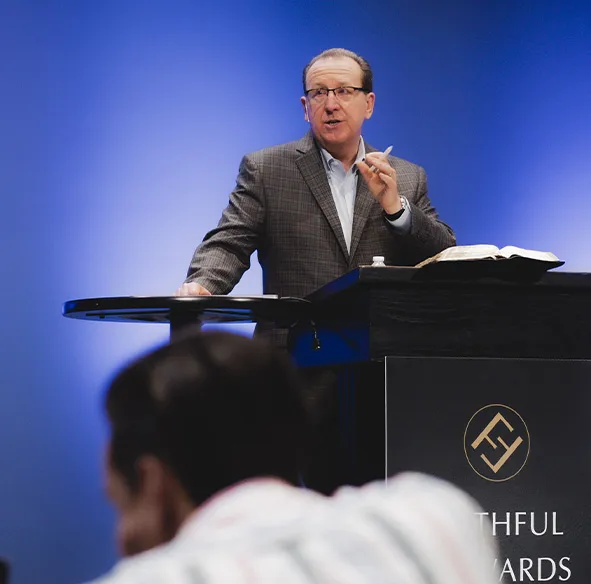
The preaching of God’s Word is central to the life of the church. Tom's pulpit ministry is dedicated to providing clear, biblical teaching to equip believers, strengthen faith, and exalt Christ.


Engage with the most recent teaching from God’s Word.
The preaching of God's Word is central to worship and of the utmost importance for the sanctification of every believer in Christ.




Explore messages organized to help you grow in Christ.
Search and filter sermons for quick access.
Benediction!
Pastor Tom Pennington concludes a multi-year study of Ephesians by examining Paul's benediction in Ephesians 6:21-24. He emphasizes that while Paul's heart and concern are evident, these verses primarily reflect Christ's heart for believers, as the entire Bible is "theo-centric" or God-centered, with biblical characters serving as supporting cast. Two core lessons are derived from this benediction. First, "If it's a care to us, it's a concern to Him." Paul sending Tychicus to inform and comfort the Ephesians about his imprisonment demonstrates Christ's own compassionate nature, showing that He cares deeply about believers' anxieties and pours Himself out for others. Second, "If it's a spiritual need for us, it's a necessity to Him." Paul's final blessings�peace, love, and grace�reflect Christ's abundant generosity in providing essential spiritual resources. Peace encompasses objective reconciliation with God and others, as well as subjective inner tranquility. Love involves a deeper understanding of God's love, growing devotion to Christ, and increased affection for fellow believers. Grace is crucial for salvation, sanctification, and service, continuously flowing from God. Ultimately, these blessings are mediated into believers' lives through diligent study and meditation on God's Word.
The Rich, Young Ruler - Part 2
Tom Pennington's sermon on Mark 10:17-27, "The Rich, Young Ruler," contrasts Jesus's direct challenge to the man with modern seeker-sensitive evangelism, highlighting the difficulty of salvation. The rich young ruler, a wealthy and outwardly moral man, asks Jesus how to inherit eternal life. Jesus confronts his flawed understanding of "goodness" and the Law, which the man claims to have perfectly kept. Jesus, "feeling love for him," then tells the man to sell all his possessions, give to the poor, and follow Him. This command exposes the man's true idol: his vast wealth. Unwilling to relinquish his riches, the man departs "saddened" and "grieving," choosing his possessions over eternal life. Jesus then teaches His astonished disciples that it is incredibly hard, even humanly impossible, for the wealthy�and by extension, anyone relying on self-merit�to enter the Kingdom of God, famously stating, "With people it is impossible, but not with God; for all things are possible with God." The sermon emphasizes that salvation is a divine miracle, not a human achievement. Personally, believers must identify and surrender any idols that rival Christ, recognizing that true faith demands total allegiance.
The Rich, Young Ruler - Part 1
This sermon unpacks the story of the rich young ruler from Mark 10:17-27, challenging prevailing first-century Jewish beliefs that wealth signified God�s blessing and good works earned salvation. The rich young ruler, an outwardly righteous and influential figure, approaches Jesus asking what *he* must *do* to inherit eternal life, seemingly believing he only lacked one thing. Jesus�s response is designed to expose the man's flawed understanding of sin and salvation. He first questions the ruler's address, stating, "No one is good except God alone," to highlight humanity�s inherent sinfulness and moral inability, emphasizing that true goodness is exclusive to God. Next, Jesus recites several commandments, not as a means to earn eternal life, but to serve the Law�s true purpose: to awaken conscience, reveal sin, and drive individuals to Christ. The Law acts as a "tutor," demonstrating the impossibility of meeting God's perfect standard through human effort, leaving sinners without excuse. The core message stresses that salvation is a gift, received like a child with no merit or accomplishments to offer.
Do You Love Jesus Christ?
Pastor Tom Pennington's sermon, "Ephesians Do You Love Jesus Christ?", posits that the heart of the Christian life is an "incorruptible love" for Jesus Christ, as highlighted in Ephesians 6:24. He stresses that this love, not merely theological knowledge or religious practice, is the primary, distinguishing mark of a true believer. The most vital question one can ask is, "Do I truly love Jesus Christ?" Pennington warns against relying on subjective, self-made standards to assess this love, such as church attendance or past decisions. Instead, he presents four objective, biblical tests of genuine love for Jesus: 1. Is Jesus more valuable to you than anything else in the world, including wealth, success, or personal comfort? 2. Is your affection for Jesus greater than for any other person, even yourself, demonstrating supreme allegiance? 3. Do you love His people�fellow Christians�actively caring for and serving the church? 4. Do you obey His commands, seeking to follow His Word and fight against sin patterns in your life?
Are There Seekers?
Pastor Tom Pennington's sermon "Are There Seekers?" critiques the modern church's "seeker-sensitive" approach, often stemming from the Church Growth Movement and pragmatic marketing strategies like Beatles-themed messages or 3D videos. While acknowledging that the Bible invites and commands men to seek God (Isaiah 55, Acts 17) and reveals His nature through creation (Romans 1), Pennington argues that humanity, in its fallen state, does not naturally seek Him. He identifies several types of "false seekers" in scripture who appear to seek God but are actually pursuing external religion without heart change (Isaiah 58), eternal life through self-effort and pride (John 5, Romans 10), temporal blessings (John 6), or mere entertainment and detached curiosity (John 11, Ezekiel 33). The sermon's core assertion is that there are no true seekers without divine intervention. Citing John 6:44, "No one can come to Me unless the Father who sent Me draws him," and Romans 3:11, "THERE IS NONE WHO SEEKS FOR GOD," Pennington emphasizes that human will is corrupt and unable to initiate a genuine search for God independently.
Watch and Pray - Part 2
This text emphasizes that prayer is as vital for our souls as breathing is for our bodies, especially in the context of spiritual warfare against Satan. Christians are called to be soldiers, depending on God and His armor (gospel truth) while continually praying. Paul's instructions in Ephesians 6:18-20 detail how to pray: with all kinds of prayer, at all times, in the Spirit, with alertness, and perseverance. Crucially, we must pray "for all the saints," meaning for ourselves and for fellow believers worldwide, combating self-focus and recognizing our shared battle. Paul's own prayer request from prison serves as a powerful example. Despite unjust imprisonment, he didn't ask for release or comfort. Instead, he sought prayer for "utterance" � God-given words to boldly proclaim the "mystery of the gospel" (Christ and the church's unity) to authorities like Caesar � and for "boldness" to speak with clarity, completeness, and courage. The overarching lesson is to view life's difficulties through the lens of spiritual warfare, not just physical circumstances or human actors. Our prayers should primarily focus on God using our situations, and those of others, to advance the gospel and His kingdom, rather than merely seeking removal of hardship or personal ease.
No Results Found.
We couldn’t find anything matching your search.
Explore The Word Unleashed
Our ministry brings together expository preaching, theological precision, and practical application for the good of Christ's church and the daily living of Christ's people.

Sermons
Listen to expository sermons that clearly teach God’s Word and guide you in daily living.

Radio
Tune in to gospel-centered programs that share biblical truth and strengthen your daily walk with Christ.
Training
Join courses and workshops designed to deepen your faith and equip you to serve others with biblical wisdom.

From the Pastor's Desk
Read pastoral messages that encourage, instruct, and help you apply God’s Word to every part of your life.

Hymns
Discover timeless hymns that lift your heart in worship and remind you of God’s abounding grace and faithfulness.

Podcasts
Stay rooted in Scripture through our podcast series.