Sermons That Exalt Christ
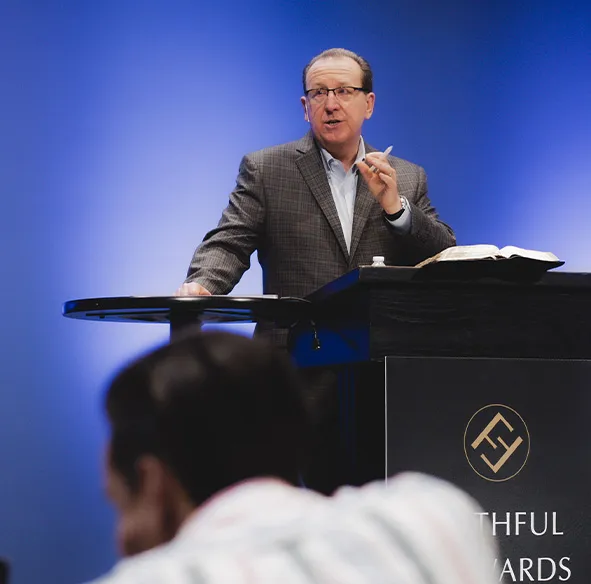
The preaching of God’s Word is central to the life of the church. Tom's pulpit ministry is dedicated to providing clear, biblical teaching to equip believers, strengthen faith, and exalt Christ.


Engage with the most recent teaching from God’s Word.
The preaching of God's Word is central to worship and of the utmost importance for the sanctification of every believer in Christ.

.jpg)
.jpg)

Explore messages organized to help you grow in Christ.
Search and filter sermons for quick access.
Lies Christians Believe (Part 5): The Stuff Mart
Pastor Tom Pennington, in his sermon series "Lies Christians Believe," challenges the prevalent cultural lie that "Possessions Will Make Me Happy." He notes that society, particularly young adults, increasingly prioritizes wealth and fame over spiritual growth or community service. This worldly mindset, Pennington argues, directly contradicts Romans 12:2, which calls believers to resist conforming to the world and instead be transformed by renewing their minds with God's truth. Materialism, defined as finding fulfillment in belongings, manifests as a continuous craving for "more," leading to excessive debt and extravagant lifestyles. This desire for possessions is a symptom of the fallen human heart and violates the First and Tenth Commandments, which forbid idolatry and covetousness. Materialism has detrimental effects on the church, hindering ministry, reducing charitable giving, stressing families, and encouraging lavish church spending. The sermon counters this lie with three biblical truths: First, God owns everything, and we possess nothing truly our own. Second, what we have is a temporary stewardship from God. Third, money and possessions can never bring true or lasting happiness, as affirmed throughout Scripture (e.g., Proverbs, Ecclesiastes, Luke 12).
Bible Study for Every Christian (Part 4): Meditation
Tom Pennington's sermon, "Bible Study for Every Christian Part 4: Meditation," emphasizes meditation as the crucial bridge between merely knowing God's Word and actually living it out. Contrasting the abundance of modern resources with historical scarcity, Pennington highlights the common gap between knowledge and application. Biblical meditation, unlike pagan practices that empty the mind, involves deliberately filling one's mind with Scripture. As the third step in inductive Bible study, meditation is vital because, according to Joshua 1:8 and Psalm 1, it leads to spiritual prosperity, wisdom, and a stable, fruitful life. What it is involves recalling, internally discussing, and deeply reflecting on Scripture to gain insight (illumination by the Holy Spirit) and to plan practical application. This deep thinking allows the truth to permeate one's understanding. To practice meditation, after observation and study, one must intentionally set aside time. Methods include asking key questions about the passage's relation to the gospel, Christ, and God, making general observations, repeating the text with varied emphasis, rephrasing it in one's own words, praying through it, and considering specific applications to daily life. This deliberate, profound engagement with Scripture is essential for spiritual growth and true transformation.
Lies Christians Believe (Part 4): A Right to be Happy
This sermon, "Lies Christians Believe: A Right to Be Happy, Part 4," challenges the pervasive American belief that the ultimate goal of life is personal happiness, urging Christians to renew their minds with God's Word rather than conform to worldly thinking (Romans 12:1-2). The pastor identifies "The Goal of Life Is My Personal Happiness" as a dangerous lie, manifesting in sentiments like "I deserve to be happy," "it's all about me," and "self-fulfillment." This idea originated in Eden (Genesis 3:6) and evolved through philosophies like hedonism and humanism, asserting that humanity's purpose is its own contentment. Within the church, this lie fosters man-centered Christianity, excuses sin by claiming "God wants me to be happy," fuels anger during trials, creates "designer churches" for "consumer Christians," and leads to man-centered evangelism and missions focused on human needs rather than divine glory. Biblically, the truth reveals three principles: 1) The end of all being is not man's happiness, but the glory of God (Romans 11:36). 2) We best glorify God when our happiness is found exclusively in Him (Psalm 16:11). 3) God's primary goal for believers is likeness to His Son, not personal comfort, often achieved through trials (Romans 8:28-29).
Crucified with Christ!
Tom Pennington's sermon, "Crucified With Christ," from Galatians 2:19-20, emphasizes the core Christian doctrine of justification by faith alone. He sets the stage with Paul's confrontation of Peter, who compromised the gospel by withdrawing from Gentiles due to fear of Judaizers, who insisted on circumcision and Law-keeping for salvation. Pennington explains that Paul's message is clear: salvation is solely "through faith in Christ Jesus," not by "works of the Law." To "die to the Law" (Galatians 2:19) means that believers spiritually participated in Christ's crucifixion. Christ bore the curse and death sentence for our failure to keep the Law, satisfying its demands completely. Consequently, the Law no longer has jurisdiction over us. This spiritual death with Christ results in several transformations: our old self dies, and a new self, a new creation, emerges, empowered by Christ living within. This new life is characterized by "faith in the Son of God," an unwavering, moment-by-moment reliance on Him for both salvation and daily living, acknowledging His personal love and sacrifice. Pennington concludes by urging believers to repudiate all human merit, beware of adding works to the gospel, actively fight against false gospels, and live in constant, personal reliance on Christ.
Lies Christians Believe (Part 3): The Randomness of Everything
Tom Pennington's sermon, "The Randomness of Everything," challenges the widespread cultural lie that life, history, and individual events lack design or purpose. This idea, rooted in naturalism and expressed in popular culture, undermines Christians' confidence in God's character, steals joy in trials, and encourages personal autonomy. Pennington asserts the biblical truth: God is absolutely sovereign, ruling over everything with a wise, eternal plan. His providence meticulously works out this plan in every detail of every life. This includes our birth, circumstances, successes, failures, free decisions, and even seemingly accidental events. God permits and directs the results of sinful choices, using them to accomplish His ultimate purpose: to redeem a people for His Son's glory. For believers, understanding God's sovereignty means submitting to His providence, not assuming personal plans will align with His, and trusting that all things work together for good. This truth fosters a fearless outlook on the future and deep gratitude for God's precise and loving control over every aspect of existence, ensuring nothing happens outside His perfect purpose.
Bible Study for Every Christian (Part 3): Observation
The sermon outlines a systematic, inductive approach to Bible study, primarily focusing on the "observation" stage. It first addresses common challenges, assuring that initial awkwardness, like learning a new habit, will subside with practice, and encourages starting with small, consistent time commitments (15-30 minutes several times weekly). This rigorous study, the speaker insists, is for all Christians. The observation stage involves several critical steps. After recalling prior steps like understanding the big picture, selecting a book, reading its background, multiple readings, identifying paragraphs, and asking questions, new methods are introduced. These include looking up proper nouns (people, places) in Bible dictionaries to grasp contextual details. Crucially, students must analyze grammar using "block diagramming," which visually arranges phrases and clauses to reveal their relationships and the author's intended meaning�a process called exegesis (leading meaning *out* of the text). Following this, a preliminary theme is identified�the paragraph's core message summarized in one sentence. Further steps involve consulting cross-references via study Bibles and concordances to connect the text to broader Scripture, and finally, studying key words. Word studies entail using dictionaries and concordances to explore various senses, connotations, and usages, while carefully avoiding fallacies like the "root fallacy" or imposing personal preferences.
No Results Found.
We couldn’t find anything matching your search.
Explore The Word Unleashed
Our ministry brings together expository preaching, theological precision, and practical application for the good of Christ's church and the daily living of Christ's people.
.webp)
Sermons
Listen to expository sermons that clearly teach God’s Word and guide you in daily living.

Radio
Tune in to gospel-centered programs that share biblical truth and strengthen your daily walk with Christ.
Training
Join courses and workshops designed to deepen your faith and equip you to serve others with biblical wisdom.
.webp)
From the Pastor's Desk
Read pastoral messages that encourage, instruct, and help you apply God’s Word to every part of your life.
.webp)
Hymns
Discover timeless hymns that lift your heart in worship and remind you of God’s abounding grace and faithfulness.

Podcasts
Stay rooted in Scripture through our podcast series.