Sermons That Exalt Christ
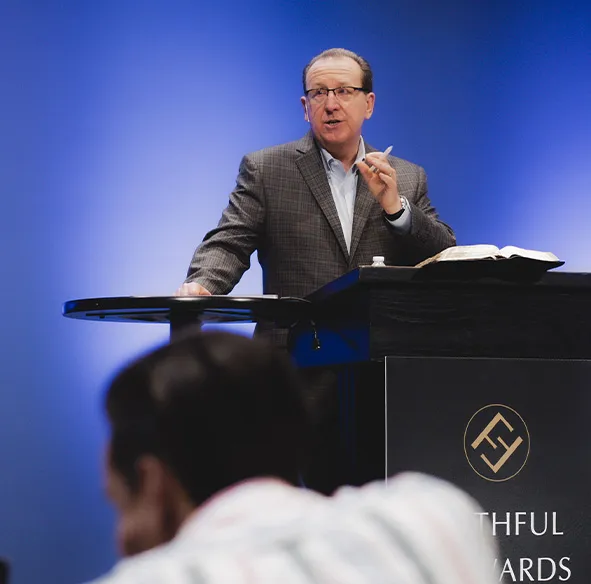
The preaching of God’s Word is central to the life of the church. Tom's pulpit ministry is dedicated to providing clear, biblical teaching to equip believers, strengthen faith, and exalt Christ.


Engage with the most recent teaching from God’s Word.
The preaching of God's Word is central to worship and of the utmost importance for the sanctification of every believer in Christ.

.jpg)
.jpg)

Explore messages organized to help you grow in Christ.
Search and filter sermons for quick access.
Radical Truthfulness - Part 1
The sermon "Radical Truthfulness" from Matthew 5:33-37 addresses the widespread issue of dishonesty, which the speaker describes as an epidemic permeating all aspects of society, from governments to personal interactions. From a biblical perspective, every word is either truth or a lie, originating with Satan and characteristic of fallen humanity. God profoundly hates lying, deeming it a damning sin that precludes entry into Heaven. Jesus calls His disciples to "radical truthfulness," contrasting it with the scribes' and Pharisees' flawed interpretations of Old Testament commands. They distorted the law by focusing primarily on avoiding perjury and fulfilling vows made explicitly to God, while creating elaborate distinctions for oaths (e.g., swearing by Heaven versus by God's name) to justify everyday untruthfulness. Jesus condemns these "equivocating schemes," demanding absolute honesty. The speaker identifies modern forms of untruthfulness: outright lying, slander, deception, cheating, false accusations, and even false profession of faith�claiming Christianity while living in unrepentant sin. This high standard of truthfulness exposes humanity's pervasive sinfulness, driving individuals to seek forgiveness solely through Jesus Christ. Christ, who never lied, suffered God's wrath for all sins, including every lie.
Gethsemane! - Part 1
In a sermon on Mark 14:32-42, Pastor Tom Pennington delves into Jesus's agonizing experience in Gethsemane, presenting it as a moment of profound struggle and revelation of His role as Savior. He contrasts Jesus's earlier serene prayers with the "heart-wrenching anguish" in the garden, where Jesus, as a fully human being, became "very distressed and troubled," His soul "grieved to the point of death." Jesus prayed fervently, with "loud crying and tears," even to the point of sweating blood, asking the Father to "remove this cup from Me; yet not what I will, but what You will." The "cup" symbolizes not just physical suffering or death, but the full, terrifying wrath of God against the sins of all humanity, which Jesus was about to bear�an experience of divine alienation and burden beyond human comprehension. Despite this immense struggle, Jesus's perfect obedience and voluntary suffering shine through. He never contemplated refusing God's will, instead embracing this ultimate temptation and sacrifice to initiate redemption. This willing submission, born of love and obedience, became the source of eternal salvation for all who believe.
What Jesus Really Said About Divorce - Part 3
This sermon, "What Jesus Really Said About Divorce (Part 3)," examines biblical grounds for divorce and remarriage based on Matthew 5:31-32. The speaker notes that most common reasons for divorce today are not biblically sufficient. Jesus teaches that marriage is a lifelong covenant between one man and one woman, and God fundamentally opposes divorce. An unbiblical divorce, followed by remarriage, is considered the moral equivalent of adultery, making all parties involved guilty. However, Jesus provides two specific exceptions where divorce and subsequent remarriage are permissible. The first, found in Matthew 5:32 and 19:9, is due to "unchastity" or "immorality" (Greek: *porneia*). This encompasses all forms of sexual sin with another entity forbidden by Scripture, such as adultery, homosexuality, and incest. While permitting divorce, it does not demand it, leaving room for reconciliation. The second exception, outlined in 1 Corinthians 7:12-15, addresses abandonment by an unbelieving spouse. If one spouse is a believer and the other an unbeliever (a term that includes those unrepentantly disciplined by the church), and the unbeliever clearly wishes to end the marriage, the believing spouse is "not under bondage" and is free to remarry. This provision aims for peace.
Unfaithful Disciples & A Faithful Lord
This text, "The Memoirs of Peter Unfaithful Disciples and A Faithful Lord Mark 14:27-31," uses the Pelagius-Augustine debate to introduce its central theme: human inability versus divine grace. After the Passover meal and institution of the Lord's Supper, Jesus and His disciples walk to Gethsemane. En route, Jesus predicts their universal desertion, quoting Zechariah 13:7: "I will strike down the Shepherd and the sheep will be scattered." He assures them, however, that this scattering will be temporary, followed by His resurrection and their reunion in Galilee. Peter, demonstrating immense pride and unbelief, vehemently insists he will never deny Jesus, even unto death. Jesus then precisely prophesies Peter�s threefold denial before the rooster crows twice, revealing this as both a sharp rebuke to Peter's self-confidence and an act of grace intended to lead him to repentance. The core lesson emphasizes God's preservation of His own. The sermon argues that, like Peter, we are "promise breakers," inherently unable to maintain our faith through personal willpower or commitment. Instead, our perseverance is secured entirely by the power of God through the continuous intercession of Jesus Christ.
What Jesus Really Said About Divorce - Part 2
Pastor Tom Pennington's sermon, "What Jesus Really Said About Divorce," from Matthew 5:31-32, critiques the modern evangelical tendency to prioritize personal happiness over biblical truth, which fosters a lax view on marriage. He explains that Jesus corrected the scribes' misinterpretation of Deuteronomy 24, which they used to permit "no-fault" divorce. Pennington asserts that marriage, designed by God from creation, is a permanent, "one flesh" union between one man and one woman, making it a divine institution, not a mere social contract. God explicitly states, "I hate divorce" (Malachi 2:16), and Moses' permission for divorce was due to humanity's "hardness of heart" and failure to uphold God's law. Unbiblical divorce, even without remarriage, is a sin. Remarriage after an unbiblical divorce is considered ongoing adultery for all involved parties (the divorcing spouse, the divorced spouse, and any new spouse), until genuine repentance. This severe view stems from divorce violating God's own covenantal character of unfailing loyalty. Pennington concludes by urging repentance for past unbiblical divorces and steadfast commitment to marriage for life, upholding God's original design.
The Lord's Supper
Tom Pennington's sermon on Mark 14:22-26 details the institution of the Lord's Supper by Jesus during the Last Supper, a radical change from the traditional Passover meal. Jesus took unleavened bread, broke it, and declared, "This is My body," symbolizing His incarnation and substitutionary death for believers. He then took the third cup of the Passover, traditionally a cup of redemption, stating, "This is My blood of the covenant, which is poured out for many." This cup symbolizes His blood shed to ratify the new covenant and secure the forgiveness of sins, offering spiritual redemption. The sermon emphasizes a symbolic interpretation of these elements, rejecting views like transubstantiation, and highlights the Lord's Supper as a perpetual remembrance of Christ's sacrifice. Notably, Jesus refused the fourth Passover cup, signifying that the communion begun that night is not yet complete but anticipates a future feast with believers in God's kingdom. This ordinance is a command for all Christians to observe "until He comes," concluding with Jesus and His disciples singing Psalms 115-118 before departing for Gethsemane.
No Results Found.
We couldn’t find anything matching your search.
Explore The Word Unleashed
Our ministry brings together expository preaching, theological precision, and practical application for the good of Christ's church and the daily living of Christ's people.
.webp)
Sermons
Listen to expository sermons that clearly teach God’s Word and guide you in daily living.

Radio
Tune in to gospel-centered programs that share biblical truth and strengthen your daily walk with Christ.
Training
Join courses and workshops designed to deepen your faith and equip you to serve others with biblical wisdom.
.webp)
From the Pastor's Desk
Read pastoral messages that encourage, instruct, and help you apply God’s Word to every part of your life.
.webp)
Hymns
Discover timeless hymns that lift your heart in worship and remind you of God’s abounding grace and faithfulness.
Podcasts
Stay rooted in Scripture through our podcast series.