Sermons That Exalt Christ
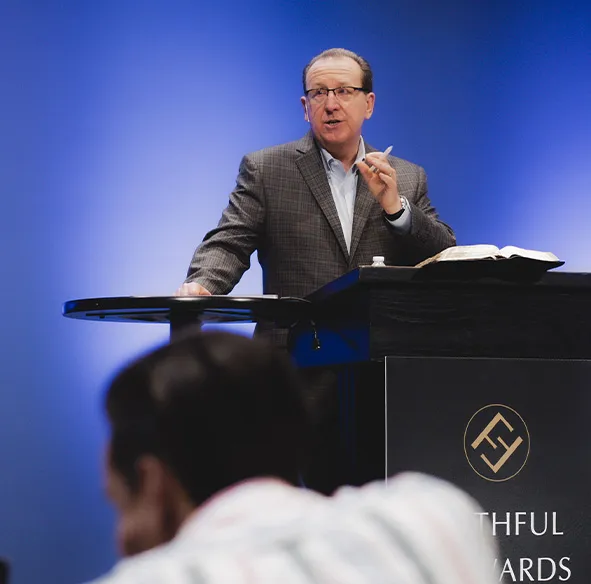
The preaching of God’s Word is central to the life of the church. Tom's pulpit ministry is dedicated to providing clear, biblical teaching to equip believers, strengthen faith, and exalt Christ.


Engage with the most recent teaching from God’s Word.
The preaching of God's Word is central to worship and of the utmost importance for the sanctification of every believer in Christ.

.jpg)
.jpg)

Explore messages organized to help you grow in Christ.
Search and filter sermons for quick access.
Your Only Reasonable Response to the Gospel - Part 4
Tom Pennington�s sermon on Romans 12:1-2 calls believers to present their bodies and minds as a living sacrifice in response to God's mercies. This requires rejecting conformity to the "mindset of the age," which is controlled by Satan and manifested in various humanistic philosophies. The text warns against "obscurantism"�misinterpreting scripture to oppose truth, citing the church's condemnation of Galileo and its historical justification of slavery. Instead, Christians must "be transformed by the renewing of your mind," undergoing a continuous, inward metamorphosis of character. This transformation is not primarily emotional or behavioral but a fundamental change in one's "way of thinking," or "spirit of your mind." Accomplished by the Holy Spirit through consistent engagement with God's Word, this process involves diligently learning, understanding, and applying Scripture, particularly by contemplating the glory of Christ. The result is the ability to "prove what the will of God is," discovering it to be good, acceptable, and perfect. This renewal into Christ's moral character is God's ultimate purpose for saving us.
Seventy Years & Seventy Weeks - Part 1
The sermon on Daniel 9 (Part 1) emphasizes that a person's true character is revealed in private prayer. Daniel, at 82, studied Jeremiah's prophecy, understanding Israel's 70-year Babylonian captivity as divine punishment for 490 years of neglecting Sabbath land rests (Leviticus 25-26). Believing in literal prophecy and seeing the 70 years nearing completion (538 BC), he was compelled to pray. Daniel's prayer is a model, marked by single-mindedness, faith in God's sovereignty (Adonai), persistence, and deep humility (fasting, sackcloth, ashes). Structured with adoration, confession, and petition, he first adores God for His grace (Yahweh), sovereignty, and steadfast covenant love. Daniel then identifies with Israel�s collective rebellion, confessing their sin as missing God's mark, twisted, criminal, and a refusal to heed prophets. He accepts God�s righteous judgment, admitting Israel deserved the "shame of face" and calamity. Crucially, he places hope in God's abundant compassion and forgiveness despite their rebellion. The sermon highlights two lessons: genuine Christians continually confess and mourn over sin. Most importantly, scripture, especially God's promises (like Jeremiah 29), should drive and shape our prayers.
Your Only Reasonable Response to the Gospel - Part 3
The sermon on Romans 12:1-2 emphasizes that the only reasonable response to God's mercy and salvation is a total commitment, presenting one's body and mind as a living sacrifice. This message specifically focuses on the command to "not be conformed to this world," which the speaker defines as resisting the "zeitgeist" or prevailing mindset of our age, a subtle influence controlled by Satan. Worldliness isn't just obvious sin, but a pervasive shaping of our thinking that then dictates behavior. The sermon details several anti-biblical philosophies dominating the current age: Naturalism (denying the supernatural, promoting evolution, moral relativism, and man's equality with animals), Humanism (making man's happiness the ultimate goal, leading to personal fulfillment and democratic morality), Marxism (viewing wealth as immoral and advocating government redistribution), and Postmodernism (denying objective truth, promoting pragmatism, subjective gender identity, and religious inclusivism). These ideas constantly assault believers through education, media, entertainment, and social interactions. The speaker asserts there are no truly independent thinkers; our minds are shaped either by God's Word or by Satan's worldly philosophies. Therefore, Christians are responsible to identify and reject this flawed thinking, ensuring their thoughts are solely directed and determined by God's revelation in Scripture.
Your Only Reasonable Response to the Gospel - Part 2
The sermon on Romans 12:1-2 asserts that the only reasonable response to God's immense mercies and salvation in the Gospel is a total, radical commitment to Him, encompassing both body and soul. Paul urges believers to present their bodies as a "living and holy sacrifice, acceptable to God, which is your spiritual service of worship." This command is grounded in the exhortation of Scripture, our relationship with God as adopted children, and the profound mercies detailed in Romans 1-11. Presenting our bodies as a sacrifice means daily denying ourselves, acknowledging Christ's ownership of our bodies (1 Corinthians 6:19), and living for Him, not ourselves. The sacrifice must be: 1. **Living:** This denotes a perpetual, continuous, daily offering, not a singular event or occasional rededication. Believers are called to persistent discipleship without "vacation." 2. **Holy:** Our bodies must be set apart for God, belonging solely to Him, and morally pure, characterized by practical obedience and abstinence from sin, particularly sexual immorality (1 Thessalonians 4). True worship requires daily obedience. This offering is "acceptable to God," meaning it truly pleases Him, and it is our "spiritual service of worship" (logikos), signifying it is both thoughtful and logically reasonable given His mercies.
The Ram, the Goat, and the Little Horn - Part 3
In "Daniel The Ram, the Goat, and the Little Horn (Part 3) Daniel 8," Pastor Tom Pennington interprets Daniel chapter 8, highlighting God�s loving warning to His people about future intense persecution. The vision unfolds with a ram, symbolizing the Medo-Persian Empire, being overthrown by a shaggy goat, representing Greece under Alexander the Great. Following Alexander�s demise, the goat�s large horn breaks into four, signifying the four successor kingdoms. From one of these arises the "little horn," identified as Antiochus Epiphanes, an insolent and deceitful Seleucid king from the 100s B.C. This interpretation is revealed to Daniel by the angel Gabriel, who is commanded by the Son of God. Antiochus Epiphanes' agenda was to Hellenize the Jews and brutally persecute those who resisted, for a period of 2,300 days. However, God promised Antiochus's destruction "without human agency," demonstrating His sovereignty. The text concludes with several lessons: acknowledging the power of sin, recognizing God�s sovereign purposes in allowing evil and suffering, and understanding that God's character is on display even in the worst times.
Your Only Reasonable Response to the Gospel - Part 1
This sermon introduces Romans 12:1-2 as a pivotal transition from the doctrinal "indicatives" of the gospel (chapters 1-11) to its practical "imperatives" in daily life. The core message is that the only reasonable response to God's saving grace is a radical, total commitment of one's body and soul to Him. This commitment is grounded in three motivations: the authoritative exhortation of Scripture, the believer's relationship as a child of God, and most importantly, the profound "mercies of God" detailed throughout Romans 1-11. These mercies, encompassing justification, peace, reconciliation, and divine election, compel believers not out of servile fear or an attempt to earn favor, but out of love and gratitude. A deep grasp of God's mercy is crucial for genuine spiritual growth and holiness. The demonstration of this commitment involves presenting our bodies as a "living and holy sacrifice." This entails continually denying oneself, valuing Christ above one's own life, living in the awareness that our bodies belong to Christ (having been bought with a price), and committing to live for Him rather than for self.
No Results Found.
We couldn’t find anything matching your search.
Explore The Word Unleashed
Our ministry brings together expository preaching, theological precision, and practical application for the good of Christ's church and the daily living of Christ's people.
.webp)
Sermons
Listen to expository sermons that clearly teach God’s Word and guide you in daily living.

Radio
Tune in to gospel-centered programs that share biblical truth and strengthen your daily walk with Christ.
Training
Join courses and workshops designed to deepen your faith and equip you to serve others with biblical wisdom.
.webp)
From the Pastor's Desk
Read pastoral messages that encourage, instruct, and help you apply God’s Word to every part of your life.
.webp)
Hymns
Discover timeless hymns that lift your heart in worship and remind you of God’s abounding grace and faithfulness.
Podcasts
Stay rooted in Scripture through our podcast series.