Sermons That Exalt Christ

The preaching of God’s Word is central to the life of the church. This page is dedicated to providing clear, biblical teaching designed to equip believers, strengthen faith, and exalt Christ.

Black and white close-up of a person writing in a notebook with an open book beside them.
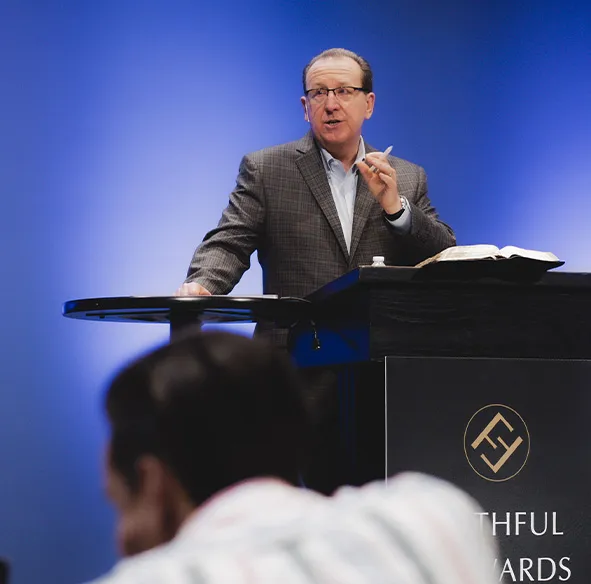
A man giving a speech at a podium.

Explore messages organized to help you grow in Christ.

Search and filter sermons for quick access.

2026
2025
2024
2023
2022
2021
2020
2019
2018
2017
2016
2015
2014
2013
2012
2011
2010
2009
2008
2007
2006
2005
2004
2003
Mark - The Memoirs of Peter
Sunday Evening Online
Trending vs. Truth
Recovering a Lost Legacy
Q&A
Ordination Services
Missions Sunday
Embracing Our Church's Distinctives
Thanksgiving Sermons
Christmas Sermons
Passion Week Sermons
An Aerial View of the New Testament
An Aerial View of the Old Testament
Anchored Section 1
Anchored Section 2
Anchored Section 3
Baptism Services
Bible Study for Every Christian
Bridge Over Troubled Water
Christmas Concert Messages
Committing to Christian Relationships
Daniel
Deadly Dangers
Ephesians
Five Hallmarks of a Biblical Church
Hold Fast
Hook, Line and Sinker
Just by Faith Alone
Lies Christians Believe
Look in the Mirror!
Lord, Teach Us To Pray
Marriage & Family by God's Design
No Whining Allowed
Power Over Temptation
Preserving the Unity of the Church
Psalm 23
Revelation
Riches to Rags
Romans
Ruth
Sanctification
Six Steps to Spiritual Stability
Systematic Theology
The Distinctives of Countryside Bible Church
The First Testament of Jesus Christ
The Memoirs of Peter
The Reason We Live
The Sermon on the Mount
United in Christ!
Watch Your Mouth!
We Were Made to Worship
When Life's Not Fair
Your Faith, Dead or Alive?
2 Corinthians
Numbers
Revelation
1 John
1 Peter
Titus
James
Hebrews
2 Timothy
1 Timothy
2 Thessalonians
Colossians
Philippians
Ephesians
Galatians
1 Corinthians
Acts
Romans
John
Mark
Luke
Matthew
Malachi
Proverbs
Daniel
Lamentations
Isaiah
Ecclesiastes
Deuteronomy
Genesis
Exodus
Ruth
Psalms
1 Samuel
Thank you! Your submission has been received!
Oops! Something went wrong while submitting the form.
2025-07-27

The Gentle

The sermon "Matthew The Gentle" examines the third Beatitude from Matthew 5:5, emphasizing that true gentleness originates from a changed heart, contrasting it with superficial moral reformation. This quality, defining genuine Christians, is rooted in an awareness of spiritual poverty and mourning over sin. Biblical gentleness is neither weakness nor mere human niceness; it's a profound, Spirit-produced virtue characterized by a humble heart, submission to God's sovereign will and Word, and a gentle manner towards all people, even when provoked. This includes accepting circumstances without complaint and treating others with grace, as exemplified by Moses and Jesus. The promise to the gentle is twofold: they are "blessed," experiencing spiritual prosperity and inner joy from God's grace, and they "will inherit the earth," referring to a future place in God's eternal new earth. Conversely, individuals consistently marked by pride, anger, and a refusal to submit will not inherit God's kingdom. This Beatitude serves as a crucial test of one's spiritual state. Believers are encouraged to cultivate this virtue through prayer, recognizing their spiritual poverty, mourning sin, contemplating Christ, and trusting God's sovereignty.

Matthew
Tom Pennington
Access Now
|
Matthew
2025
2025-07-20

Our Spiritual Biography

2 Thessalonians
2:13-14
Tom Pennington
Access Now
|
2 Thessalonians
2025
2025-07-06

Those Who Mourn

Tom Pennington's sermon on Matthew 5:4, "Blessed are those who mourn," distinguishes true Christians from those who downplay sin. Unlike a lighthearted admission of flaws, genuine mourning is a profound sorrow over one's own sins and the sins of others, akin to grieving a loved one's death, and is an emotional response to spiritual bankruptcy. This sorrow isn't over life's difficulties or merely sin's consequences, but a godly grief that leads to repentance and God's comfort. Believers experience this comfort in the past through salvation, in the present through daily confession and forgiveness, and eternally in the future when all sin and sorrow cease. Mourning is a continuous, lifelong characteristic for true followers of Christ. In stark contrast, unbelievers ignore, rationalize, rename, or even celebrate sin, laughing at it. Jesus warns that those who laugh at sin now will face eternal mourning and weeping. The sermon urges self-examination for genuine faith and a continuous practice of mourning sin, assuring believers of God's faithful and unending comfort.

Matthew
Tom Pennington
Access Now
|
Matthew
2025
2025-06-29

The Poor in Spirit

Pastor Tom Pennington begins a study of Jesus' Beatitudes, focusing on Matthew 5:3: "Blessed are the poor in spirit." He contrasts physical beggars in Mumbai with the spiritual reality that all true Christians are "spiritual beggars." The Beatitudes are crucial for interpreting the Sermon on the Mount, describing those who are already Jesus' true subjects, a state produced by God's grace. The word "blessed" (makarios) signifies being in a desirable circumstance, experiencing inner joy, and receiving God's unique favor. "Poor in spirit" does not mean a weak character, false humility, or financial poverty. Rather, it means being deeply aware of one's complete spiritual bankruptcy before God, acknowledging this profound need, and humbly begging God for His grace. The parable of the Prodigal Son powerfully illustrates this realization and turning to God as a beggar. Conversely, unbelievers are "spiritually rich" in their own eyes, filled with self-righteousness and spiritual pride, believing they need nothing from God. Jesus clarifies that the only way into God's kingdom is to recognize one's spiritual sickness. The phrase "for theirs is the kingdom of heaven" affirms that those who are poor in spirit already belong to Jesus' spiritual kingdom through grace alone.

Matthew
Tom Pennington
Access Now
|
Matthew
2025
2025-06-22

An Introduction to the Beatitudes

Tom Pennington's sermon introduces the eight Beatitudes (Matthew 5:3-12) as defining the character of true citizens of God's kingdom. He outlines four guiding principles for their interpretation. Firstly, the Beatitudes describe *all* true Christians, who inherently display and must actively grow in *all* these qualities. Secondly, their *opposites* define every unbeliever. Luke 6's corresponding "woes" illustrate that there are only two spiritual kingdoms�Satan's or God's�providing a stark contrast for self-examination. Thirdly, these qualities are not natural, merited, or achieved by human effort. Instead, they are supernaturally produced solely by God's grace through the "new birth" and the Holy Spirit's ongoing work in a believer's heart. They indicate *who you are* in Christ, rather than a checklist for salvation. Finally, Jesus Christ is the only one who perfectly lived out these Beatitudes (except being "poor in spirit," as He was spiritually rich). He never sinned, lacked a sin nature, and was entirely righteous. True Christians, by grace, already reflect His moral character to some extent and will perfectly one day. Pennington concludes by urging self-examination: if one genuinely desires these qualities despite unworthiness, it signifies new life.

Matthew
Tom Pennington
Access Now
|
Matthew
2025
2025-06-15

An Introduction to the Sermon on the Mount

The Sermon on the Mount, found in Matthew 5-7, is widely recognized for its profound moral grandeur, influencing Western civilization and earning praise from figures like St. Augustine, Daniel Webster, and Immanuel Kant. Pastor Tom Pennington introduces this extraordinary journey, explaining that Jesus preached it due to His teaching priority and the spiritual confusion caused by His immense popularity. Though condensed, this sermon provides "The Principles of His Kingdom," intended primarily for His disciples, not as a universal ethical system achievable by human effort alone. It outlines the character and influence of kingdom citizens, the righteousness expected (heart obedience, loving God supremely, right relationships with others), and warnings against false entrances, teachers, and professions. Pennington emphasizes the "Reformed Interpretation," known as the "Realized Eschatological View," which acknowledges the "already, but not yet" reality of God's kingdom. This means its spiritual truths apply to believers today, enabling "Kingdom Living: Here and Now." The sermon serves two crucial objectives: to show unbelievers the impossibility of meriting acceptance with God, driving them to the Gospel of grace, and to instruct disciples on how to live in Christ's spiritual kingdom, leading to true happiness, effective evangelism, and pleasing God.

Matthew
Tom Pennington
Access Now
|
Matthew
2025

No Results Found.

We couldn’t find anything matching your search.

Now Playing -
Now Playing
00:00
-00:00