Sermons That Exalt Christ
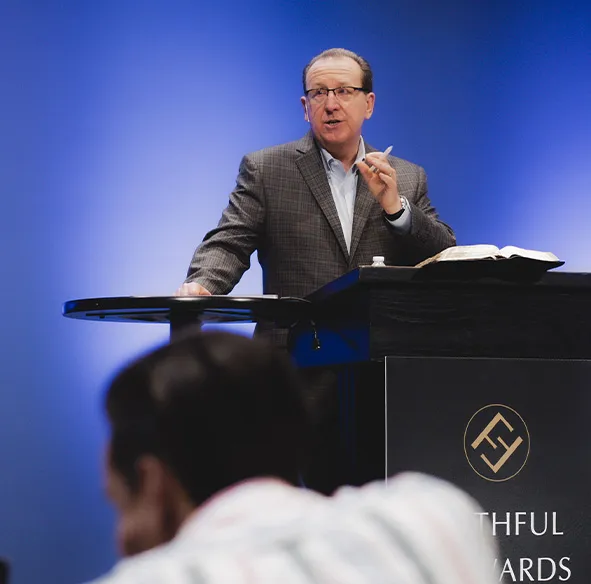
The preaching of God’s Word is central to the life of the church. Tom's pulpit ministry is dedicated to providing clear, biblical teaching to equip believers, strengthen faith, and exalt Christ.


Engage with the most recent teaching from God’s Word.
The preaching of God's Word is central to worship and of the utmost importance for the sanctification of every believer in Christ.

.jpg)
.jpg)

Explore messages organized to help you grow in Christ.
Search and filter sermons for quick access.
The Joy of Giving - Part 2
Pastor Tom Pennington's sermon "The Joy of Giving, Part 2," drawn from Philippians 4:14-19, underscores the profound importance of Christian giving. He identifies materialism, debt, and a lack of knowledge or obedience as common obstacles to faithful giving, emphasizing that giving is crucial to God. Pennington outlines four core principles for Christian giving: 1. **Give with the right mindset:** View giving as a partnership in advancing the gospel. 2. **Give according to God�s prescribed plan:** Giving should primarily flow through the church, supporting gospel initiatives, those in need, and local church ministries, consistently and systematically. Unlike Old Testament tithes, the New Testament emphasizes freewill offerings, determined by individual desire, ability (even sacrificially), and personal purpose, always given cheerfully, not under compulsion. 3. **Give with spiritual motives:** Focus on the spiritual "profit" or eternal blessings that accrue to the giver, rather than seeking material returns. Giving is ultimately an act of worship and a test of one's allegiance to God. 4.
The Joy of Giving - Part 1
Pastor Tom Pennington introduces "The Joy of Giving" from Philippians 4:14-19, acknowledging the topic's unpopularity among preachers and congregations. He clarifies his motives are not personal financial gain or church distress, but rather because giving is a direct theme of the Scripture passage and one of five essential activities commanded for corporate worship (praise, prayer, reading, teaching, and giving). He asserts that giving is an absolutely essential and greatly beneficial part of the Christian life. Pennington outlines two core principles of Christian giving. First, "give with the right mindset," viewing giving as a partnership (koinonia) with fellow believers and God in the advancement of the gospel. The Philippians' support for Paul exemplifies this, as does Christ's teaching that caring for the "least of these" is caring for Him. Second, "give according to God�s prescribed plan." This involves two aspects: giving should primarily flow through the local church, as demonstrated by New Testament examples, and it should be directed towards God's established priorities. These priorities include supporting missionaries, helping those in need (with a primary focus on fellow believers and family), and sustaining the local church's ministry, especially those who labor in teaching and preaching.
Great Is Thy Faithfulness!
This sermon, "Systematic Theology Great Is Thy Faithfulness!", underscores the foundational importance of understanding God's character, particularly His faithfulness, for one's spiritual life. It posits that what one believes about God shapes their spiritual future, emphasizing that God stands in absolute contrast to unfaithful humanity. God's faithfulness is intricately linked to His truthfulness: He is metaphysically genuine, logically rational, ethically reliable in His communication, and covenantally true, always fulfilling His promises. The sermon illustrates God's faithfulness through various demonstrations: His righteous judgment of the wicked, His chastening of the righteous, His care, protection, and preservation of believers, His guarantee of eternal promises, and supremely, in the person of Jesus Christ. Practically, knowing God's unwavering faithfulness should inspire praise, guarantee ultimate salvation, ensure forgiveness for confessed sins, strengthen faith, provide hope and comfort in suffering, and protect from sin by offering a way of escape from temptation. Believers are called to imitate God's faithfulness in their relationships and service. Ultimately, God will use faithfulness as the standard for judging our service. This profound truth serves as the bedrock of confidence, hope, and joy for believers, enabling them to trust God's unfailing promises even amidst life's greatest trials.
Contentment: The Lost Virtue - Part 3
The sermon "Contentment: The Lost Virtue" opens by contrasting our privileged modern lives with the discomforts of King Louis XIV's opulent Versailles, highlighting humanity's persistent struggle with contentment despite material advancements. Pastor Tom Pennington explains that discontent stems from internal craving and coveting, not external circumstances. Drawing from Philippians 4:10-13, he defines contentment as self-sufficiency and delight in God-ordained situations, emphasizing it's a heart attitude, not an excuse for idleness. To achieve lasting contentment, four attitudes are essential. First, find your ultimate joy in God, as no earthly possession or experience can truly satisfy the soul. Second, focus your attention on others; Paul's rejoicing over the Philippians' gift was rooted in their spiritual profit, not just his personal gain, demonstrating how selflessness counters discontent. Third, fix flawed thinking about circumstances: recognize that external situations do not cause discontent (it resides in the heart), understand that contentment can be learned in any condition (humble or prosperous), and accept that no circumstances are perfect�choose to focus on abundance rather than perceived lack. Finally, the "secret" to contentment lies in finding your strength in Christ, as articulated in Philippians 4:13.
The Ultimate Standard
The text defines God's righteousness as the ultimate standard for all existence, illustrating this by comparing it to the need for consistent measurements in the physical world. God is inherently (absolutely) righteous, meaning He *is* what is right, and His perfect character serves as the benchmark against which everything, including humanity, falls short (Romans 3:23). Beyond His being, God also demonstrates His (relative) righteousness through His actions. This includes legislating just laws, communicated through conscience and Scripture, which are not arbitrary but reflect His own nature. Furthermore, God's relative righteousness is distributive, meaning He impartially administers reward or punishment. While rewards for faithful service are given by His grace, not strict merit, punishment for sin is justly deserved, expressing God's holy revulsion toward evil. The implications of God's righteousness are profound: it argues for His existence, mandates that human government should reflect His justice, confirms that judgment is coming for all, and demands wrath for His enemies. It means His ways, even those we don't fully understand, must not be questioned. Most importantly, God's righteousness was both vindicated and satisfied through the death of Christ, allowing Him to justify believers by crediting them with Christ's perfect righteousness.
Contentment: The Lost Virtue - Part 2
This sermon identifies America's national sinful propensity as discontent, evidenced by constant job changes, rampant materialism, and a perpetual desire for "twice as much" as one currently possesses. This insatiable restlessness was even observed by Alexis de Tocqueville in the 1830s. Pastor Tom Pennington explains that biblical contentment, as articulated by Paul in Philippians 4:10-13, is an acquired state of mind, not an inherent trait. It means being truly satisfied in God despite one's circumstances, accepting one's lot as God's best, and is the direct opposite of coveting or craving. Paul himself learned this over time, realizing his deepest pre-conversion sin was coveting. To cultivate this contentment, the first essential attitude is to find ultimate joy in God. This involves recognizing that coveting is idolatry, as it seeks joy outside of God. Practical steps include investing in "heaven's currency"�godliness and Christ-likeness, which hold eternal value�and meditating on the surpassing worth of Jesus Christ above all earthly treasures. Just as the rich farmer Al Hafed missed the diamond mine on his own land while searching elsewhere, we often pursue temporary "baubles" instead of embracing God, the universe's greatest treasure, as our ultimate joy and satisfaction.
No Results Found.
We couldn’t find anything matching your search.
Explore The Word Unleashed
Our ministry brings together expository preaching, theological precision, and practical application for the good of Christ's church and the daily living of Christ's people.
.webp)
Sermons
Listen to expository sermons that clearly teach God’s Word and guide you in daily living.

Radio
Tune in to gospel-centered programs that share biblical truth and strengthen your daily walk with Christ.
Training
Join courses and workshops designed to deepen your faith and equip you to serve others with biblical wisdom.
.webp)
From the Pastor's Desk
Read pastoral messages that encourage, instruct, and help you apply God’s Word to every part of your life.
.webp)
Hymns
Discover timeless hymns that lift your heart in worship and remind you of God’s abounding grace and faithfulness.

Podcasts
Stay rooted in Scripture through our podcast series.