Sermons That Exalt Christ
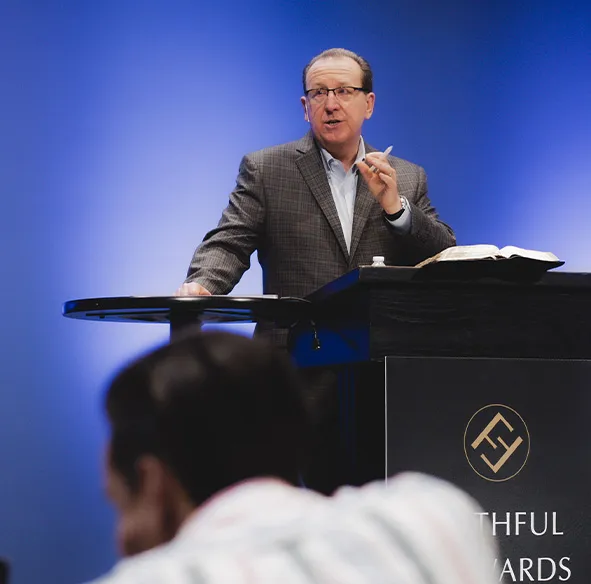
The preaching of God’s Word is central to the life of the church. Tom's pulpit ministry is dedicated to providing clear, biblical teaching to equip believers, strengthen faith, and exalt Christ.


Engage with the most recent teaching from God’s Word.
The preaching of God's Word is central to worship and of the utmost importance for the sanctification of every believer in Christ.

.jpg)
.jpg)

Explore messages organized to help you grow in Christ.
Search and filter sermons for quick access.
The Rapture of the Church
Tom Pennington discusses the "Rapture of the Church," defining it as believers being "snatched away" to meet Christ. He highlights the exegetical dilemma caused by biblical passages that suggest Christ's return is both imminent and preceded by specific signs. Pennington advocates for a pre-tribulation Rapture, proposing a two-stage Second Coming: the church is raptured before the seven-year tribulation, followed by Christ's physical return to Earth with His saints at the tribulation's conclusion. He supports this view with several arguments: the distinct differences between descriptions of the Rapture and the Second Coming; Christ's promise to protect the church from God's wrath (Revelation 3:10); the church's notable absence from earth in Revelation 6-18, which details the tribulation; and the lack of New Testament epistle warnings preparing the church to endure the tribulation. Furthermore, he argues that 1 Thessalonians 4 and John 14 best support a pre-tribulation timing, and that a rapture during or after the tribulation would be unnecessary.
The Forgiveness of Our Sins
The text introduces the Hebrew concept of *go'el*, a kinsman-redeemer responsible for protecting family, buying back property or slaves, and ensuring justice. Job identified God as his *go'el*. Pastor Tom Pennington explains that Ephesians 1:7 reveals Jesus Christ as our Kinsman-Redeemer, who accomplished our redemption and the forgiveness of sins. Our forgiveness is rooted "in Him," meaning in our spiritual union with Christ, who acts as our representative. Before Christ, we were slaves to sin and condemned criminals under God's just law, deserving eternal death. The "cost of our forgiveness" was paid "through His blood"�Christ's sacrificial death on the cross, a ransom paid to God the Father. This echoes the Old Testament sacrificial system where innocent blood atoned for sin, but only Christ's perfect sacrifice could fully satisfy divine justice. The "reality of our forgiveness" means God removes our legal guilt and cancels the penalty of eternal death for all our deliberate "trespasses," past, present, and future. This is a complete and irreversible pardon, coupled with justification where Christ's perfect righteousness is credited to us. The "source of our forgiveness" is "according to the riches of His grace," God's infinite perfection that delights in bestowing undeserved good.
Real Christians & Deep Fakes - Part 3
Pastor Tom Pennington concludes his two-year study of 1 John, emphasizing the contrast between real Christians and "deepfakes" (false believers) created by Satan. The final verses (1 John 5:16-21) offer insights into distinguishing true Christians. Real Christians are identified by three certainties. First, they have a new relationship with sin; those born of God do not persist in sin, as Christ protects them. Second, they have a new Father and family, being "of God" rather than "of the evil one," leading to love for God and His people. Third, real Christians possess a new, saving understanding of the true God. This understanding originates from God's incarnate Son, Jesus, who gives it through His inspired Word (explaining past revelation, bringing new truth, and authorizing the New Testament) and through His Holy Spirit (who provides spiritual life and illumination). This new understanding enables believers to truly know God (Father, Son, and Holy Spirit) and be united to Him in continuing fellowship, exclusively through Jesus Christ. The sermon stresses the singular nature of this truth: there is only one true God, and salvation is found solely in Jesus.
Real Christians & Deep Fakes - Part 2
Pastor Tom Pennington�s sermon, "Real Christians & Deep Fakes (Part 2)," draws parallels between art forgeries and spiritual "deep fakes" to help identify genuine believers, referencing 1 John 5:16-21. The core idea is that all false forms of Christianity are idolatry stemming from Satan, leading to death, while truth through Jesus Christ alone offers eternal life. The sermon highlights two distinguishing marks of true Christians. Firstly, they possess a **new relationship with sin (v.18)**. Real Christians do not live in an ongoing pattern of unrepentant sin; though they still sin, they hate it, confess it, and strive for purity. This transformation is secured by their new spiritual nature and Christ's constant protection, shielding them from enslaving sin, Satan's lies, and ultimately, destruction. Secondly, genuine believers have a **new Father and family (v.19)**. They know they are "of God," adopted into His family, unlike the "whole world" which remains under Satan's control, blinded by his deceptions. True Christians, therefore, love their new spiritual family. The sermon encourages those recognizing themselves as forgeries to repent and trust in Christ for salvation, assuring true believers of His unwavering safekeeping.
Real Christians & Deep Fakes - Part 1
Pastor Tom Pennington introduces the concept of "deepfakes" in the church, referring to professing Christians who embrace false faith or make false professions, much like the original deepfakes misrepresent reality. He explains that 1 John 5:16-21 offers guidance on distinguishing real Christians from these "deepfakes" and how to pray for them, emphasizing the idolatrous nature of all false belief. Pennington outlines two common interpretations for "a sin not leading to death" and "a sin leading to death." One view suggests praying for true believers caught in unrepentant sin (not leading to physical death), but not for those facing severe divine physical judgment (leading to death). The other, which Pennington prefers, interprets "sin not leading to death" as referring to false believers in deception, for whom we should pray for salvation, as God grants eternal life. "A sin leading to death" in this view pertains to hardened false teachers whose ultimate judgment is certain, making prayer not necessarily effective for them.
No Results Found.
We couldn’t find anything matching your search.
Explore The Word Unleashed
Our ministry brings together expository preaching, theological precision, and practical application for the good of Christ's church and the daily living of Christ's people.
.webp)
Sermons
Listen to expository sermons that clearly teach God’s Word and guide you in daily living.

Radio
Tune in to gospel-centered programs that share biblical truth and strengthen your daily walk with Christ.
Training
Join courses and workshops designed to deepen your faith and equip you to serve others with biblical wisdom.
.webp)
From the Pastor's Desk
Read pastoral messages that encourage, instruct, and help you apply God’s Word to every part of your life.
.webp)
Hymns
Discover timeless hymns that lift your heart in worship and remind you of God’s abounding grace and faithfulness.
Podcasts
Stay rooted in Scripture through our podcast series.