Sermons That Exalt Christ
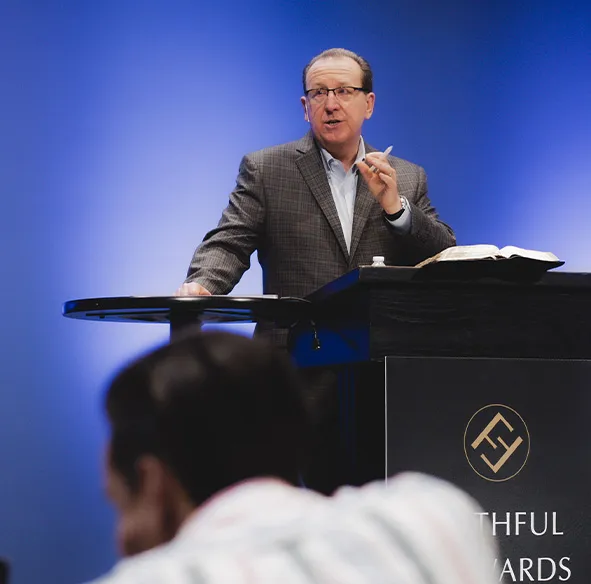
The preaching of God’s Word is central to the life of the church. Tom's pulpit ministry is dedicated to providing clear, biblical teaching to equip believers, strengthen faith, and exalt Christ.


Engage with the most recent teaching from God’s Word.
The preaching of God's Word is central to worship and of the utmost importance for the sanctification of every believer in Christ.

.jpg)
.jpg)

Explore messages organized to help you grow in Christ.
Search and filter sermons for quick access.
The Trials of Jesus & His Family
The sermon "The Trials of Jesus and His Family" challenges "retribution theology," the belief that good circumstances signify God's favor and bad ones His disfavor, a concept echoed in the modern prosperity gospel. Pastor Tom Pennington argues that trials are not always divine punishment, but are an inherent part of life in a fallen world, used by God for good, to fulfill His divine plan, and to teach obedience. Pennington illustrates this by detailing six significant trials faced by Jesus and His earthly family: the public suspicion surrounding Mary's pregnancy; the arduous 90-mile journey to Bethlehem for the census while Mary was nine months pregnant; the lack of lodging, leading to Jesus' birth in a cave/manger; fleeing to Egypt to escape Herod's massacre of infants; Joseph's early death, making Jesus the family's primary provider; and the family's initial disbelief and rejection of Jesus' divine claims. These difficulties, though severe, were not signs of God's disfavor but divinely orchestrated. For example, the census ensured Jesus' birth in Bethlehem, fulfilling prophecy. Through suffering, Jesus "learned obedience," growing in moral and spiritual strength as a human, ultimately becoming the perfect source of eternal salvation.
Preparing for the Lord - Part 2
Tom Pennington's sermon, "Sermons Preparing for the Lord (Part 2)," asserts that the Gospels unequivocally present Jesus as Israel's long-awaited Messiah, despite common Jewish misconceptions. He emphasizes the critical role of John the Baptist as the messenger prophesied in Malachi 3:1, who would prepare the way for the Messiah, serving as a vital link between the Old and New Testaments. Pennington meticulously details the historical context of Luke 1:5-25, establishing Jesus' birth around 6-4 BC, not year 0, and underscoring the historicity of these events. The narrative focuses on Zacharias, a righteous but childless priest, who, while serving in the Temple, encounters the Angel Gabriel after centuries of divine silence. Gabriel announces the miraculous birth of John, answering both Zacharias' personal prayer for a child and his priestly prayer for Israel's redemption. John's name, meaning "God is gracious," signifies God's faithfulness. The sermon extracts key implications for prayer: God always hears, answers in His time, and integrates prayer into His sovereign plan. John's ministry is revealed as a prophet preaching repentance, turning people back to God, and preparing them for the Messiah, who brings either salvation or judgment.
Preparing for the Lord - Part 1
Pastor Tom Pennington's sermon highlights Luke's unique intertwining of Jesus's and John the Baptist's birth narratives, emphasizing John's crucial role. John serves as the "hinge" between the Old and New Testaments, fulfilling Malachi's prophecy of an Elijah-like messenger, and as the primary witness designated to identify Jesus as the Messiah. The message begins with Luke 1:5-10, setting the scene during the oppressive reign of Herod the Great in Judea�a dark time for God's people. Amidst this, Zacharias, a common but godly priest, and his wife Elizabeth are introduced. Despite being righteous and blameless in God's eyes, they endured the cultural disgrace of barrenness and advanced age, contrasting with the era's flawed "retribution theology." Zacharias then experiences a rare, once-in-a-lifetime privilege: burning incense in the temple's Holy Place. This act, symbolizing the ascent of God's people's prayers, profoundly illustrates the ongoing need for a mediator between humanity and a holy God, a role now perfectly fulfilled by Jesus Christ, our Great High Priest, who intercedes for us and makes our prayers acceptable to God.
Q & A
Pastor Tom Pennington hosts a Q&A session addressing various theological questions. He advises against ecumenical cooperation with groups like those involved in the Manhattan Declaration. Pennington argues that differing "gospels" on salvation are fundamentally incompatible with biblical truth, citing Galatians 1 and Old Testament alliances, even when there are shared social concerns. Pennington explains that Proverbs offer general truisms for wisdom, not absolute guarantees, giving the example of "train up a child." He reconciles Proverbs 1:28, where God rejects sinners, with His mercy by clarifying that persistent, unrepentant rejection can close the door to His response, but genuine repentance always finds pardon, as seen in Isaiah 55. Discussing Ecclesiastes 7:15-16 ("Do not be excessively righteous"), he suggests it warns against self-righteousness or overly rigid living, emphasizing the book's theme of enjoying life's gifts from God while finding ultimate satisfaction only in Him. Regarding the elder qualification in Titus 1 concerning "faithful children," Pennington notes scholarly debate. He interprets it as children not living in open rebellion, stressing individual accountability for salvation (Ezekiel 18) and a parent's duty to be faithful, not to guarantee a child's faith.
Watch Where You Step! - Part 1
The sermon explores the biblical definition of foolishness, distinguishing it from common understanding. In God's view, a fool denies or blasphemes Him, mocks and loves sin, and, critically, despises His revealed wisdom and instruction, leading to morally corrupt and spiritually irrational behavior. The text then introduces Paul's command in Ephesians 5:15-18 for believers to "walk not as unwise men but as wise." This "walk" encompasses our daily thoughts, attitudes, speech, and behavior, urging Christians to live purposefully with divine wisdom. Two crucial components for cultivating biblical wisdom are presented from Ephesians 5:15-16. First, believers must "examine their ways" by carefully contemplating their life patterns and habits, using the Scripture as a spiritual mirror (James 1:21-25) to reveal their true condition and prevent self-deception (Proverbs 14:8). Second, they must "seize every opportunity" by "making the most of your time," actively "redeeming" moments (kairos) for spiritual growth. This urgency stems from the reality that "the days are evil," necessitating intentional use of one's free hours to pursue godly understanding, exemplified by figures like Jonathan Edwards. A wise life is an examined one, purposefully leveraging every opportunity for spiritual development.
Unashamed! - Part 2
In "UNASHAMED! (Part 2)," Tom Pennington explores Romans 1:16-17, explaining why Christians should never be ashamed of the gospel. He highlights how this passage transformed Martin Luther's life, sparking the Reformation as Luther realized God's righteousness is received through faith, not human works. Pennington presents six key reasons for Paul's unashamed declaration. The gospel is: 1. **Good news**. 2. **God's power**. 3. **Produces salvation**. 4. **Appropriate for everyone**, regardless of background, status, or past sins, encompassing all people without discrimination. 5. **Requires no human merit or work**, received solely by faith�a supernatural gift involving knowledge, assent, and trust in Christ alone, distinct from personal effort. 6. **Promises righteousness**: God, as a judge, credits believers' sins to Christ and Christ's perfect righteousness to them, declaring them eternally righteous and free from condemnation through justification. This profound truth of salvation and imputed righteousness, received by grace through faith, is presented as the ultimate reason for thanksgiving, both now and throughout eternity, symbolizing the "white robes" believers wear in God's presence.
No Results Found.
We couldn’t find anything matching your search.
Explore The Word Unleashed
Our ministry brings together expository preaching, theological precision, and practical application for the good of Christ's church and the daily living of Christ's people.
.webp)
Sermons
Listen to expository sermons that clearly teach God’s Word and guide you in daily living.

Radio
Tune in to gospel-centered programs that share biblical truth and strengthen your daily walk with Christ.
Training
Join courses and workshops designed to deepen your faith and equip you to serve others with biblical wisdom.
.webp)
From the Pastor's Desk
Read pastoral messages that encourage, instruct, and help you apply God’s Word to every part of your life.
.webp)
Hymns
Discover timeless hymns that lift your heart in worship and remind you of God’s abounding grace and faithfulness.
Podcasts
Stay rooted in Scripture through our podcast series.