Sermons That Exalt Christ
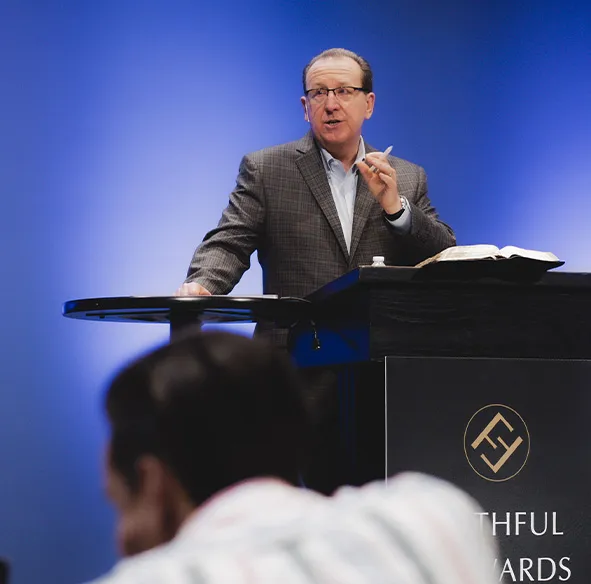
The preaching of God’s Word is central to the life of the church. Tom's pulpit ministry is dedicated to providing clear, biblical teaching to equip believers, strengthen faith, and exalt Christ.


Engage with the most recent teaching from God’s Word.
The preaching of God's Word is central to worship and of the utmost importance for the sanctification of every believer in Christ.

.jpg)
.jpg)

Explore messages organized to help you grow in Christ.
Search and filter sermons for quick access.
The Disciple's Greatest Danger - Part 2
In Mark 9:42-48, Jesus employs the shocking imagery of amputation to convey the extreme seriousness with which disciples must confront personal sin, identifying it as their greatest spiritual danger. The sermon clarifies that Jesus does not advocate for physical mutilation or asceticism, explicitly rejecting these as ineffective for genuine spiritual transformation. Instead, His message is a call for radical, decisive action against sin. The text presents six core affirmations: Tolerating personal sin poses the gravest threat to one's soul. Eternal punishment in hell is a terrifying reality, a place of unquenchable fire and undying torment for the body, where suffering is perpetual. It is actual, personal patterns of sin�not merely original sin�that ultimately condemn an individual. Nothing in life is more crucial than one�s eternal destiny, making it worth sacrificing even the most cherished worldly possessions. Believers must cultivate a profound hatred for sin in all its forms, committing to "kill it" within themselves, a process made possible by the Holy Spirit. The ultimate objective is not just outward purity, but nurturing a pure and holy heart that mirrors Christ's moral character, addressing internal desires like lust and pride.
The Belt of Truth
This sermon, delivered on Reformation Sunday, stresses that Christians are in a constant spiritual war against demonic forces, as outlined in Ephesians 6. Unlike physical body armor that evolves, believers have access to God's spiritual armor, which represents Christ's strength and objective truths about Him, essential for resisting Satan's schemes, including attacks on God's Word, intimidation, and temptations. The first and foundational piece of this armor is the "belt of truth." Analogous to a Roman soldier's belt that cinched his tunic for freedom of movement and anchored other equipment, this spiritual belt prepares believers for battle. The "truth" Paul refers to is not personal sincerity or integrity, but God's objective truth found in the gospel and revealed in Jesus Christ�the entire truth contained in Scripture. This truth protects believers by freeing them from sin's slavery, enabling sanctification and spiritual growth, and shielding them from Satan�s attacks on the Bible's authority and sufficiency, as well as from personal temptations. A deep knowledge of God's Word exposes sinful hearts and Satan's tactics. To "put on" this belt means actively engaging with Scripture�reading, studying, meditating, applying, and living out its truths by the Holy Spirit's power.
Satisfied!
According to this sermon by Tom Pennington, the primary purpose of sacrifice, including Christ�s death on the cross, was to satisfy God. The central concept is "propitiation," which means satisfying God's holy wrath against sin. Citing Romans 3, the text explains that God�s perfect justice demands that sin be punished. This created a dilemma: how could God forgive and declare sinners righteous without compromising His own character? The solution was the cross, where God publicly displayed Jesus as the propitiation. God poured out the full punishment for sin upon His own Son, thereby satisfying the demands of His justice. This divine transaction allows God to be both "just and the justifier" of those who have faith. By punishing sin in Christ, God vindicated His righteousness, enabling Him to extend grace to humanity. Therefore, believers are assured that they will never face God's wrath, as it was fully and permanently absorbed by Christ on their behalf.
The Disciple's Greatest Danger - Part 1
In his sermon "The Disciple�s Greatest Danger (Part 1)," Pastor Tom Pennington explores Mark 9:42-48, focusing on Jesus� severe warning against causing fellow believers to sin. Jesus declares that whoever causes "one of these little ones who believe to stumble" would be better off drowned with a heavy millstone around their neck. This powerful imagery highlights Jesus' profound personal investment in His followers; He takes any harm to a believer as a direct offense against Himself. The "little ones" refer to all everyday believers. This dire consequence, "it would be better," suggests two possibilities: either the person consistently causing others to sin may not be a true Christian, or a genuine believer who leads another into sin will face such severe divine chastening in this life that a premature, violent death would have been preferable. Pennington outlines common ways we cause others to sin: harboring provincial attitudes or spiritual superiority, setting a poor example, abusing our influence or authority, teaching false doctrine, persuading others to sin with us, and misusing Christian liberty. Each of these actions, if leading a brother or sister into sin, is deemed an attack on Christ.
Not One of Us: Overcoming Christian Provincialism
The text defines "provincialism" as a narrow viewpoint, illustrating it with an anecdote about church members rarely leaving their county. It then applies this concept to Christian circles, focusing on Mark 9:38-41. Here, John and the disciples attempted to stop someone casting out demons because he "was not following us," demonstrating a provincial, sectarian spirit rooted in a lack of personal deference and association, and tied to their own ambition. Jesus corrects this by commanding, "Do not hinder him." He provides three reasons: our chief concern must be Jesus' glorification (as anyone working miracles in His name won't speak evil of Him); there are only two sides, for or against Christ ("he who is not against us is for us"); and how we treat fellow believers is how we treat Christ. The apostle John later understood this balance, differentiating between false teachers (to be avoided) and true believers (to be welcomed). Legitimate applications include not resenting others' ministry success, rejecting provincialism towards other true churches or denominations, and not severing ties over non-fundamental doctrinal differences (defined by the denial of the true gospel or Christ's person/work).
Learning to Use God's Armor - Part 8
Pastor Tom Pennington, in his sermon on Ephesians 6:10-17, explains the Christian�s spiritual battle, likening it to Israel�s conquest of the Promised Land. This battle is against supernatural forces, not flesh and blood, and cannot be won by human strength. Believers are commanded to "put on the full armor of God" to stand firm against the devil's schemes. This "armor of God" has an intentional order and its metaphor is flexible, focusing on essential spiritual qualities rather than precise attachments. Its origins are twofold: Roman soldiers and, more importantly, Old Testament prophecies, particularly from Isaiah, where "the servant of the Lord" (Jesus Christ) is depicted as a warrior wearing this very armor. Crucially, the armor is not subjective internal human virtues, which are insufficient against spiritual enemies. Instead, it represents objective, external truths and acts of God. It is a gift from God and is, in essence, Jesus Christ�s own personal armor. Therefore, "putting on the armor of God" means understanding and applying the rich truths of Christ's righteousness, truth, peace, faith, salvation, and His Word. Our ultimate defense and spiritual growth come from comprehending and embracing what God has done for us in Christ.
No Results Found.
We couldn’t find anything matching your search.
Explore The Word Unleashed
Our ministry brings together expository preaching, theological precision, and practical application for the good of Christ's church and the daily living of Christ's people.
.webp)
Sermons
Listen to expository sermons that clearly teach God’s Word and guide you in daily living.

Radio
Tune in to gospel-centered programs that share biblical truth and strengthen your daily walk with Christ.
Training
Join courses and workshops designed to deepen your faith and equip you to serve others with biblical wisdom.
.webp)
From the Pastor's Desk
Read pastoral messages that encourage, instruct, and help you apply God’s Word to every part of your life.
.webp)
Hymns
Discover timeless hymns that lift your heart in worship and remind you of God’s abounding grace and faithfulness.

Podcasts
Stay rooted in Scripture through our podcast series.