Sermons That Exalt Christ
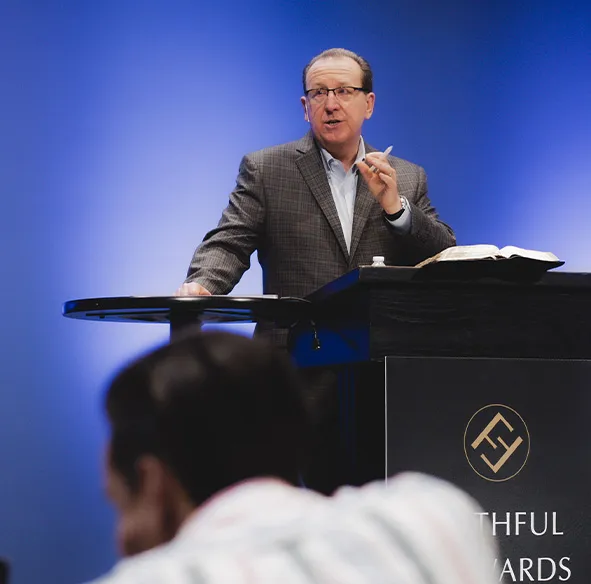
The preaching of God’s Word is central to the life of the church. Tom's pulpit ministry is dedicated to providing clear, biblical teaching to equip believers, strengthen faith, and exalt Christ.


Engage with the most recent teaching from God’s Word.
The preaching of God's Word is central to worship and of the utmost importance for the sanctification of every believer in Christ.

.jpg)
.jpg)

Explore messages organized to help you grow in Christ.
Search and filter sermons for quick access.
Jesus on Divorce - Part 2
Pastor Tom Pennington's sermon, "The Memoirs of Peter Jesus on Divorce (Part 2)," delves into Mark 10:1-12, addressing Jesus' teaching on marriage and divorce. He highlights that divorce among Christians has become widespread, attributing this to secular influence, inadequate biblical instruction, and a diluted understanding of Jesus as a facilitator of personal happiness rather than a Lord to obey. The Pharisees, testing Jesus, cited Deuteronomy 24, where Moses permitted divorce with a certificate. Jesus clarified that this permission was given "because of your hardness of heart," not as God's original design. Jesus redirects to "the beginning of creation" (Genesis 1-2) to articulate God's foundational intent for marriage. He emphasizes four divine establishments: marriage's **place** as God's own creation, its **parameters** as between one male and one female (two becoming "one flesh"), its **priority** where spouses supersede parental ties, and its **permanence** as an indivisible union. Jesus declared, "What God has joined together let no man separate." Pennington reinforces this with Malachi 2:16, stating, "For I hate divorce." While acknowledging that biblical exceptions for divorce will be discussed later, the core message is that divorce goes against God's intention for a permanent, covenantal bond.
Resolved: To Pursue Life's Highest Priority! - Part 1
The sermon contrasts typical New Year's resolutions, which focus on temporal concerns, with life's true highest priority. Pastor Tom Pennington emphasizes that Jesus identified loving God with all one's heart, soul, mind, and strength (Deuteronomy 6:4-5) as the greatest commandment, encompassing all of God's law. This passage, part of the Jewish Shema, details humanity's fundamental duty to God. Two key insights into loving God are presented: its preeminent claim and its personal confession. Loving God is our ultimate, central duty, demanding passionate pursuit above all else. This requires a personal confession acknowledging God's identity as Yahweh�the self-existent, sovereign "I Am." We confess Him as "our God" due to His gracious, unmerited choice, and as the "one" unique God, affirming monotheism while acknowledging the Trinity. This confession mandates undivided allegiance, warning against idolatry of wealth, pleasure, possessions, or pride. Ultimately, God recognizes only two groups of people: those who love Him and those who hate Him, leaving no room for neutrality. Loving God with all our being is therefore our supreme priority.
God's Unlikely Plan For the Birth of His Son - Part 2
This sermon by Tom Pennington from Luke 1:26-38 emphasizes understanding the profound uniqueness of Jesus, beyond superficial Christmas celebrations. It outlines three characteristics: First, His **unlikely parents**, Mary and Joseph, were humble and chosen by God�s sovereign grace, ensuring Jesus remained the focus, not their status. Second, His **unrivaled position** is paramount. He is named "Jesus" (Yahweh saves) because He is the *only* Savior sent to rescue humanity from sin through His sacrificial death. He is also the *one-of-a-kind Son of the Most High*, eternally God, not merely a created or adopted son. Furthermore, He is the *Sovereign of everything*, inheriting David's throne to reign eternally over a comprehensive kingdom, fulfilling ancient prophecies and establishing a new earth. Third, His **unique conception** by the Holy Spirit in a virgin, Mary, was miraculous. This virgin birth ensured His sinlessness, as the Spirit protected His humanity from inherited sin, making Him a holy Messiah. This divine intervention fulfilled prophecy, bypassed specific curses, and allowed the eternal Son of God to add full humanity without creating a separate person.
God's Unlikely Plan For the Birth of His Son - Part 1
Pastor Tom Pennington's sermon, "God�s Unlikely Plan For the Birth of His Son," seeks to reveal the true meaning of Christmas, moving beyond secular despair to God�s divine purpose. Focusing on Luke 1, he highlights the angel Gabriel's announcement to Mary regarding Jesus' birth, contrasting it with the earlier announcement to Zacharias. The sermon emphasizes God's "unlikely choice" of Mary and Joseph as Jesus' human parents. Mary was a young, unknown virgin from the obscure village of Nazareth. Joseph, a humble carpenter also from Nazareth, was critically a descendant of King David, providing Jesus' legal right to the Davidic throne and fulfilling crucial Old Testament prophecy. The central takeaway is that God selected this ordinary couple not because of their inherent worth or greatness, but entirely by His "sovereign grace." Mary and Joseph are not the heroes of the Christmas story; rather, God's undeserved favor is the hero. This illustrates that God often chooses the humble and the weak so that He alone receives all the glory for salvation. Consequently, Christmas is profoundly a celebration of God's overflowing grace toward humanity, demonstrating His delight in doing good for those who deserve the opposite.
The Forgotten Miracle of Christmas!
The sermon highlights the "forgotten miracle" of Christmas: God's ingenious resolution of two seemingly irreconcilable prophecies through Jesus' virgin birth. God unconditionally promised David a perpetual kingly descendant through Solomon. However, God also cursed King Jeconiah, a Solomonic descendant, declaring none of his physical heirs would ever sit on David's throne due to his evil. For Jesus to be the promised Messiah, He needed both a legal claim to David's throne (via Solomon) and a physical lineage untainted by Jeconiah's curse. The solution is revealed in Jesus' genealogies. Matthew traces Joseph's legal line through Solomon and Jeconiah; since Jesus was not Joseph's biological son, He inherited the legal right without the curse. Luke traces Mary's physical line through David's other son, Nathan, bypassing Jeconiah entirely. This miracle demonstrates God's absolute faithfulness to *all* His words�both judgment and gracious promises�doing whatever it takes to fulfill them. Ultimately, it spotlights Jesus as the righteous, eternally reigning King, contrasting with fallible human rulers. The Christmas celebration underscores God's trustworthy word and Christ's rightful kingship.
The Helmet of Salvation
The "Helmet of Salvation" from Ephesians 6:17 represents a settled confidence in our spiritual rescue from God, protecting our minds from Satan's attacks. Pastor Tom Pennington explains this spiritual helmet, like a Roman soldier�s headgear, is a gracious gift that enables believers to fight without hesitation or fear. Salvation encompasses three tenses. Satan attempts to instill doubt regarding our *past* salvation, questioning our initial repentance or belief. We must counter this by clinging to God's promises of eternal security (John 6, 10). Next, Satan fosters discouragement about our *present* condition by highlighting persistent sin or trials. However, God is actively rescuing us from sin's power and using trials to conform us to Christ (Romans 7, 8). Lastly, Satan introduces doubt about our *future* salvation, our ultimate deliverance from sin's presence and God's wrath. We put on the helmet by affirming the certainty of future glorification, trusting God to complete the work He began (Philippians 1:6, 1 Thessalonians 5:8). To stand firm in spiritual battle, believers must consciously apply this comprehensive confidence in God's completed, ongoing, and promised work of salvation.
No Results Found.
We couldn’t find anything matching your search.
Explore The Word Unleashed
Our ministry brings together expository preaching, theological precision, and practical application for the good of Christ's church and the daily living of Christ's people.
.webp)
Sermons
Listen to expository sermons that clearly teach God’s Word and guide you in daily living.

Radio
Tune in to gospel-centered programs that share biblical truth and strengthen your daily walk with Christ.
Training
Join courses and workshops designed to deepen your faith and equip you to serve others with biblical wisdom.
.webp)
From the Pastor's Desk
Read pastoral messages that encourage, instruct, and help you apply God’s Word to every part of your life.
.webp)
Hymns
Discover timeless hymns that lift your heart in worship and remind you of God’s abounding grace and faithfulness.
Podcasts
Stay rooted in Scripture through our podcast series.