Sermons That Exalt Christ
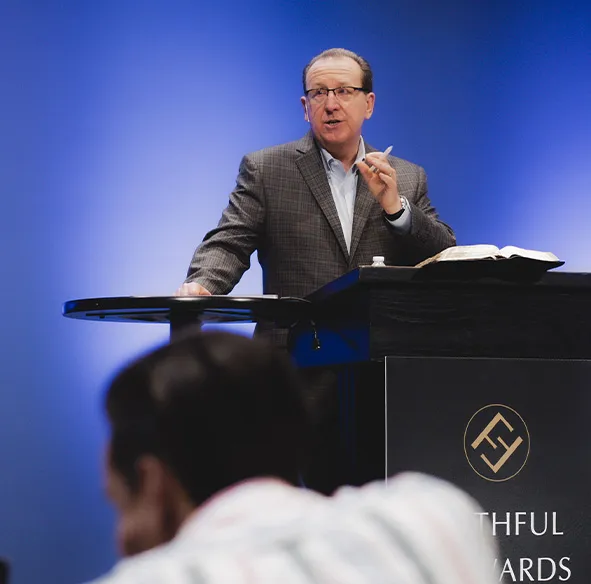
The preaching of God’s Word is central to the life of the church. Tom's pulpit ministry is dedicated to providing clear, biblical teaching to equip believers, strengthen faith, and exalt Christ.


Engage with the most recent teaching from God’s Word.
The preaching of God's Word is central to worship and of the utmost importance for the sanctification of every believer in Christ.

.jpg)
.jpg)

Explore messages organized to help you grow in Christ.
Search and filter sermons for quick access.
Benefitting From the Beatitudes
Pastor Tom Pennington discusses the Sermon on the Mount, focusing on the legitimate uses of the Beatitudes (Matthew 5:3-12). He contrasts the misuse of human products with the misuse of God's Word, emphasizing that the Bible should be actively applied, not just intellectually accumulated. Pennington outlines four primary benefits of the Beatitudes. First, they serve as **a tutor to Christ**. Their impossibly high standard of spiritual perfection (e.g., meekness, purity of heart) reveals humanity's inability to earn salvation, driving individuals to Christ as spiritual beggars for mercy, repentance, and faith. Second, they function as **a test of saving faith**. By examining whether these qualities (like mourning sin, hungering for righteousness, being a peacemaker) genuinely describe one's life, individuals can discern if they belong to Christ's kingdom. Third, the Beatitudes act as **a textbook for kingdom living**. For those already in Christ, they provide a blueprint for daily conduct, encouraging continuous growth in spiritual poverty, mourning over sin, demonstrating mercy, pursuing purity, and making peace. Finally, they are **a testament to our future**.
Blessed Are the Peacemakers
Tom Pennington's sermon "Blessed Are The Peacemakers" (Matthew 5:9), part of his Sermon on the Mount series, identifies peacemaking as a defining characteristic of those belonging to Christ's spiritual kingdom. He emphasizes that the world is inherently saturated with conflict, from global wars to personal strife, stemming from humanity's natural state of hostility towards God (by loving the world) and one another (driven by selfish desires). Pennington clarifies that "peace" doesn't mean avoiding all conflict; righteous causes like self-defense or defending the faith can involve confrontation. Instead, true peace signifies an objective state of harmonious wholeness, beyond mere truces. This peace is only possible through the character of God, Jesus' mission to reconcile humanity through His atoning sacrifice, and the transformative power of the Gospel. As peacemakers, Christians are actively called to: 1) introduce others to peace with God through the Gospel of reconciliation, 2) pursue peace in their personal relationships "as far as it depends on you," and 3) strive to resolve conflicts between others when appropriate. This consistent, Spirit-produced quality reflects God's nature and is a mark of true discipleship.
Jesus Publicly Affirms the Resurrection!
Tom Pennington's sermon explores Jesus' public affirmation of the resurrection during a critical encounter on Tuesday of Passion Week. The Sadducees, wealthy anti-supernaturalists who denied the resurrection and only accepted the Pentateuch, challenged Jesus. They presented a hypothetical "trap" about a woman married sequentially to seven brothers, asking whose wife she would be in the resurrection. They aimed to expose the resurrection's "folly," undermine Jesus' teaching, and embarrass the Pharisees. Jesus rebuked them for not understanding the Scriptures or the power of God. He clarified that resurrected life transforms, without marriage as we know it, making people "like angels." He then cited Exodus 3:6, "I AM the God of Abraham, Isaac, and Jacob," arguing God is "not the God of the dead, but of the living," proving the Patriarchs' continued existence and future bodily resurrection from their accepted Scriptures. This affirmation offers profound applications: confidence in resurrection, motivation to share the Gospel (as all face resurrection to life or judgment), comfort for the grieving, and conquering the fear of death. Our hope, Pennington concludes, rests not in an event, but in Jesus, who declared, "I am the resurrection and the life."
Blessed are the Pure in Heart
Pastor Tom Pennington's sermon on Matthew 5:8, "Blessed are the pure in heart, for they shall see God," delves into the nature and necessity of inner purity. He explains that Old Testament cleanness laws prefigured God's demand for purity to approach Him, but Jesus clarified that true defilement originates from the "heart," which biblically encompasses one's entire inner self�intellect, will, and emotions. "Pure" in this context means morally clean, free from sin's defilement. Recognizing that humanity is not inherently pure, Pennington highlights three means to achieve this purity. First, at salvation, God radically cleanses the believing sinner's heart through Christ's sacrifice, a "soul bath" known as regeneration. Second, believers receive ongoing cleansing through daily confession and repentance, akin to "foot washing" for sins accumulated while living in the world. Third, sanctification involves actively working to "cleanse ourselves" by mortifying sin, though true cleansing remains God's sovereign work. Purity, in this life, signifies a fervent desire for holiness and a loathing for impurity. The profound promise for the pure in heart is to "see God," both by faith now and ultimately face-to-face in the beatific vision, experiencing His presence eternally.
Blessed are the Merciful
Tom Pennington's sermon, "Blessed Are The Merciful" (Matthew 5:7), examines the fifth beatitude as a defining characteristic of true Christians. He first establishes the "divine pattern of mercy," demonstrating that God's very nature is merciful, a truth revealed in Exodus 33-34 and the ultimate ground of our salvation, as highlighted in Ephesians 2:4. Next, Pennington explains the "believer's practice of mercy." Distinct from grace, mercy is defined as sympathetic action to alleviate another's distress. True mercy transcends mere feeling, compelling believers to act. This is exemplified in three ways: extending forgiveness to those who sin against us (Joseph, Matthew 18), providing practical help to the needy and poor (Proverbs, Isaiah), and showing compassion to the suffering (Matthew 25). Finally, the sermon explores "Christ's promise of mercy": the merciful shall receive mercy from God. This isn't about earning God's favor but confirms genuine faith. Conversely, the unmerciful will face a merciless judgment (James 2:13). Pennington encourages self-examination, urging listeners to assess if mercy genuinely characterizes their lives as a litmus test of their belonging to Christ's kingdom, or if they need to repent and embrace God's profound mercy.
Render to Caesar: Jesus on the Role of Government
In his sermon "The Memoirs of Peter Render to Caesar," Tom Pennington analyzes Jesus' teaching on the role of government from Mark 12:13-17, addressing the often-charged political climate then and now. Opposing factions, the religiously conservative Pharisees and the pro-Roman Herodians, united by their hatred of Jesus, tried to trap him with the question: "Is it lawful to pay a poll tax to Caesar, or not?" A "yes" would alienate the populace and challenge his messianic claims, while a "no" would incite Roman accusation. Jesus, knowing their hypocrisy, asked for a denarius. Upon identifying Caesar's image and inscription, he declared, "Render to Caesar the things that are Caesar�s and to God the things that are God�s." This foundational statement affirms that human government is divinely ordained (Romans 13) to express God's common grace, restrain evil, promote good, and punish wrongdoers. Consequently, Christians are called to obey laws and leaders, show respect, and pay taxes, regardless of the government's character or its uses for the funds. However, Jesus simultaneously asserts God's ultimate authority, meaning that when the state's demands conflict with God's commands, believers must always obey God, even if it entails consequences, as demonstrated by the apostles.
No Results Found.
We couldn’t find anything matching your search.
Explore The Word Unleashed
Our ministry brings together expository preaching, theological precision, and practical application for the good of Christ's church and the daily living of Christ's people.
.webp)
Sermons
Listen to expository sermons that clearly teach God’s Word and guide you in daily living.

Radio
Tune in to gospel-centered programs that share biblical truth and strengthen your daily walk with Christ.
Training
Join courses and workshops designed to deepen your faith and equip you to serve others with biblical wisdom.
.webp)
From the Pastor's Desk
Read pastoral messages that encourage, instruct, and help you apply God’s Word to every part of your life.
.webp)
Hymns
Discover timeless hymns that lift your heart in worship and remind you of God’s abounding grace and faithfulness.
Podcasts
Stay rooted in Scripture through our podcast series.