Sermons That Exalt Christ
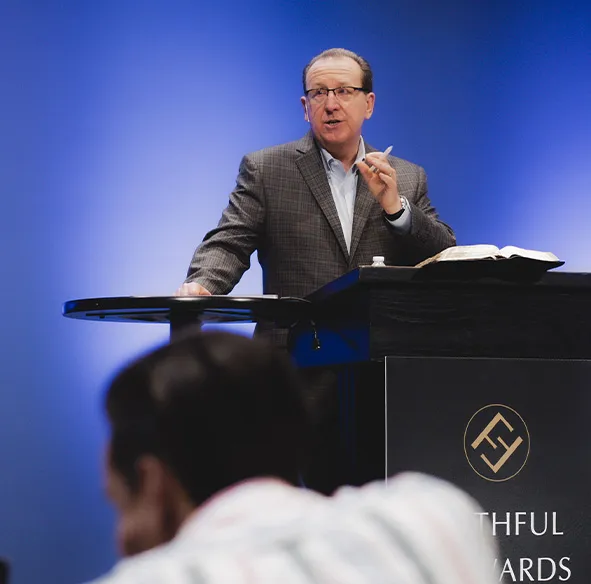
The preaching of God’s Word is central to the life of the church. Tom's pulpit ministry is dedicated to providing clear, biblical teaching to equip believers, strengthen faith, and exalt Christ.


Engage with the most recent teaching from God’s Word.
The preaching of God's Word is central to worship and of the utmost importance for the sanctification of every believer in Christ.

.jpg)
.jpg)

Explore messages organized to help you grow in Christ.
Search and filter sermons for quick access.
Search and Rescue
Pastor Tom Pennington's sermon, "Search and Rescue," based on Matthew 18:15-20, addresses the crucial yet often neglected practice of church discipline. Analogizing it to a daring military rescue, he asserts that God holds individual believers and churches responsible for rescuing fellow Christians from the bondage of unrepentant sin. This process, essential for a healthy church, must be undertaken with genuine love, an eagerness to forgive, gentleness, and humility, rather than harshness or pride. The sermon outlines a four-step process for a professing Christian caught in hard-hearted rebellion against Scripture. It begins with private confrontation. If unsuccessful, the second step involves private confirmation with one or two witnesses. Persistent unrepentance leads to the third step: public proclamation to the church, calling the entire assembly to urge repentance. The final step, if rebellion continues, is excommunication, where the individual is treated as an unbeliever, compelling self-examination of their faith. The biblical reasons for this discipline are to restore the sinning Christian, create a proper sense of shame, and ultimately save their soul, while simultaneously purifying the church, protecting it from error, and fostering a healthy fear of sin among its members.
The Manifestation of God's Wrath
Pastor Tom Pennington's sermon on Romans 1:24-32 explores "God's Wrath Revealed," using Oscar Wilde's life as an example of being "given over" to sin. Paul argues for universal human guilt, indicting all unbelieving pagans who reject and refuse to worship the true God, instead turning to idolatry. God's wrath is not a capricious human emotion, but a "settled hostility"�His holy opposition to evil, personal displeasure with sinners, and compulsion to punish sin. In Romans 1, God's wrath is primarily manifested as "divine abandonment," where He "gives over" those who reject Him. This occurs in three stages: releasing them to sexual impurity, then to degrading passions like homosexuality, and finally to a depraved mind that approves of wickedness, resulting in a proliferation of vices. This abandonment signifies God removing His restraining power, allowing sin to intensify in frequency, power, and kind. While other forms of God's wrath include natural consequences, civil punishment, cataclysmic judgments, eschatological judgments, and eternal hell, divine abandonment is a present reality for those outside of Christ. However, this wrath of abandonment is not necessarily permanent.
The Birth of Jesus the Messiah - Part 2
The sermon "The Birth of Jesus the Messiah" affirms the miraculous virgin birth as essential proof of Jesus' identity as the Messiah and rightful king. Addressing skepticism, Pastor Pennington argues that a God who created all things can surely orchestrate a virgin conception, one of five ways God has created human beings. Matthew's Gospel, from Joseph's perspective, details five unique characteristics: 1. **Unique Conception:** Jesus was miraculously conceived by the Holy Spirit in the virgin Mary, fulfilling Isaiah 7:14. 2. **Unique Mission:** Named Jesus ("Yahweh saves"), He would save "His people from their sins" by living a perfect life, paying sin's legal guilt, breaking its power, and eliminating the future ability to sin. 3. **Unique Credentials:** His birth fulfilled a 700-year-old prophecy of a virgin conceiving a divine child (Isaiah 7:14, 9:6), consistently translated as "virgin" across ancient texts. 4. **Unique Person:** Called "Immanuel" ("God with us"), Jesus embodied the incarnation, uniting divine and human natures. 5. **Unique Pedigree:** Joseph's legal adoption of Jesus placed Him in David's royal lineage through Solomon, circumventing a curse on Jekoniah's physical descendants, while Mary provided physical descent through Nathan.
The Birth of Jesus the Messiah - Part 1
This sermon, based on Matthew 1:18-25, addresses the historical reality of Jesus and the unique circumstances of His birth. The pastor refutes claims denying Jesus' existence, citing widespread historical and archaeological evidence. He then focuses on Joseph's perspective of the virgin conception, explaining the Jewish betrothal period. When Mary was found pregnant by the Holy Spirit, Joseph, a righteous man, knew the child wasn't his. To avoid publicly disgracing Mary, he planned a secret divorce. However, an angel appeared to Joseph in a dream, confirming Mary's miraculous conception and instructing him to proceed with the marriage, naming the child Jesus ("He will save His people from their sins") and fulfilling the prophecy of Immanuel ("God with us"). The sermon emphasizes that the virgin conception was crucial, not as the source of Jesus' deity or sinlessness, but as the only possible way for the pre-existent Son of God to unite His divine nature with a full human nature. This dual nature, "like us in all things except for sin," was necessary for Jesus to become a merciful and faithful high priest, representing humanity and offering Himself as an acceptable sacrifice for our sins.
Christ the King
Tom Pennington's sermon, "Christ the King," asserts that Christmas celebrates the birth of our rightful king, Jesus Christ. He highlights the Magi, pagan "king-makers" from Persia, as surprising models for how to respond. Through God's providence and historical Jewish influence from Daniel's time, these men were divinely informed of the Messiah's birth. Guided by a star, they journeyed to Bethlehem, finding Jesus in a house some time after His birth, not a stable. Their reactions serve as a blueprint for our own: first, overwhelming joy upon finding the divine Messiah; second, profound submission as they fell and worshipped Him, acknowledging His supreme authority as King and Lord; and third, honor expressed through valuable gifts. Gold symbolized His kingship, frankincense His divinity, and myrrh prophetically signified His death for the sins of believers. The sermon concludes that the Magi's journey is a testament to God's sovereign grace, as He sought them out for spiritual rescue. This story stands as an invitation for all to respond to their rightful King with unrestrained worship, finding their chief joy in Him, submitting their lives to His rule, and honoring Him with the ultimate gift�their very self, for He truly deserves and demands it.
Man's Shocking Response to God - Part 3
This sermon, rooted in Romans 1:21-23 and Isaiah 44, exposes humanity's "shocking response to God": idolatry. Despite God clearly revealing Himself through creation, people suppress this truth, refusing to honor or thank Him. This willful rebellion leads to flawed thinking, darkened hearts, and foolishness. Humans are inherently wired to worship; rejecting the true God means inevitably turning to false gods. This exchange of God's incorruptible glory for corruptible images is not merely about physical idols but encompasses worshipping nature, abstract concepts, or anything prioritized over God, including personal desires like lust. The sermon asserts all false religion is idolatry, driven by demonic influence, and represents an intentional flight *from* God, rather than a search *for* Him. People embrace idolatry to diminish God's glory, enabling self-rule, self-gratification (manifested in violence, sex, or prosperity), and human pride. The worship of increasingly debased images�from man to crawling creatures�symbolizes this spiritual descent. Believers must recognize their own susceptibility to idolatry, while unbelievers are urged to abandon their idols and turn to the living God through Christ, their sole rescue from divine wrath.
No Results Found.
We couldn’t find anything matching your search.
Explore The Word Unleashed
Our ministry brings together expository preaching, theological precision, and practical application for the good of Christ's church and the daily living of Christ's people.
.webp)
Sermons
Listen to expository sermons that clearly teach God’s Word and guide you in daily living.

Radio
Tune in to gospel-centered programs that share biblical truth and strengthen your daily walk with Christ.
Training
Join courses and workshops designed to deepen your faith and equip you to serve others with biblical wisdom.
.webp)
From the Pastor's Desk
Read pastoral messages that encourage, instruct, and help you apply God’s Word to every part of your life.
.webp)
Hymns
Discover timeless hymns that lift your heart in worship and remind you of God’s abounding grace and faithfulness.
Podcasts
Stay rooted in Scripture through our podcast series.