Sermons That Exalt Christ
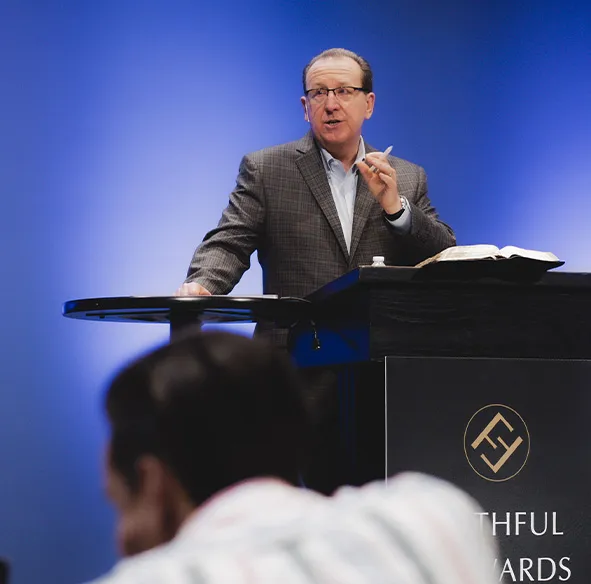
The preaching of God’s Word is central to the life of the church. Tom's pulpit ministry is dedicated to providing clear, biblical teaching to equip believers, strengthen faith, and exalt Christ.


Engage with the most recent teaching from God’s Word.
The preaching of God's Word is central to worship and of the utmost importance for the sanctification of every believer in Christ.

.jpg)
.jpg)

Explore messages organized to help you grow in Christ.
Search and filter sermons for quick access.
The Heart of Jesus’ Teaching Ministry
Pastor Tom Pennington identifies the "heart of Jesus' teaching ministry" in Matthew 4:17: "From that time Jesus began to preach, and to say, �Repent, for the kingdom of heaven is at hand.�" This verse reveals Jesus' essential method and exclusive message. Jesus' method was "preaching" (kerusso), meaning to be a herald proclaiming God's authoritative message. This was His central purpose, not just a side activity, a model for His apostles and all church leaders, highlighting its divine importance. His message, the "gospel of the kingdom" or "gospel of God," consists of an indicative and an imperative. The indicative, "the kingdom of heaven is at hand," announces that God's rule is spiritually present and accessible now, through salvation, and will manifest physically in the future (Millennial and Eternal Kingdoms). This good news implies sin, forgiveness, and atonement through Christ. The imperative, "Repent," is the condition for entering this kingdom. True repentance involves recognizing sin, feeling genuine sorrow, and determining to turn from it. It's a gift from God, originating from conviction by His Word, accompanied by hope in His grace, leading to salvation and producing visible fruit.
Jesus' Strategic Ministry Home
This sermon, based on Matthew 4:12-16, examines Jesus' strategic decision to establish His ministry headquarters in Capernaum, Galilee. It begins by contrasting Jesus as the eternal "Light of the world" with the created sun, highlighting His superior, life-giving power. Jesus' move to Galilee was prompted by practical reasons: John the Baptist's arrest by Herod, which spurred Jesus to withdraw from Judea to avoid premature conflict with the Pharisees, and the rejection of Jesus by His hometown, Nazareth, which attempted to kill Him. This highlights the importance of making wise, scripturally-informed decisions. The choice of Capernaum, a city on a major international trade route in "Galilee of the Gentiles," was perplexing yet strategic. This location allowed Jesus' message and miracles to spread widely among both Jews and Gentiles. Crucially, this move fulfilled Isaiah 9:1-2, authenticating Jesus' Messianic credentials, anticipating His worldwide mission to all nations, and illustrating His saving purpose to bring "a great Light" to people "sitting in darkness" and the "shadow of death." The sermon concludes by urging believers to embrace Jesus' global mission, while warning non-believers of the severe judgment awaiting those who indifferently reject the Light, as exemplified by Capernaum's fate.
The Temptation of Jesus Christ - Part 4
In "Matthew: The Temptation of Jesus Christ (Part 4)," Pastor Tom Pennington explores the third and climactic temptation Jesus faced in Matthew 4:8-10, paralleling it to the legend of Dr. Faust selling his soul for worldly gain. Satan offered Jesus all earthly kingdoms and their glory if He would simply worship him. The true temptation, however, was not merely a moment of worship, but for Jesus to seize His promised kingdom *now* and *His own way*, bypassing the Father's plan of suffering and a later glorification. This represents a pursuit of power, wealth, and self-fulfillment over God's perfect will and timing. For believers, this temptation manifests as a sinful craving for power and possessions, which can lead to idolatry�loving these things more than God, pursuing them contrary to His commands, or trusting in them. Jesus countered Satan by quoting Deuteronomy 6:13, "YOU SHALL WORSHIP THE LORD YOUR GOD, AND SERVE HIM ONLY." This highlights that all we have is a gift from God and must never replace Him in our lives.
The Temptation of Jesus Christ - Part 3
This sermon on Matthew 4:1-11 examines Jesus' second temptation, where Satan prompted Him to seek personal glory instead of God's. Pastor Pennington establishes that temptation is universal and not sin, yet a lifelong challenge, with Jesus' example providing guidance. Satan tempted Jesus to leap from the Temple's pinnacle, misquoting Scripture to urge a public, spectacular display. The core temptation was for Jesus to instantly prove His Messiahship through self-promotion and a dramatic sign, rather than God's chosen path of teaching His Word. Jesus resisted by quoting Deuteronomy 6:16, "You shall not put the Lord your God to the test," emphasizing that one must not distrust God's Word or demand He prove Himself on human terms. For believers, this temptation appears as "boastful pride of life" � any form of self-promotion. To overcome it, we must embrace two convictions: our purpose is to glorify God alone, and any personal exaltation comes solely from Him, in His chosen way and time. Our inherent sin is prioritizing our own glory over God's, highlighting our need for Jesus. As the only sinless one, Jesus is uniquely qualified to be our Savior, offering salvation to all who repent and believe.
No Results Found.
We couldn’t find anything matching your search.
Explore The Word Unleashed
Our ministry brings together expository preaching, theological precision, and practical application for the good of Christ's church and the daily living of Christ's people.
.webp)
Sermons
Listen to expository sermons that clearly teach God’s Word and guide you in daily living.

Radio
Tune in to gospel-centered programs that share biblical truth and strengthen your daily walk with Christ.
Training
Join courses and workshops designed to deepen your faith and equip you to serve others with biblical wisdom.
.webp)
From the Pastor's Desk
Read pastoral messages that encourage, instruct, and help you apply God’s Word to every part of your life.
.webp)
Hymns
Discover timeless hymns that lift your heart in worship and remind you of God’s abounding grace and faithfulness.

Podcasts
Stay rooted in Scripture through our podcast series.