Words from the Pastor’s Desk
Biblical insights, pastoral reflections, and timeless wisdom to nurture your faith and strengthen the church.

Words to Strengthen and Guide
Explore our collection of writings, arranged by topic, to help you discover truth and wisdom for every season.
Sin & Sacrifice Pt. 5 - A Sacrificial Body
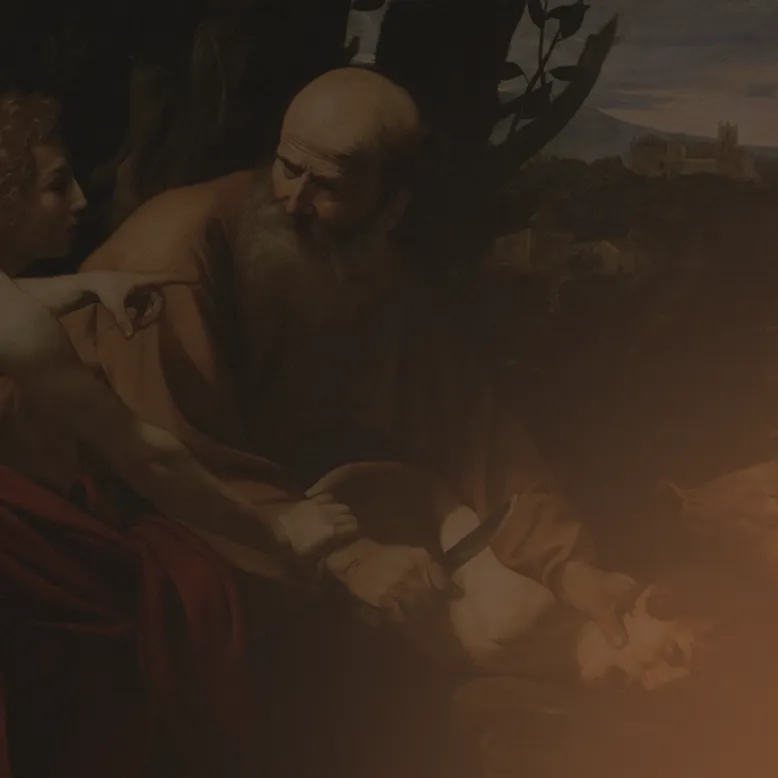
God intended for the sacrifice of His Son to perfectly fulfill and replace the animal sacrifices of the Old Testament. In Hebrews 10, the author demonstrates that Jesus' death on the cross fulfills those very sacrifices as the perfect substitute. Because our sin calls for death and God's justice must be satisfied, someone must die. The reality is either you have to die and be punished forever by God, or somebody, who is worthy, has to die in your place.Hebrews 10:5-7 says, "Therefore, when He comes into the world, He says, "SACRIFICE AND OFFERING YOU HAVE NOT DESIRED, BUT A BODY YOU HAVE PREPARED FOR ME; IN WHOLE BURNT OFFERINGS AND SACRIFICES FOR SIN YOU HAVE TAKEN NO PLEASURE. THEN I SAID, 'BEHOLD I HAVE COME (IN THE SCROLL OF THE BOOK IT IS WRITTEN OF ME) TO DO YOUR WILL, O GOD."You'll notice that almost all of verses 5-7 are in capital letters (NASB) identifying the text as a quotation from the Old Testament, specifically, Psalm 40:6-8. The writer of Hebrews quotes the psalmist as the words of Jesus Christ from when He came into the world. Referring to animal sacrifices in verse 5 explains that He did not desire them or take pleasure in them. Notice the clear contrast between those animal sacrifices and what the writer of Hebrews says in the latter half of verse 5: "A BODY YOU HAVE PREPARED FOR ME." In other words, Christ's own body would provide the sacrifice that God desires and one that would ultimately please Him. The apostle Peter affirms this reality when he writes "And He Himself bore our sins in His body (italics mine) on the cross, so that we might die to sin and live to righteousness; for by His wounds you were healed" (1 Pet. 2:24).In addition to the bodily fulfillment of Psalm 40, Jesus lived in perfect obedience to the Father as Hebrews 10:7 states: "I HAVE COME ... TO DO YOUR WILL." It was Jesus' perfect obedience to the will of God that made Him the perfect sacrifice.The author of Hebrews continues with a monumental statement of divine fulfillment in verse 9: "He takes away the first in order to establish the second." The first being the Levitical sacrifices in the Old Testament, and the second being the sacrifice of Christ's body on the cross. The author shows that Jesus' sacrifice of His own body replaces and fulfills all of the previous sacrificial system. Ephesians 5:2 says, "And walk in love, just as Christ also loved you and gave Himself up for us, an offering and a sacrifice to God as a fragrant aroma."1 Peter 1:18-19 adds, "Knowing that you were not redeemed with perishable things like silver or gold from your futile way of life inherited from your forefathers, but with precious blood, as of a lamb unblemished and spotless, the blood of Christ."Christ-in the sacrifice of His own body-completely demolishes the entire Old Testament sacrificial system. However, at the same time, He fully establishes the second.
Sin & Sacrifice Pt. 4 - A Satisfying Sacrifice
In the Old Testament there was no real relationship between a person's sin and the animal that was sacrificed-it was only symbolic. The Old Testament believer's faith was not to be in the death of an animal, but in God who would one day provide a sacrifice that would forever deal with sin. How, then, did Old Testament believers know that God would provide a future sacrifice for sins? Psalm 51:16-17 says, "For You do not delight in sacrifice, otherwise I would give it. You are not pleased with burnt offering." The sacrifices of God are a broken spirit; A broken and a contrite heart, O God, You will not despise."David, the author of Psalm 51, is not saying that God didn't want sacrifices anymore, because later in that same Psalm he says he's going to offer one. Instead, he is saying that God wants a broken and a contrite heart from the sinner, not a sacrifice. David understood that an animal sacrifice could never truly deal with his sin, and in the context of Psalm 51, he specifically has in mind the sins of murder and adultery. What the Old Testament sacrifices didn't accomplish and could not fulfill, Christ's sacrifice on the cross did. If you're a Christian, here's what the Scriptures teach concerning what Jesus' sacrifice accomplished for you: First, the cross has cleansed you. Jesus said "He who has bathed needs only to wash his feet, but is completely clean; and you are clean, but not all of you" (John 10:13). Acts 15:9 adds, "And He made no distinction between us and them, cleansing their hearts by faith."Second, Christ has removed your need for that constant sense of guilt. In other words, you no longer need to have a consciousness of, or a guilt for, sins that you have confessed and forsaken. Hebrews 10:2 says, "Otherwise, would they not have ceased to be offered, because the worshipers, having once been cleansed, would no longer have had consciousness of sins?"If you have repented and believed in Christ, you have been cleansed from those sins. If you have turned from sin and confessed them, then there is no longer a consciousness of sins.Third, Christ has provided you with a perfect standing before God the Father. According to Hebrews 10:1, Christ has perfected you. If you are a Christian, then today you stand before God as if you were as perfect as Jesus Christ. In the Old Testament sacrificial system millions of animals died, but not one time was the just anger of God against that person's sin satisfied. However, in Christ, God's anger against sin has been fully satisfied! "Not all the blood of beasts on Jewish altar slain Could give the guilty conscience peace or wash away the stain.But Christ the heavenly lamb takes all our sins away,A sacrifice of nobler name and richer blood than they."-Isaac Watts
Sin & Sacrifice Pt. 3 - A Worthy Substitute
The sacrifices in the Old Testament were like a shadow and were never considered to be the literal image or icon. By way of illustration, your shadow isn't really you. Instead, it is a vague outline of your human body. In the same way, the sacrificial system in the Old Testament was a shadow not the reality. That's because the Old Testament sacrifices couldn't fully satisfy God's holy and just anger against our sin. The good news, however, is the reality that God's just anger was satisfied through the sacrificial death of our Lord Jesus Christ. Hebrews 10:1, "For the Law, since it has only a shadow of the good things to come and not the very form of things, can never, by the same sacrifices which they offer continually year by year, make perfect those who draw near." Notice how the author of Hebrews points out that the Old Testament sacrifices could never "make perfect those who draw near." In other words, those sacrifices could never give us a perfect standing before God and that's why they were continuously offered. Hebrews 10:2 says, "Otherwise, would they not have ceased to be offered because the worshipers, having once been cleansed, would no longer have had consciousness of sins?" Not only was the Old Testament believer forgiven for their sins, but they also had a sense of forgiveness and complete confidence in it. So, why would the author of Hebrews mention that they had a "consciousness of sins with them?" It is because Old Testament believers knew their sins had not yet been objectively dealt with as shown in the repetitive nature of the sacrifices. They knew intuitively that an animal's death simply could not remove sins. Because of this, the consciousness of sins remained with them-they had a lingering sense of guilt because they knew their sin had not yet objectively been paid for. Hebrews 10:3 says, "But in those sacrifices there is a reminder of sins year by year." In the Old Testament you'll discover that the list of sacrifices is exhaustive and exhausting. In fact, if you just take the national sacrifices that had to be offered every year, roughly 1,200 animals were used. If you add to that number all the animals used by individuals, some historians estimate that 200,000 animals were sacrificed every year in Israel during Passover. But it didn't stop there! Once that year was over the same calendar cycle of sacrifices began again. What was the Old Testament believer to learn from the fact that he had to continually offer sacrifices? Why was the repetition necessary? Simply put, because animal blood cannot expiate sin; it cannot remove the guilt of sin. Hebrews 10:4 says, "It is impossible for the blood of bulls and goats to take away sin." An animal can never be an adequate substitute for a human being made in the image of God. Animal sacrifices were to be a constant reminder for the Old Testament believer that someday there would be a true substitute, not merely a picture or shadow.R. C. Sproul writes, "The value of those atoning sacrifices in the Old Testament was in the way they dramatized the authentic atonement yet to come. In other words, people were justified by believing in the promise of God, by seeing those rites as shadows of a future reality. They received real atonement only from Christ. In the Old Testament ceremony, the concept of substitution was central."
Sin & Sacrifice Pt. 2 | A Soothing Aroma
As we continue to work through Hebrews 10, the author informs us why Jesus' sacrifice was the ultimate sacrifice, and he does so by contrasting it with the sacrifice that was made on the annual Day of Atonement (Lev. 16). For the nation of Israel, the Day of Atonement was the day when the people's sins were atoned for. That particular day was considered by Jewish people to be the ultimate sacrifice out of their entire sacrificial system. So, the writer of Hebrews endeavors to compare Jesus's sacrifice with that great sacrifice on the Day of Atonement. First, Hebrews 10:1-4 reveals that Jesus' death on the cross was the ultimate sacrifice because it was completely satisfactory. Foundational to understanding the Old Testament sacrificial system is the fact that the required sacrifice was always for God and not for the worshipper.Leviticus 1:9, "Its entrails, however, and its legs he shall wash with water. And the priest shall offer up in smoke all of it on the altar for a burnt offering, an offering by fire of a soothing aroma to the Lord."When Moses speaks of the burnt offerings he says it will be "a soothing aroma to the Lord," which literally means a smell that satisfies or an aroma that calms and soothes. That expression is often found in the Old Testament when human sin is forgiven (Lev. 4:31) and for Israel's national sacrifices (Num. 28-29). In fact, that same expression occurs forty-two times in the Old Testament in conjunction with instructions for sacrifice. Leviticus 4:31, "Then he shall remove all its fat, just as the fat was removed from the sacrifice of peace offerings; and the priest shall offer it up in smoke on the altar for a soothing aroma to the Lord. Thus the priest shall make atonement for him, and he will be forgiven."Even prior to the levitical system the Scripture speaks of sacrifice. After the worldwide flood in Genesis 6-8, you see the same principle of animal sacrifices soothing the justice of God against human sin. Genesis 8:20 says, "Noah built an altar to the LORD, took of every clean animal and ... every clean bird and offered burnt offerings on the altar. The LORD smelled the soothing aroma; and the LORD said to Himself, "I will never again curse the ground on account of man, for the intent of man's heart is evil from his youth; and I will never again destroy every living thing, as I have done."It is a terrifying thought to know our sin greatly offends God our Creator. Those sins that we sometimes write off and take lightly, truly offend God! But don't picture God as someone who loses His temper and blows up capriciously for no reason. Instead, we see a righteous God displaying a pure and holy response to rebellion against His rule. According to Scripture, that holy response of God must be propitiated. The word propitiated essentially means it must be satisfied. In other words, God's justice demands that every sin be punished, because no sin is able to pass by Him (Ex. 34:7; Num. 14:18). But thankfully, God set forth Christ as a propitiation for the sins of the world (Rom. 3:25-26; 1 John 2:2), and it was His sacrifice on the cross where God's holy wrath against sin was satisfied.The Apostle Paul understood this reality. He writes in Ephesians 5:2: "And walk in love, just as Christ also loved you and gave Himself up for us, an offering and a sacrifice to God as a fragrant aroma."
Sin & Sacrifice Pt. 1 | A Sacrificial Foundation
In 1996, I had the opportunity to travel to India. The most indelible memory of that trip was a visit to the Temple of Kali, one of the chief gods in Hinduism. As I exited the temple and walked into the adjoining courtyard, suddenly a couple came in with the intent of cursing one of their enemies by sacrificing a temple goat. As I stood there, not even six feet away, a priest took a large knife, slit the goat's throat, and cried out to Kali to curse their enemies. In reality, what I was witnessing was not a sacrifice to a false god, but to demons (1 Cor. 10:14-22).As I watched that spectacle unfold, my mind went back to the sacrificial system in the Old Testament. Specifically, when animal sacrifices were a crucial part of the worship of the true God. Those sacrifices were carefully prescribed by God, not to invite curses on others, but in hopes of receiving God's blessings.The truth of the matter is God demands sacrifice from every human being. In fact, the purpose of the first sixteen chapters of Leviticus is to instruct the nation of Israel that sinful man can only approach God through sacrifice. In Leviticus 1-7, God prescribes five different kinds of sacrifices that were to be performed as an act of worship by every child of Israel. According to Numbers 28 and 29, God required four of the five sacrifices to be offered every year as national sacrifices.Theologically speaking, there are a number of doctrinal realities that undergirded the entire Old Testament sacrificial system. First, God's holiness and justice are the foundation for the entire system. Leviticus 19:2, "You shall be holy, for I the Lord your God am holy."Exodus 34:7, "The Lord, the Lord God, compassionate and gracious, slow to anger, and abounding in lovingkindness and truth; who keeps lovingkindness for thousands, who forgives iniquity, transgression and sin; yet He will by no means leave the guilty unpunished."A second doctrinal reality that undergirds the framework of the sacrificial system is the sinfulness of man. All of us-without exception-have sinned against God, and the Scriptures teach that we have violated His Law and have spurned His goodness. Solomon writes, "Surely there is no righteous man on earth who does good and never sins" (Eccl. 7:20). The apostle Paul adds, "For all have sinned and fall short of the glory of God" (Rom. 3:23).Because of man's sinfulness, the only way he can approach a holy God is based on the terms that God establishes, and those terms demand sacrifice. Not only was this true during the period of the Old Testament, it is still true today. The only way any one of us can approach a holy and just God is through sacrifice. The key difference being, as Hebrew 10 demonstrates, no longer through the sacrifice of an animal but through the sacrifice of Jesus Christ. Throughout this series we will walk through Hebrews 10:1-18 together, for the purpose of discovering the relationship between Sin & Sacrifice.
The Perfections of Scripture - Pt. 6 | Truth
Today, we conclude our series on The Perfections of Scripture by looking at one final characteristic of Scripture found in Psalm 19:9, "The judgments of the LORD are true; they are righteous altogether." At first glance, "the judgments of the LORD" seems to be an odd description for the nature of Scripture. The Hebrew word for judgments is a legal word that comes from the courtroom environment, and it describes God's Word as a collection of judicial decisions and precedents that He has made about various human situations. In other words, David is saying that the Word of God is filled with God's precedents. He means that all God's legal decisions about the details of human life and community are contained in Scripture.The text goes on to say, "The judgments of the LORD are true" (v. 9). That is to say that God's Word is dependable and trustworthy. Scripture has, like God Himself, an unchangeable moral foundation that cannot be broken. It contains permanent, legal decisions about what is and what ought to be in terms of morals. David adds, "The judgments of the LORD are truth; they are righteous altogether" (v. 9). All God's Word collectively and every commandment individually meet the standard of perfect righteousness.Psalm 119:142 says, "Your righteousness is an everlasting righteousness, and Your law is truth."Psalm 119:160 says, "The sum of your word is truth, and every one of Your righteous ordinances is everlasting."Scripture is without defect and has no moral corruption. It is radiant and piercing like the sun, and it's completely refined without any dross. There isn't a more trustworthy, dependable, and reliable book in existence.It restores the soul at the moment salvation and continues giving restoration in keeping with repentance. It gives wisdom to those who are morally gullible or misled, and it produces genuine joy as we are conformed to our Creator's design. It enlightens our eyes in the sense that it gives us a true understanding of life and eternity, and it provides a comprehensive standard of righteousness and righteous living when obeyed.Charles Bridges writes, "The professor may read, and understand, and even externally obey the law; but the believer only loves it; and he lives in it, as if he could not live without it; To the professor it is a task imposed to satisfy conscience. To the child of God, it is food and medicine, light and comfort-yea, life from the dead."That's why David, in Psalm 19:10, says God's words, "Are more desirable than gold, yes, than much fine gold. Sweeter also than honey and the drippings of the honeycomb." Charles Bridges, Exposition of Psalm 119 (Banner of Truth).
The Perfections of Scripture - Pt. 5 | Eternality
As we continue our study of Psalm 19, we come to a fifth expression of the perfections of Scripture, "The fear of the LORD is clean, enduring forever" (v. 9). "The fear of the Lord" is an unusual title for Scripture and quite frankly, not one we would expect. But David isn't referring to what Scripture is, but what it produces. This text and many others teach us how to have a biblical and healthy fear of God. Scripture consistently calls us to we must display a proper sense of reverence and respect towards Him.Proverbs 1:7 says, "The fear of the LORD is the beginning of knowledge."Psalm 47:2 says that the "Most High is to be feared, a great King over all the earth." This reverence that we're to have for God comes from a proper recognition of who God is, that He is awesome. Today, we tend to throw around the word awesome nonchalantly, but I can assure you that's not what David has in mind here. When you really understand that God is awesome, you have no trouble fearing Him. A true comprehension of and appreciation for the greatness of God, always produces a fear of Him. The whole of Scripture teaches us how to fear God and how to worship Him appropriately.David goes on to say, "The fear of the LORD is clean" (v. 9). This word clean is used of a precious metal that has been refined and had all of its dross removed."The words of the Lord are pure words; as silver tried in a furnace on the earth, refined seven times." -Psalm 12:6 The words of God are pure of all dross. They're free from anything that's false, phony, and valueless. But not only is the Word of God pure, it endures forever. "The fear of the LORD is clean, enduring forever." The Bible repeatedly demonstrates the eternality of God and therefore, of His Word. Psalm 102:26 says, "Of old You founded the earth, and the heavens are the work of Your hands. Even they will perish, but You endure; And all of them will wear out like a garment; Like clothing You will change them and they will be changed. But You are the same, and Your years will not come to an end." Psalm 119:89 says, "Forever, O LORD, Your Word is settled in heaven."Isaiah 40:8 says, "The grass withers, the flower fades, but the word of our God stands forever."Do you understand what David is telling us in Psalm 19:9? He's saying nothing is more relevant than the eternal Word of God! In every age and at all times, it is an unerring, unchanging guide that remains eternally relevant. It has the power to speak on timely issues at any given moment.
The Perfections of Scripture - Pt. 4 | Reliability
As David continues to expound on the perfections of the Word of God in the latter half of Psalm 19, he argues for its truthfulness and reliability. David writes, "The testimony of the LORD is sure, making wise the simple" (v. 7). The Hebrew word for sure speaks of truth that God Himself testifies of or gives witness too. The language also describes not only that which is firm or secure, but that which has been verified. The same Hebrew word is used that way in Genesis 42:20 where Joseph says, "Bring your youngest brother to me, so your words may be verified." In other words, the Word of God is verified in its truthfulness, dependability and reliability. Charles Spurgeon writes, "God's witness in his Word is so sure that we may draw solid comfort from it both for time and eternity, and so sure that no attacks made upon it, however fierce or subtle, can ever weaken its force."David goes on to give the believer a direct application of the reliability of God's Word. "The testimony of the LORD is reliable, making wise the simple" (v. 7). The Hebrew word for simple describes someone who is wide open in terms of easily falling prey to every conceivable influence, and to whatever this life has to offer. If you read the book of Proverbs you'll find the simple person described as the person who simply doesn't have enough life experience to understand how things work. Proverbs 14:15 says, "The naive believes everything, but the sensible man considers his steps."David assures us that God's dependable, reliable, and verified Word is able to make us wise. Paul confirms this reality in 2 Timothy 3:14-17:You, however, continue in the things you have learned and become convinced of, knowing from whom you have learned them, and that from childhood you have known the sacred writings which are able to give you the wisdom that leads to salvation through faith which is in Christ Jesus. All Scripture is inspired by God and profitable for teaching, for reproof, for correction, for training in righteousness; so that the man of God may be adequate, equipped for every good work.Not only does Scripture provide wisdom for salvation, it is also able to give you the wisdom necessary for living in this world in a way that pleases God. Do you believe that Scripture is God's verified testimony to you and that if you spend time in it, you will no longer be a simple person? Are you convinced that Scripture is non-negotiable for someone who desires to live wisely for the glory of God? John Calvin writes, "When we give ourselves up to be guided and governed by the word of God, we are in no danger of going astray, since this is the path by which he securely guides his own people to salvation." Treasury of David Commentary on the Psalms
The Perfections of Scripture - Pt. 3 | Excellency
We all have multiple copies of the Bible. You probably have it on your phone or tablet, or maybe you have a hard copy right in front of you. You most likely have several Bibles in multiple locations as do I. But I want you to truly consider this question with me: Do you really believe, deep in your soul, that no other resource in the world can give you what the Bible can give you?Sadly, many Christians don't truly believe that. They don't read their Bibles, and when they have a choice, they often choose something else. In Psalm 19, David calls his readers to choose the power of Scripture above all else. In verse 7 he writes, "The law of the LORD is perfect, restoring the soul." Notice, first, David calls Scripture the law. The Hebrew word is torah which simply means teaching or instruction, and is essentially a comprehensive term for God's revealed will. This word torah was used of the Mosaic Law that was given to the people of Israel at Sinai. It is used as a title for the first five books of the Old Testament. In Luke 24:44, referring to the entire Old Testament, Jesus calls it the "Law of Moses and the Prophets and the Psalms." It's also used-and I think this is David's point in Psalm 19-of the inspired Word of God that is available at any point in biblical history. David goes on to say in verse 7, "The law of the LORD is perfect." The Hebrew word for perfect is used in the Old Testament of animals offered in sacrifices. In particular, it denoted animals that were without blemish and free from defect. When this Hebrew word is used of human beings, it describes someone who is without moral defect and blameless. It doesn't mean they're perfect, but they have no obvious defect or flaw. In Psalm 19, when it's used of Scripture, David means that Scripture is complete, without error, and flawless. Just as sacrificial animals had to be without defect, so is the Word of God. Charles Bridges captures this when he writes, "Its promises are without a shadow of change or unfaithfulness. Its precepts reflect the holy image of their Divine Author. In a word, it contains truth without mixture of error for its matter." Exposition of Psalm 119
No Results Found
No results found. Try searching with different keywords or browse our latest writings for inspiration.
Explore The Word Unleashed
Our ministry brings together expository preaching, theological precision, and practical application for the good of Christ's church and the daily living of Christ's people.
.webp)
Sermons
Listen to expository sermons that clearly teach God’s Word and guide you in daily living.

Radio
Tune in to gospel-centered programs that share biblical truth and strengthen your daily walk with Christ.
Training
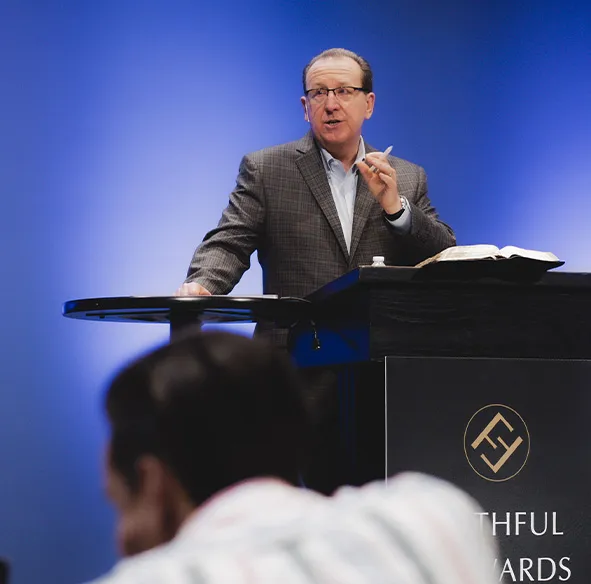
Join courses and workshops designed to deepen your faith and equip you to serve others with biblical wisdom.
.webp)
From the Pastor's Desk
Read pastoral messages that encourage, instruct, and help you apply God’s Word to every part of your life.
.webp)
Hymns
Discover timeless hymns that lift your heart in worship and remind you of God’s abounding grace and faithfulness.
Podcasts
Stay rooted in Scripture through our podcast series.